

The ideas below move from the cleanest office-casual line to the deliberate clash of ripped denim against polished leather, and the right one depends on whether your jeans are straight, skinny, or already distressed.
1. Straight-Leg Jeans
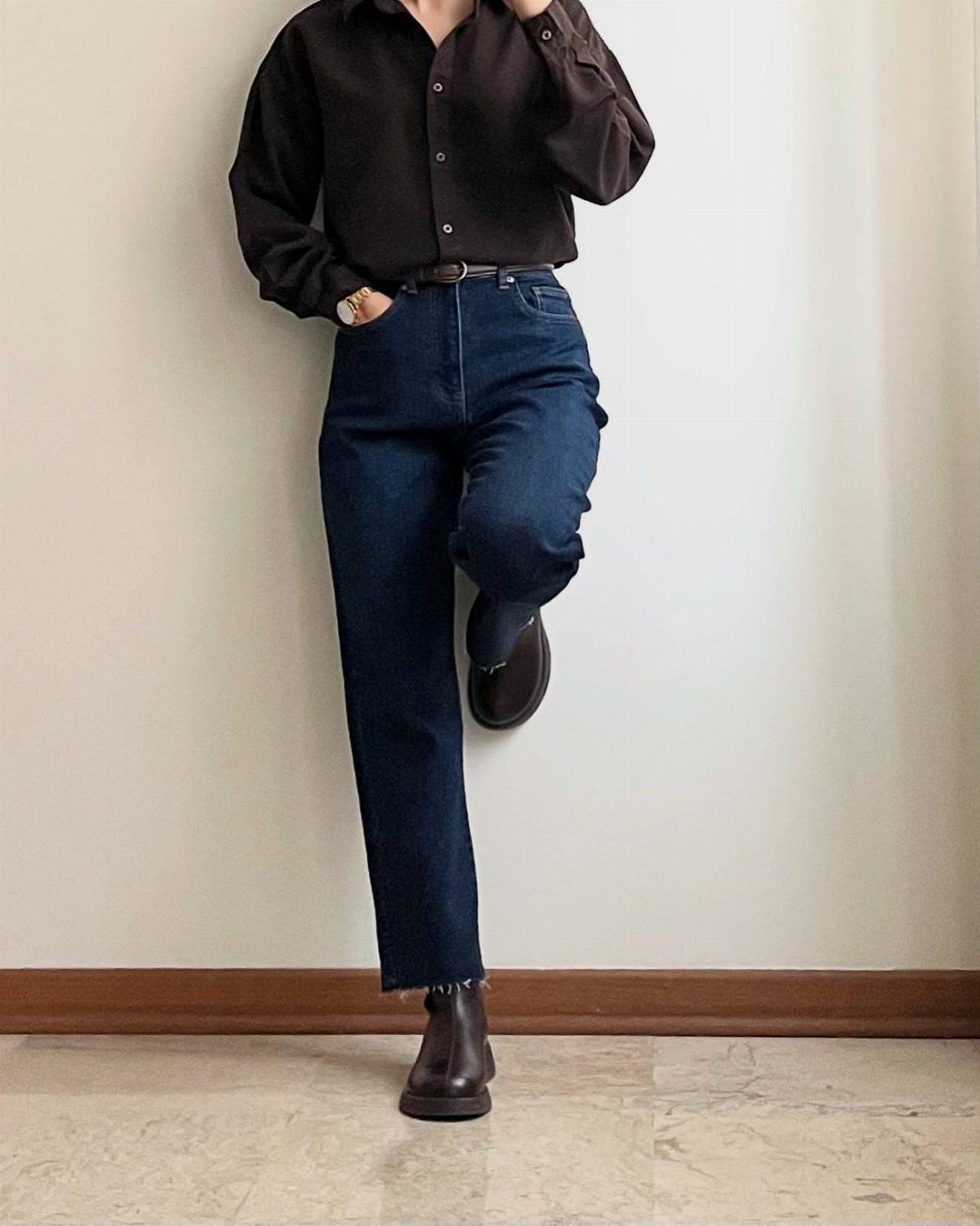
Straight-leg jeans hit that middle ground where the boot shows but the leg still reads as relaxed.
A hem that grazes the top of brown Chelsea boots sits at the right height: high enough to avoid dragging, low enough to keep the boot from looking stranded. A half-inch cuff works if you need to shorten without tailoring.
This silhouette suits office-casual days better than skinnier cuts, since the even width from hip to hem looks intentional without trying hard. Watch the break: too long and the denim pools, too short and you lose the line.
2. Skinny Jeans
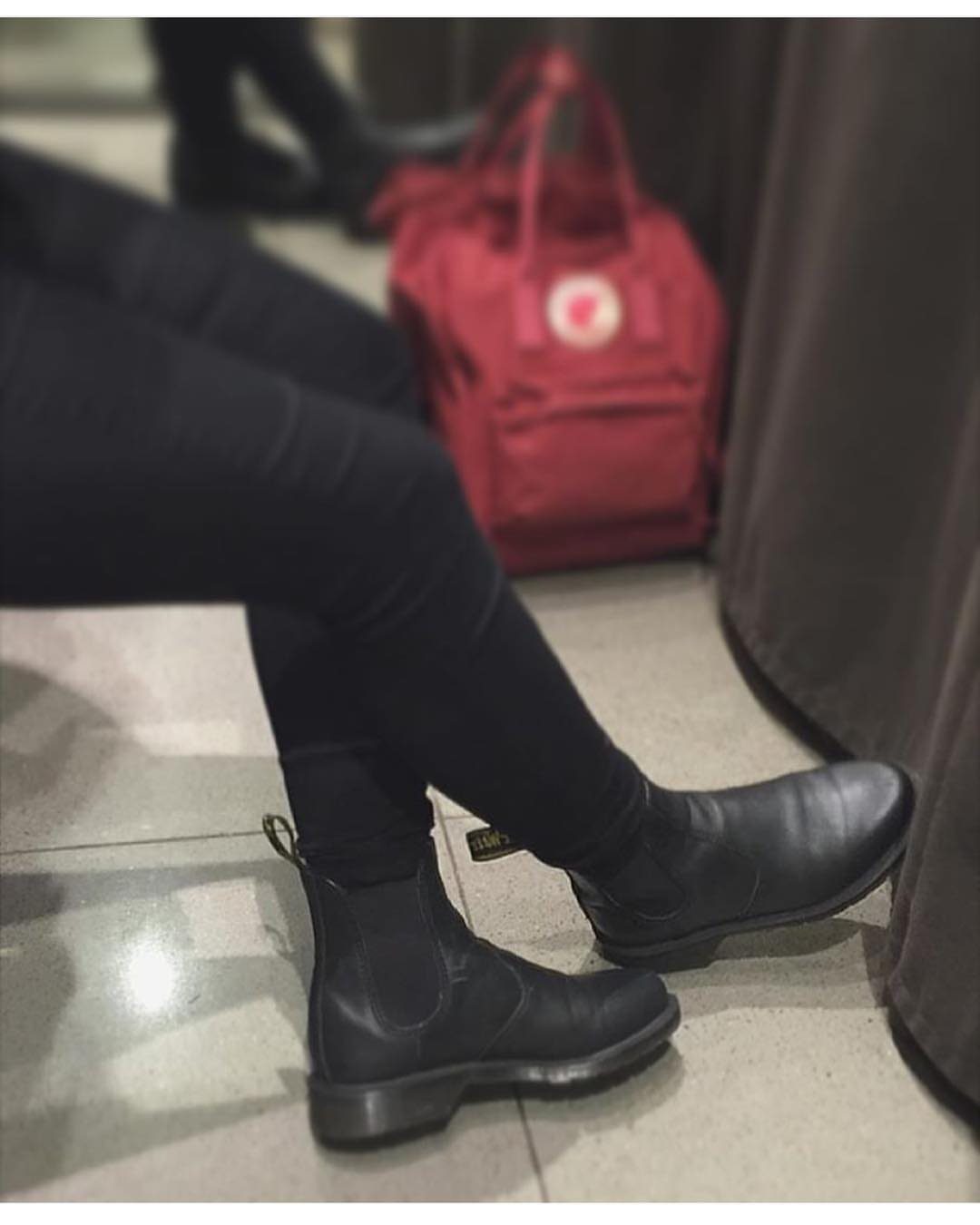
Black skinny jeans into black Chelsea boots gives one continuous leg line, which is why this pairing works.
Jeans that end right at the boot top, no gap, no bunch, give the fit to look for, since any break kills the streamlining.
Super skinny cuts work best here, the kind that skim like leggings rather than taper.
All black makes this easiest to pull off, since the eye reads shoe and pant as one piece. Color elsewhere, a red bag or a bright top, carries the outfit without breaking the leg.
For those who have moved past the 2000s skinny phase, a slim-straight cut that tapers only below the knee can sit neatly over the boot shaft instead of tucking inside. Same boot, different silhouette, no cling required.
3. Distressed Jeans
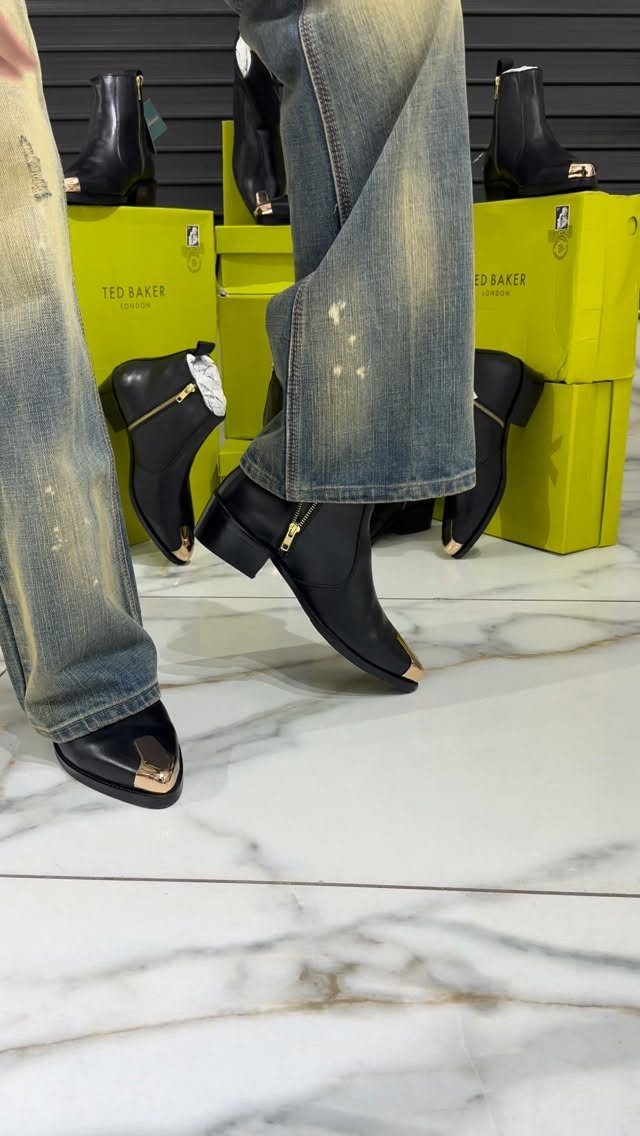
Distressed denim with polished boots is a deliberate mismatch, and that is why it works.
Rips add texture the eye notices first; a Chelsea boot with a detail like a gold toe cap keeps the look from sliding into full casual.
Minimal distressing keeps the outfit acceptable at a casual office or dinner out.
Heavy shredding pushes toward streetwear, which is fine if that is the goal, but the boot should match the energy: a cleaner leather for smarter occasions, something with hardware or a cap toe when the jeans are louder.
The photo leans smarter, and the marble floor and stacked boxes behind it suggest a retail context, not a concert venue.
I would check the back of the jeans too; distressing on the seat reads differently than knees or thighs, and not every setting allows it.
Common Mistakes
Baggy cuts that pool at the ankle are the main thing to watch. Extra fabric bunches above the boot and hides the shape you chose the Chelsea for, so the whole look reads accidental rather than styled.
A slim fit matters, but skin-tight denim creases at the knee and crotch in ways that distract.
A touch of stretch in the fabric helps the jean keep its shape through the day without clamping. Mid-rise sits better with boots than low-rise; the waistband stays put and the leg line stays clean from hip to hem.
Tucking jeans into the shaft is almost always wrong.
The jean belongs at or just above the boot opening, period. If the inseam is too long, a hem costs less than a boot you never wear because the proportions look off.
Seasonal Styling
Winter calls for heavier denim that holds its shape against coats and layers.
Dark washes read smarter in low light and pair cleanly with a turtleneck and peacoat over black or brown leather boots. Water-resistant leather helps if you are walking through slush.
Summer does not rule the boot out. Light-wash denim in a lighter weight fabric, a tank, and a denim jacket over the top works for evenings when sandals feel too casual.
The boot still gives the outfit a foundation; the lighter layers keep it from looking like you dressed for the wrong month.
I switch to lighter-weight jeans around May and back to heavier denim in October, though that line moves depending on where you live.
Occasion Versatility
The same boot and jean combination changes direction with what you put over it.
A blazer or tailored casual jacket pulls the look toward smart-casual, clean enough for most offices that do not require a suit. A moto jacket pushes the same base in a rougher direction, still polished but with different energy.
Platform soles on the boot play against skinny jeans for a night out; the added height shifts the proportion without changing the core pairing. Shiny leather against a cutoff hem adds texture where the outfit might otherwise go flat.
For running errands, the boot is already doing the work; a simple tee or sweater is enough.
The elastic panels and pull tab mean you are not lacing and unlacing between stops, which is why the combination stays in rotation even when you have other options.
Frequently Asked Questions
Can you wear a Chelsea boot with jeans?
Yes, and the pairing works across most jean styles. Straight-leg, skinny, and even slightly flared cuts all sit well with the boot’s low shaft, though the hem height matters more than the leg shape.
Keep the denim fitted through the thigh so the silhouette stays intentional where it meets the boot.
What are common Chelsea boot mistakes?
Tucking jeans into the boot opening is the most frequent one; the gathered denim adds bulk where the silhouette should stay narrow, and the low shaft makes the tuck look accidental rather than styled.
Hemming fixes length; folding or stuffing does not.
Are Chelsea boots out of style in 2026?
No. The boot’s clean lines and minimal hardware have kept it relevant through decades of shifting trends, and the current move toward quality-over-quantity dressing favors pieces that work across contexts.
Leather and suede versions both hold, with chunkier soles as one option among many rather than a required update.
Should I tuck my jeans into the boots?
Generally no. Chelsea boots sit too low for a tuck to read as deliberate, and the bunched fabric at the ankle breaks the line.
The exception is tall riding-style boots, which are a different category entirely. If your jeans run long, tailoring is the fix; a half-inch cuff works in a pinch, but stuffing the excess into the boot does not.