The right jeans for Chelsea boots range from cropped straights to full-length flares, and the deciding factor is the boot itself: its sole weight and leather color set what the denim above it needs to do.
A sharp hem matters most, whether that means a straight-leg crop hitting 1–2 inches above the ankle bone or a full-length flare breaking cleanly at the instep.
1. Cropped Jeans
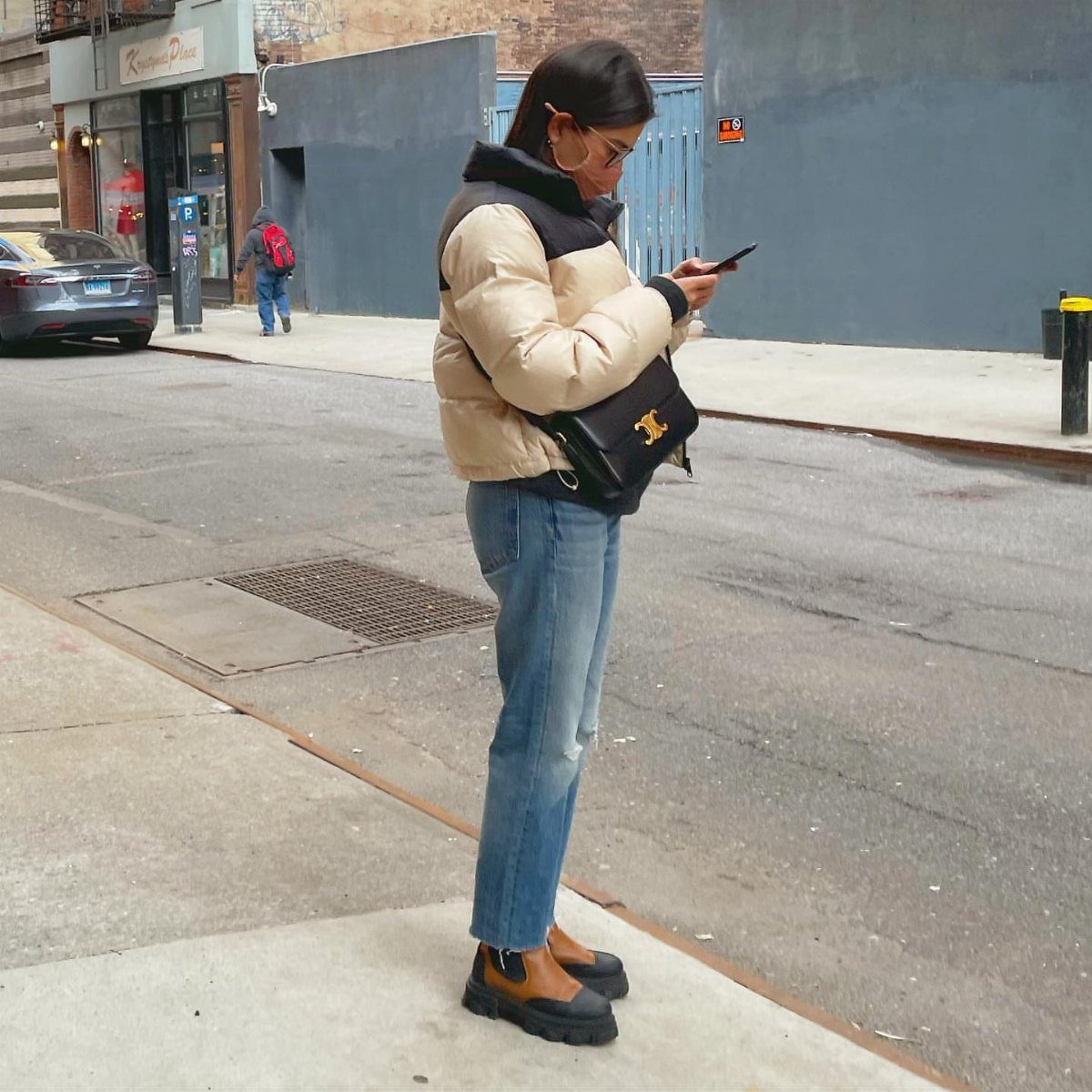
Cropped jeans end right where the boot shaft begins, so the Chelsea boot reads as part of the outfit rather than an afterthought peeking out from fabric.
I look for a straight-leg crop that hits 1–2 inches above the ankle bone; anything shorter starts to look like a flood pant, anything longer breaks the line.
The Levi’s Ribcage Straight Ankle and Citizens of Humanity Winslow Cropped Boyfriend both sit at that height with enough room to tuck a thin sock.
Cropped jeans and Chelsea boots work in every season; add wool socks in winter and let a sliver of color show.
The reason the boot trend she wore was the perfect choice for cropped jeans is this: For starters, they’re flat, which is the chicest style when wearing cropped jeans.
2. Classic Blue Denim with Black Boots
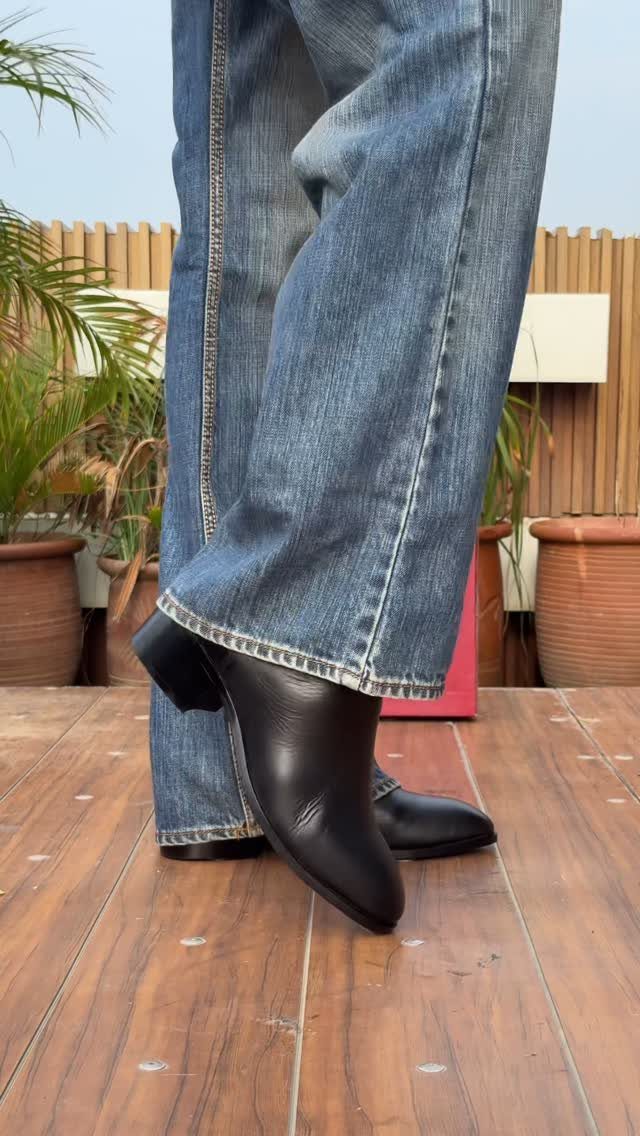
This is the combination most people picture when they think of Chelsea boots, and it survives because it does not ask much of either piece.
Faded blue denim and black leather handle errands, dinner, and most offices without looking like you tried.
I keep the jeans straight-leg rather than skinny; the boot needs enough room to sit naturally but not so much that fabric pools at the ankle. A plain T-shirt and overshirt, or an Oxford alone, finishes it.
Brown boots warm the look up; black keeps it sharp. The standard is no cuff, no tuck, just jeans falling clean over the boot’s elastic panel.
3. Light Blue Flared Jeans
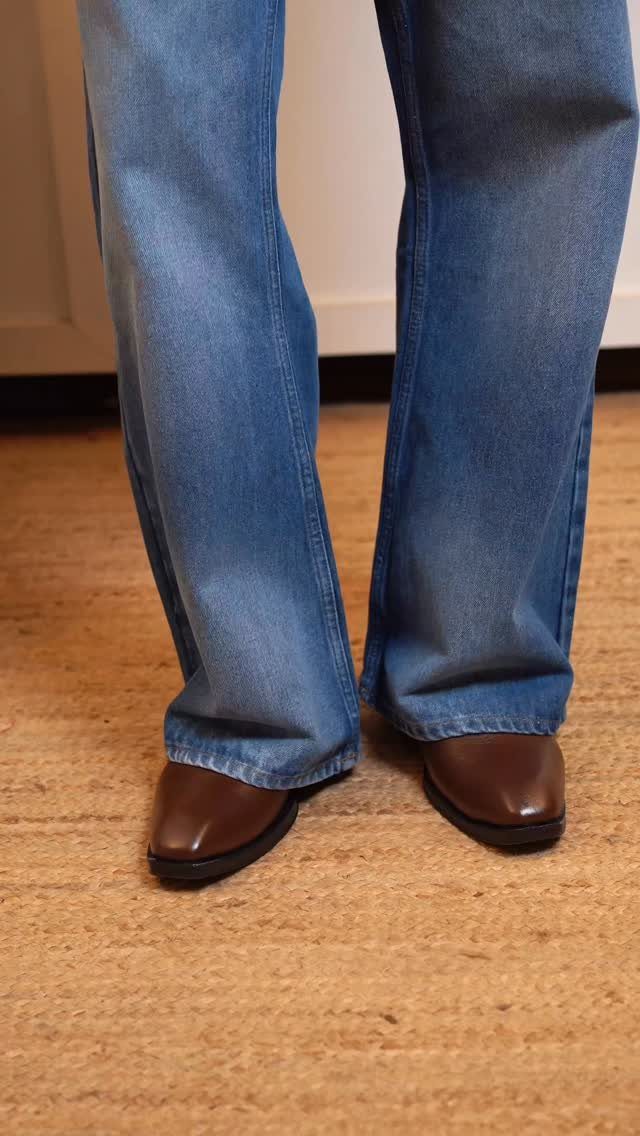
Light wash over brown leather reads warmer and less expected than black-on-blue, which is why I reach for it when the rest of my outfit runs dark.
The flare needs to break over the boot rather than swallow it; a cropped flare or a full-length hem with enough volume to sit right at the instep works.
A smooth, dressy brown Chelsea, closer to a Blundstone dress boot than their work sole, keeps the 70s reference from going costume.
I would avoid distressed brown here; the light denim already carries enough casualness. A tucked sweater or fitted tee balances the width below.
4. Dark Grey Jeans
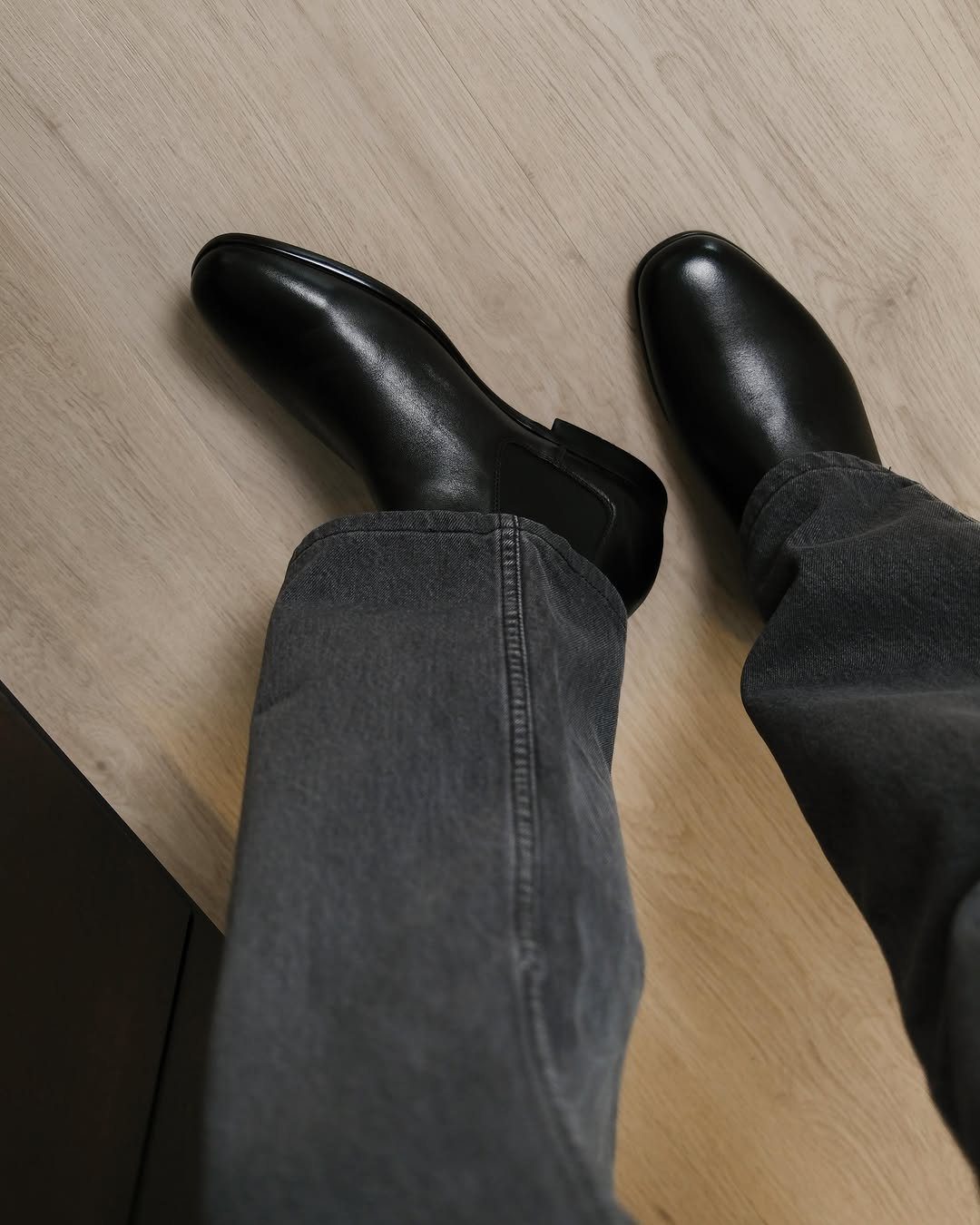
Dark grey removes the blue entirely, which makes black Chelsea boots look intentional rather than like a default choice. The tone-on-tone elongates the leg more than blue denim manages, and the grey reads as slightly dressier without crossing into formal.
I prefer a straight or slim cut in this wash; the slim boot needs a clean hem, and too much fabric around a black Chelsea turns sloppy fast.
Add a charcoal or olive jacket and the whole outfit stays in one quiet register.
Styling Tips
The hem is where most outfits with Chelsea boots go wrong.
A clean fall with little excess fabric reads as intentional; one accidental fold above the boot looks like you grabbed the wrong inseam. Anything between, where denim bunches or tucks inside the shaft, collapses the line of the leg.
A slim or straight jean can sit with a slight break at the ankle, but a wider leg needs more length; about an inch of fabric overlapping the boot front and back keeps the line from ankle to toe from looking chopped.
With hems around 16–18 inches, I set the break just above the boot top and leave half an inch to an inch of sock or bare ankle visible.
This lets the boot stand as its own piece, which helps on shorter frames where a hem that pools on the ground starts to look like too much.
Footwear Recommendations
The Blundstone Originals 550 run about $200 and have become the default for good reason: the round toe and clean elastic gusset soften into a shape that works with nearly any jean cut.
The colors run stout brown, black, and a worn-in rustic black.
The Doc Martens 2976, around $170, carry the welt stitching and air-cushion sole; the silhouette reads more rugged, which I reach for with looser denim or when I want the outfit to edge toward grunge.
For situations where Blundstone read too casual, the Sam Edelman Penny ankle at roughly $180 offers a sleeker last and cleaner line.
The Stuart Weitzman 5050 Chelsea sits at about $700 with premium leather for the occasions that warrant it. R13’s Chelsea, priced near $500, cuts slimmer with a low heel and pushes the look toward fashion rather than workwear.
Occasions for Wearing
Most days I wear Chelsea boots for the easiest possible outfit: jeans, a plain T-shirt, and out the door. The boot does enough work that the rest can be simple.
For smart-casual, I switch to dark jeans and brown Chelseas with a button-down.
The boot’s streamlined shape carries the formality; I keep the hem clean so the line stays tidy. Black jeans with black boots and a plain tee scales back from there without looking careless.
The same boot handles dressier occasions if the leather is right. A smooth, polished Chelsea with dark grey or clean dark denim and an Oxford or fitted jacket sits at the edge of formal without crossing over.
I would not push it to a suit, but for dinner or a meeting where jeans are acceptable, the boot earns its place.
Frequently Asked Questions
What type of jeans look best with Chelsea boots?
A straight-leg crop that stops just above the ankle lets the boot sit in the open, not buried under denim.
Slim and straight cuts work with most Chelseas, while relaxed or wide-leg denim needs enough volume to break over the boot without pooling.
Skinny jeans can work but tend to look dated now; I reach for a straight or slightly relaxed fit almost every time.
What are common Chelsea boot mistakes?
Letting fabric bunch above the elastic panel is the one I see most often, even half an inch reads careless.
Too much cuff is another; one roll under two inches controls length on wider jeans, anything more looks like you are forcing a fit.
Denim tucked into the shaft tends to bunch and stay there; I have also learned the hard way that the elastic gusset and low heel make these boots a poor choice for slush or downpours.
I also avoid distressed brown boots with light wash denim; the casualness stacks rather than balances.
How to wear chunky Chelsea boots?
Chunky Chelseas like the Doc Martens 2976 need more room than sleek styles, so relaxed or wide-leg denim balances the bulk better than slim cuts.
With a heavier sole, I let the jeans drape past the welt or turn up a narrow cuff so the stitching and cushion show; if the denim snags on the pull tabs, a wider leg opening fixes it without a fight.
The rugged sole reads best with casual washes rather than dark formal denim.
What color boots look best with black jeans?
Black Chelsea boots create a continuous line that lengthens the leg, which is why I default to black-on-black for a sharper look.
Brown boots work too but create stronger contrast; I save that pairing for casual outfits where the break in tone is intentional rather than accidental.
Dark grey jeans with black Chelseas is another combination I wear often, since removing blue entirely makes the black read deliberate.
Should jeans go over or inside Chelsea boots?
Over the boot is almost always the cleaner choice for denim. With wider or relaxed fits, the hem can rest on the boot top with about a 1-inch overlap or break just above it exposing a sliver of sock.
I avoid tucking denim inside the shaft; Chelsea boots are cut close at the ankle and the bulk reads awkward.