The range here runs from canvas slip-ons to leather and suede builds that need polish, not a washing machine.
What picks one idea over another is how formal your office reads on a normal Thursday, not the day before a long weekend.
A white leather sneaker with a pressed black trouser and a tucked white shirt reads as intentional because the sole stays low and the upper stays clean.
1. White Sneakers with Tailored Trousers
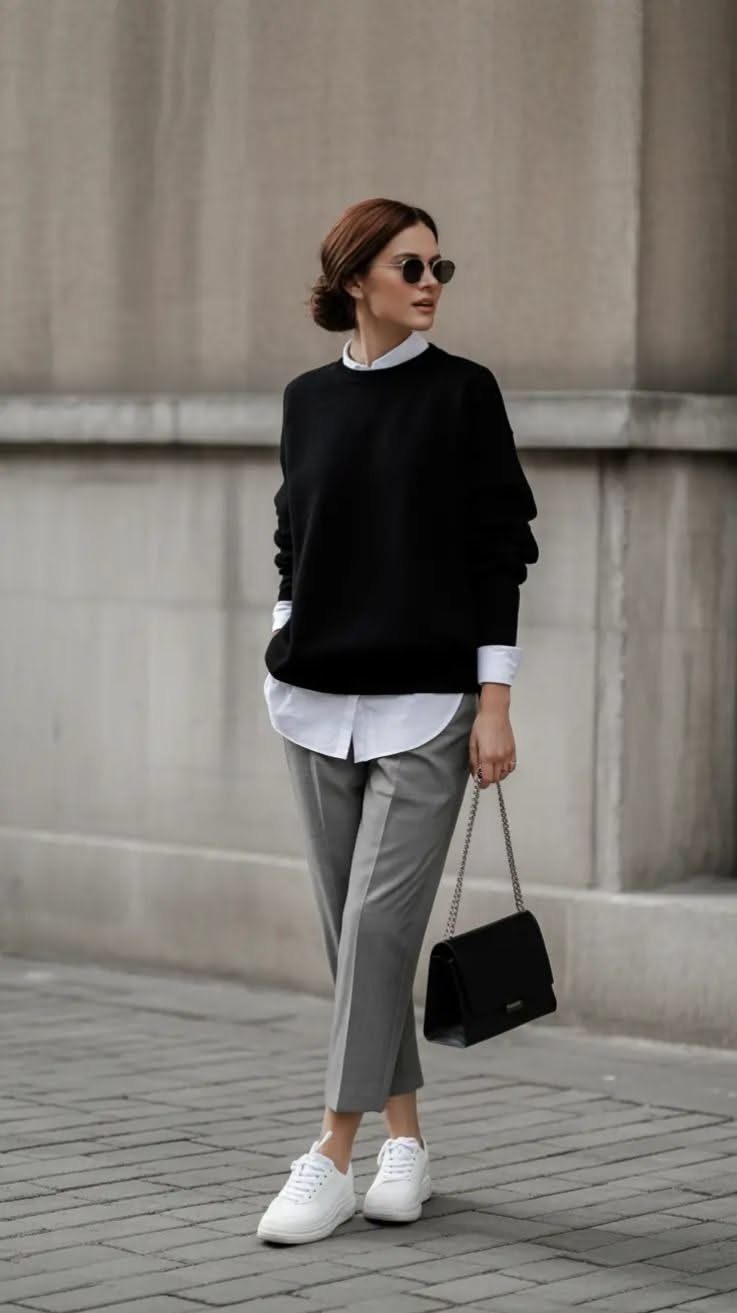
White sneakers with tailored trousers land in that narrow space between looking like you tried and looking like you tried too hard.
Press the trousers, tuck the shirt, and choose clean leather over weekend canvas; that is how a white sneaker reads as intentional in an office.
Navy, beige, black, and grey all work here.
I would stick to one neutral and let the white do the punctuation. A black sweater layered over a white shirt, like the visible look, gives you two textures and two temperatures for an office that runs hot or cold.
The limit is the sole: once it thickens into a platform, the outfit tilts casual Friday instead of Monday through Thursday.
2. Blazers with Sneakers
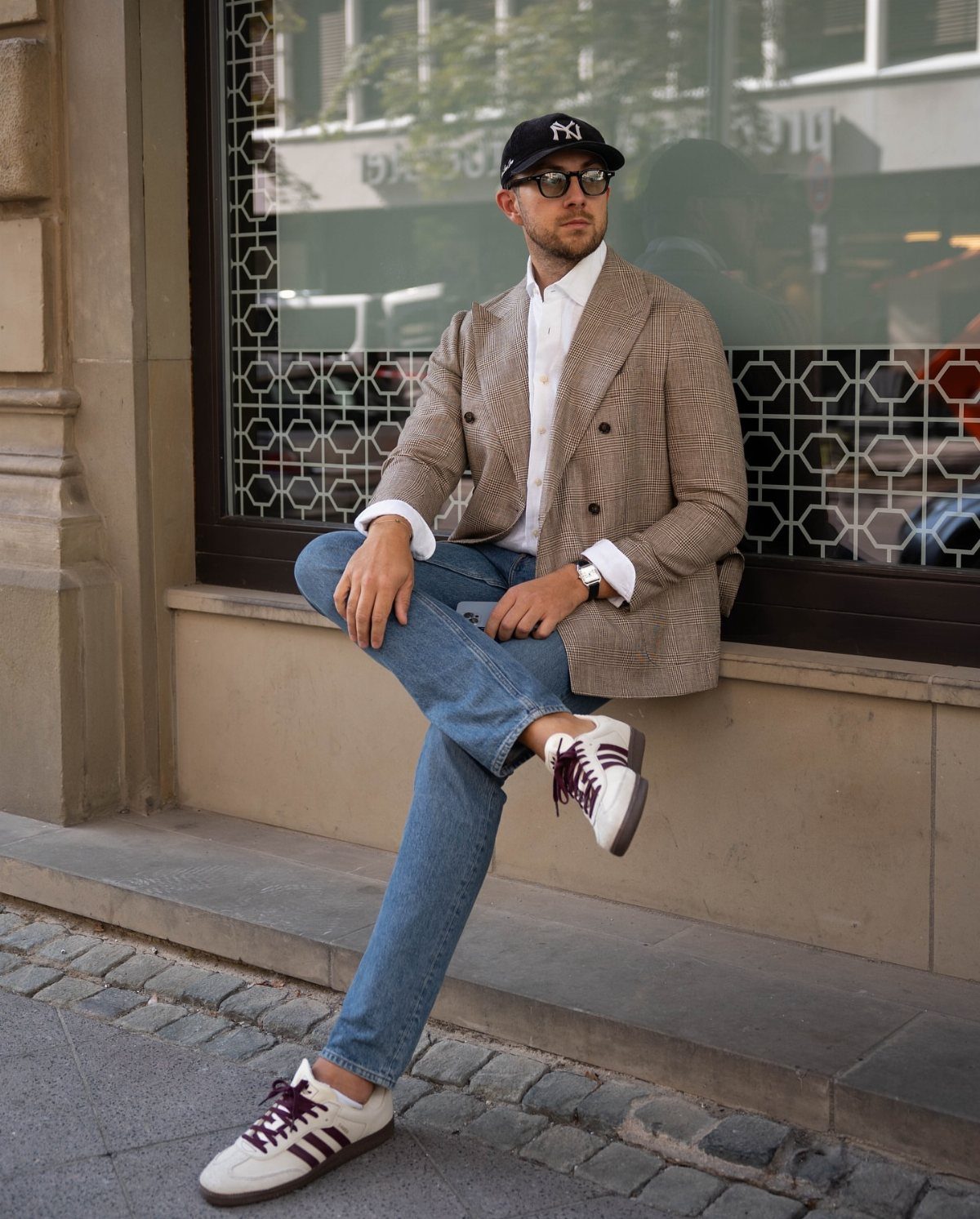
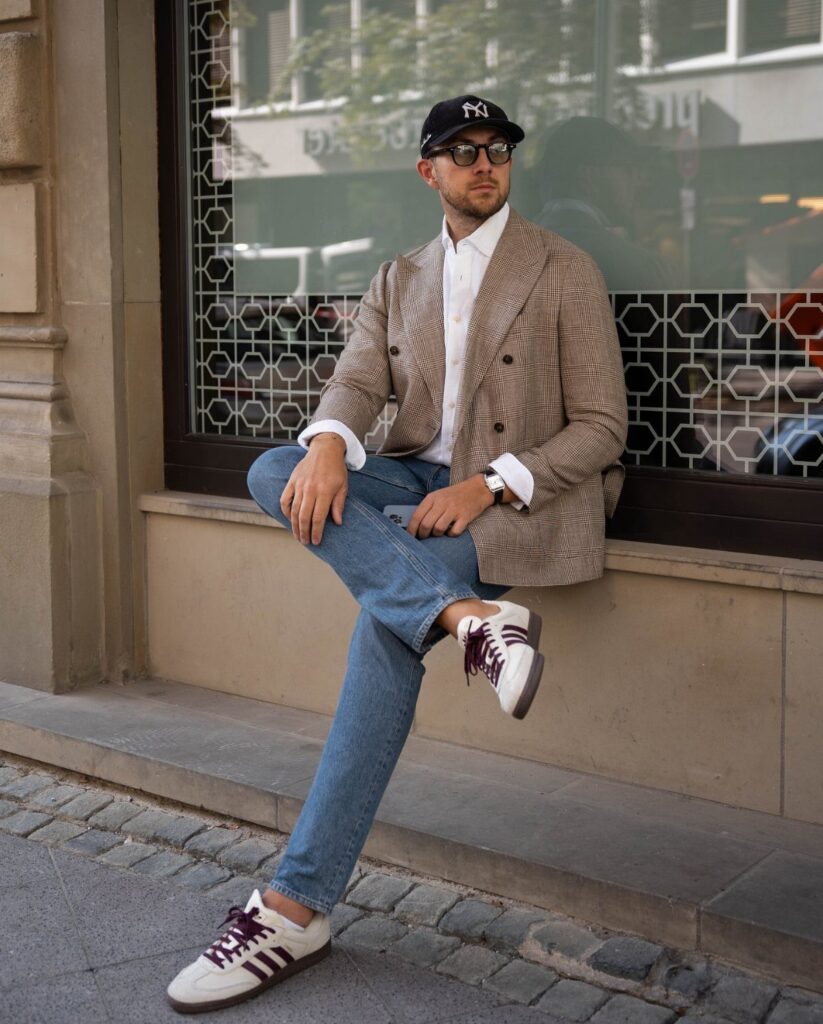
Blazers with sneakers depend on the blazer doing most of the structural work. A brown patterned or checkered jacket carries enough formality that what happens below the knee matters less.
Slim pants and minimal sneakers keep the silhouette deliberate. I would avoid anything with a logo or a contrast heel; the eye already has the pattern to settle on.
A white shirt and dark denim work, though I prefer the look with trousers in a matching tone to the blazer.
Leave the baseball cap at home for an actual office. Save it for the commute, or for a job where no one sits above you in the hierarchy.
3. Stylish Work Sneakers

Stylish work sneakers are not an oxymoron if you shop for materials first. Leather or suede uppers in grey, white, or cream read as deliberate; mesh and neon read as gym.
A slip-on sneaker sits at the polished end of the range.
I would look for a low profile and a monochrome finish, then let the outfit carry the interest. An olive shirt and black trousers, like the visible version, give you color without pattern.
If your office leans formal, a grey sneaker with a slight sheen bridges further than white. Dirt shows less on these, but scuffs show more; you will polish them, not throw them in the wash.
4. Sneakers with Midi Skirts
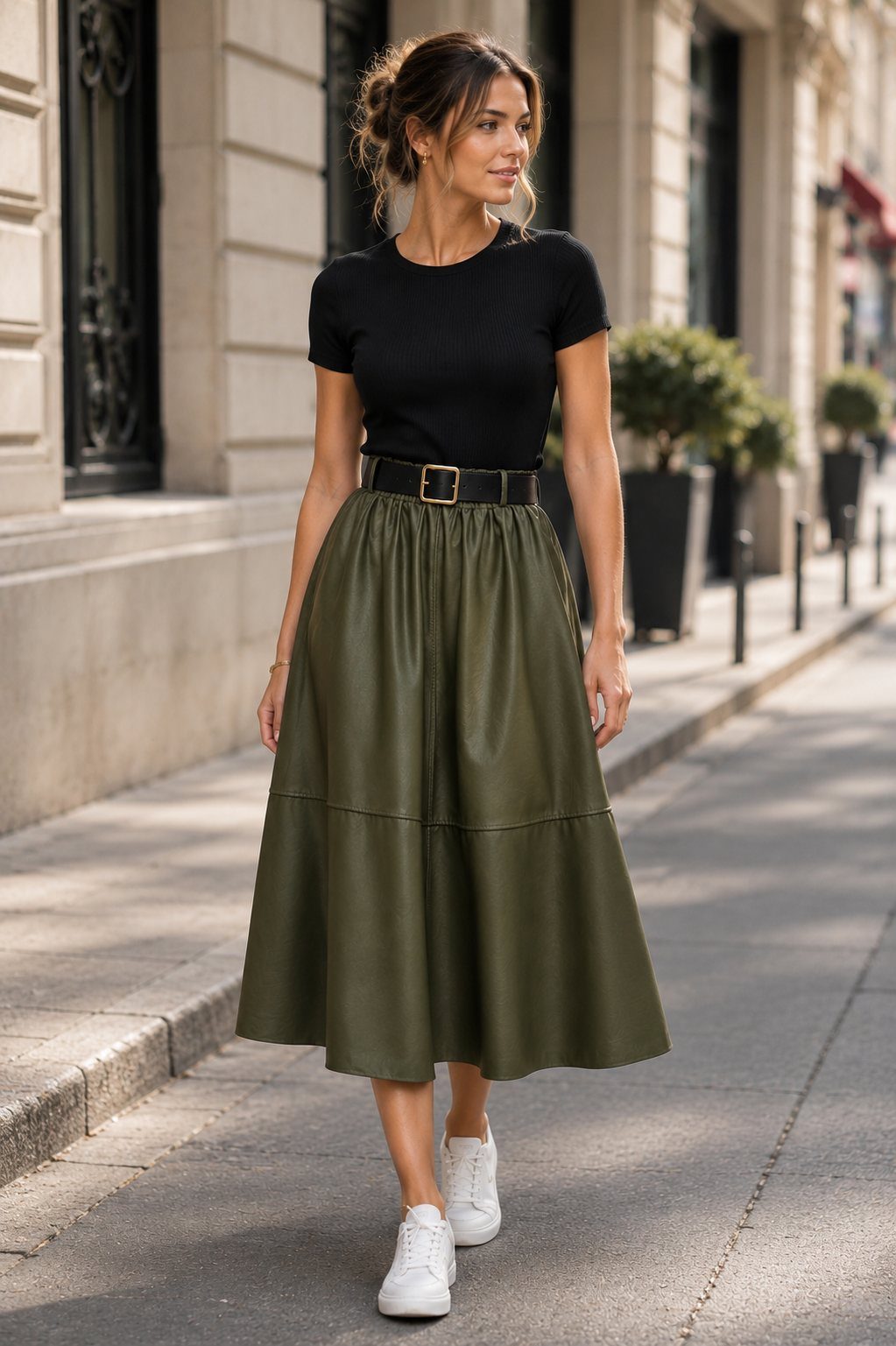
Sneakers with midi skirts solve the problem of a hem that hits at the widest part of the calf.
The skirt needs to move, and the shoe needs to stay low and narrow so the line from knee to ankle does not break twice.
White sneakers with a black or olive midi skirt, belted, gives you a column of color with the foot as punctuation. A simple top keeps the focus on the shape work the belt and skirt are already doing.
Wide-leg trousers in cream work the same way: one continuous line, one clean shoe. The risk is a skirt too full or a sneaker too bulky; then you read as dressed for errands.
5. Sneakers with Structured Outfits
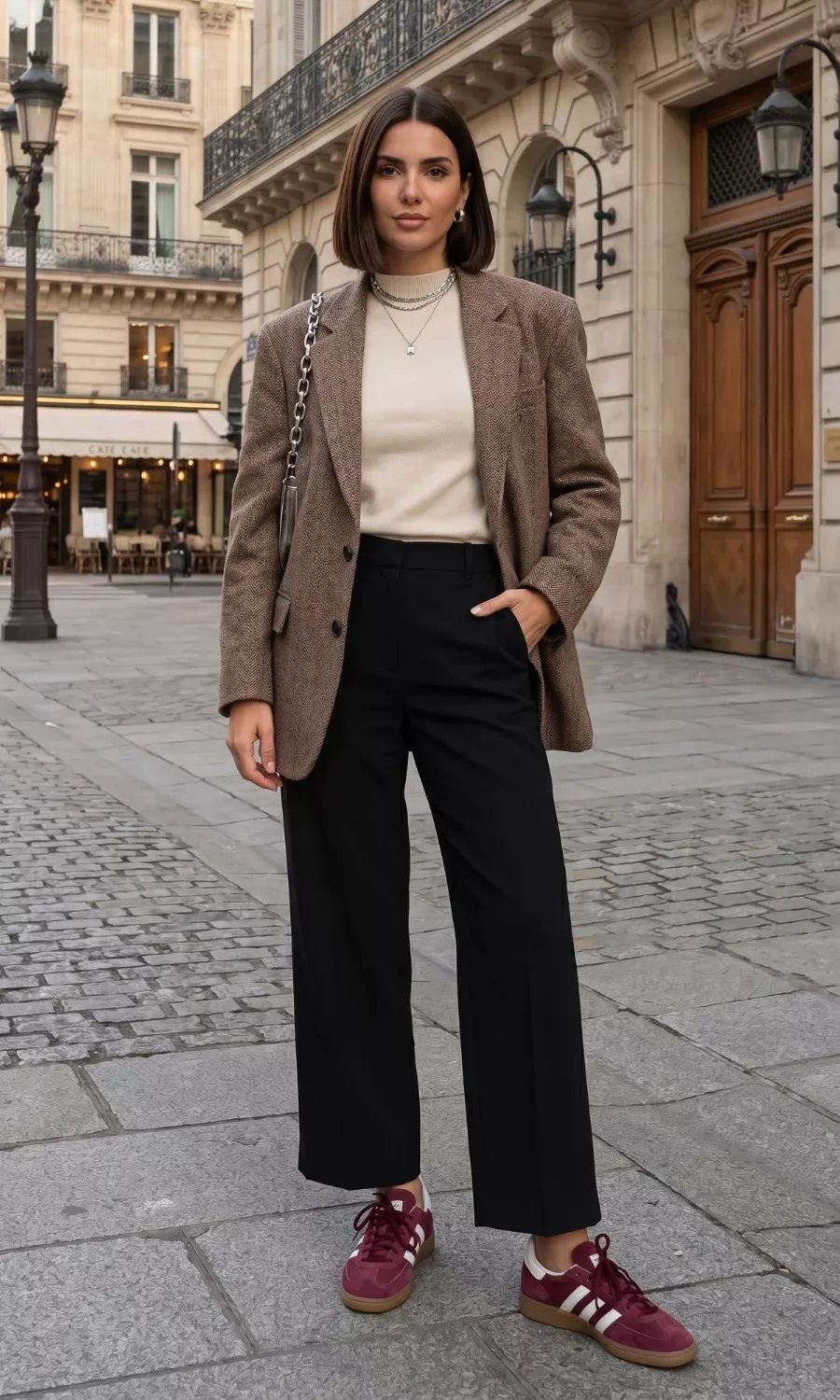
Burgundy sneakers with a brown blazer and black trousers use color to claim the look as chosen, not fallen into. The cream sweater underneath softens the contrast so the palette stays warm.
I would not have picked burgundy myself; I tend toward white or grey for safety.
But the photo makes the case that a darker, richer sneaker holds its own against tailoring in a way that bright colors do not. Leather or suede, no perforations, no athletic detailing: that surface reads as office-appropriate.
For a smart casual office, this is the furthest I would push.
The tailored dress with sleek trainers that the notes mention is a variation I have not tried; I would want to see the dress length and the trainer profile together before I wore it to a meeting.
Best Sneakers for the Office
The most reliable office sneaker is white leather with no visible branding.
Canvas scuffs and stains too easily; leather wipes clean and keeps its shape through years of wear. A minimal design means no contrast heel tabs, no neon accents, no perforations that read athletic.
I would set a ceiling of one inch on sole thickness. Below that, the shoe stays in conversation with loafers and ballet flats; above it, the proportion shifts toward weekend.
For color, grey and cream are safer second choices than black, which can look like a failed attempt at a dress shoe.
Suede reads well in dry climates but needs more maintenance; I would not wear it where slush or salt are common.
Slip-on styles work if the elastic is hidden and the vamp stays smooth. Lace-ups tolerate more foot shapes and look more intentional with tailoring.
Casual Office Wear Tips
The blazer-and-sneaker pairing fails when the blazer is too short or too soft. A hip-length cut with some structure in the shoulder carries the formality; a cardigan-weight knit blazer collapses into loungewear.
Trousers matter more than the top.
Wide-leg needs a slimmer sneaker silhouette; slim trousers can handle a slightly heavier sole. The break at the ankle should be minimal; a full puddle of fabric over the shoe looks accidental.
I would keep the t-shirt fitted and the neckline high.
A loose or low-cut tee drags the outfit toward weekend. The tan blazer, white tee, and black wide-leg combination works because each piece holds its own shape.
Totes in leather or suede finish the look better than nylon or canvas. The bag is where you signal that you understood the assignment.
Balancing Comfort and Professionalism
The satin midi skirt with blazer and sneakers succeeds because the materials do the dressing up.
Satin catches light; leather sneakers reflect it back. Both read as chosen rather than defaulted.
An oversized blazer with a midi skirt needs the sneaker to stay low.
Any lift in the sole and the proportions read as costume. The black stripe on white leather gives just enough graphic interest without competing.
For offices that run formal, I would test the combination on a day without external meetings.
Grey leather trainers with a slight sheen and a structured insole give more support than minimal sneakers while still reading as intentional in an office.
The color downplays the athletic origin. Polish weekly and replace laces when they fray; that upkeep keeps leather trainers presentable far longer than neglected ones.