The pairs here run from jelly sliders you can rinse off at a hose to leather espadrilles that need a full season’s care, and the right choice depends on whether your day holds sand and sun or a hike to the shore access path.
A rubber flip-flop handles surf and pool decks; mesh sneakers with a removable insole cover the walk to dunes or tide pools.
1. Flip Flops
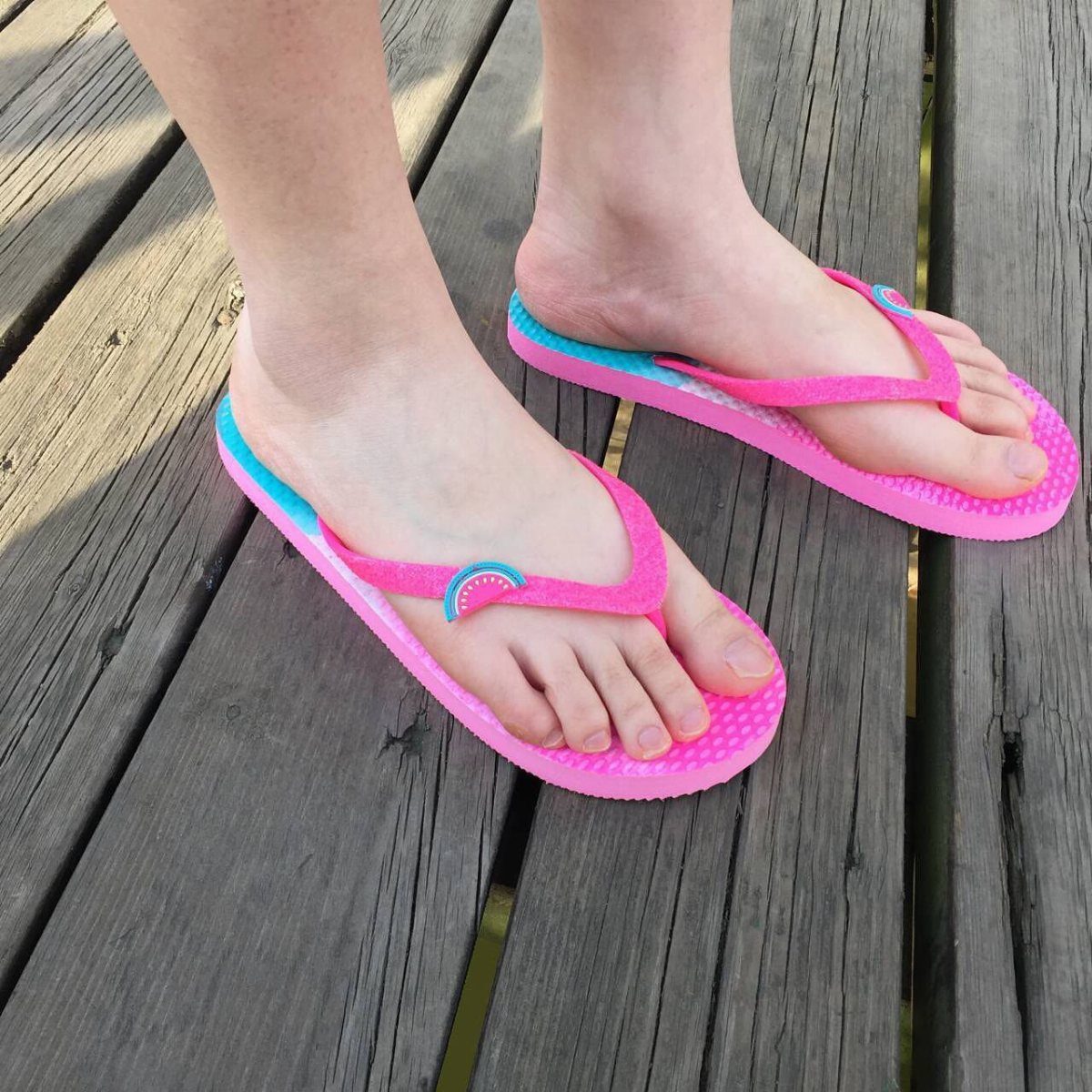
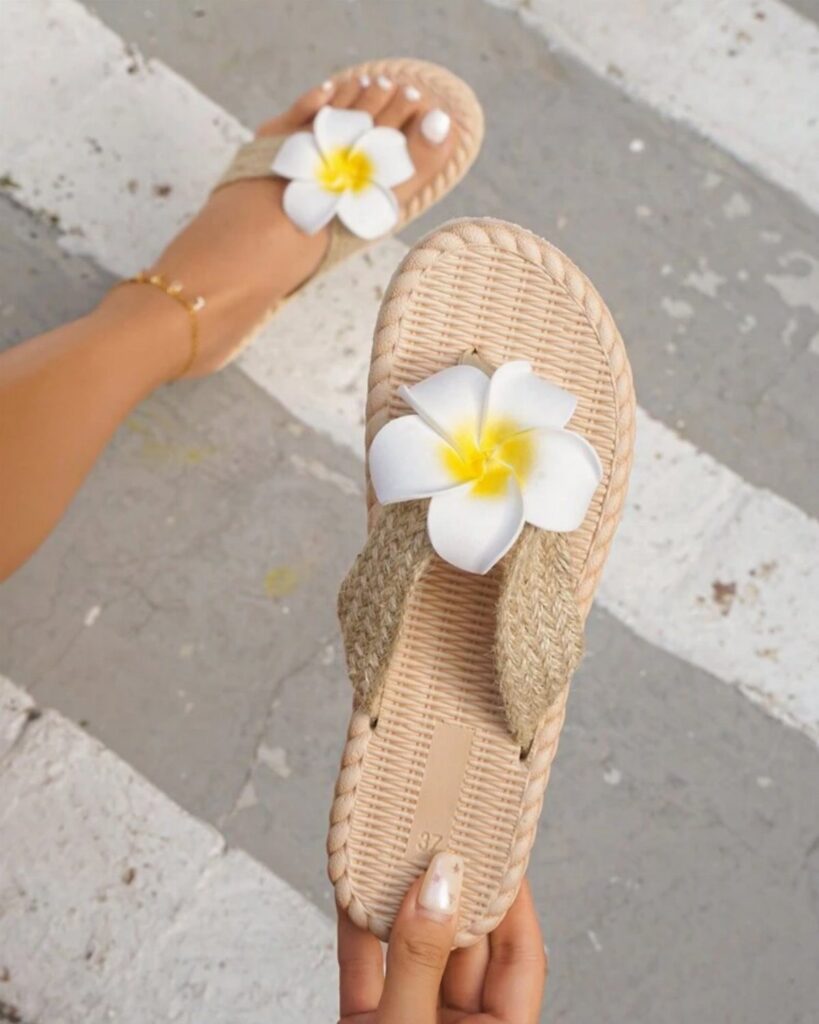
Rubber, foam, or leather, flip-flops are what I still reach for when the day holds nothing more complicated than sand and sun.
The waterproof ones handle surf and pool decks without complaint. Foam cushions longer walks to the snack bar or the pier, and leather, if you put it through salt water, needs a rinse and dry to keep from stiffening.
I buy mine one size up from my usual so the strap sits forward on my foot rather than digging in.
Charms and prints are easy to find now, though plain colors match everything you packed in one carry-on. One pair is enough if they are the rubber kind; two, if you want leather for dinner walks along the boardwalk.
2. Water Shoes
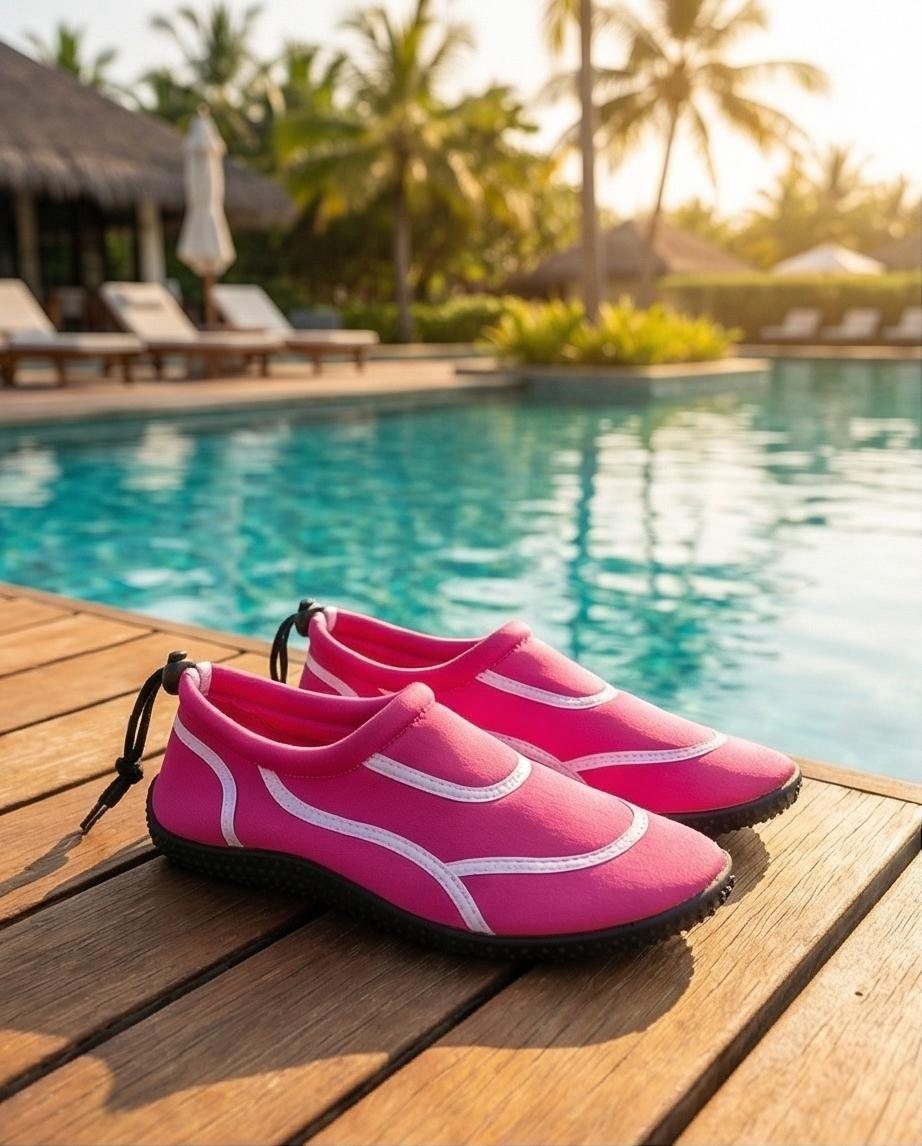
Water shoes solve what flip-flops cannot: hot sand, broken shells, and the zebra mussels colonizing lake beds. The hole-pattern uppers drain as fast as waves come in, and the soles grip wet rock better than bare feet ever managed.
I would check the fit with wet feet, not dry ones, since mesh loosens in water and neoprene contracts to a snugger fit.
A slip-on water shoe means no laces to fuss with when your hands are full of snorkel gear.
Quick-dry lining matters more than brand if you are moving between beach and car all day; damp shoes left in a hot trunk grow mildew by evening.
3. Sneakers
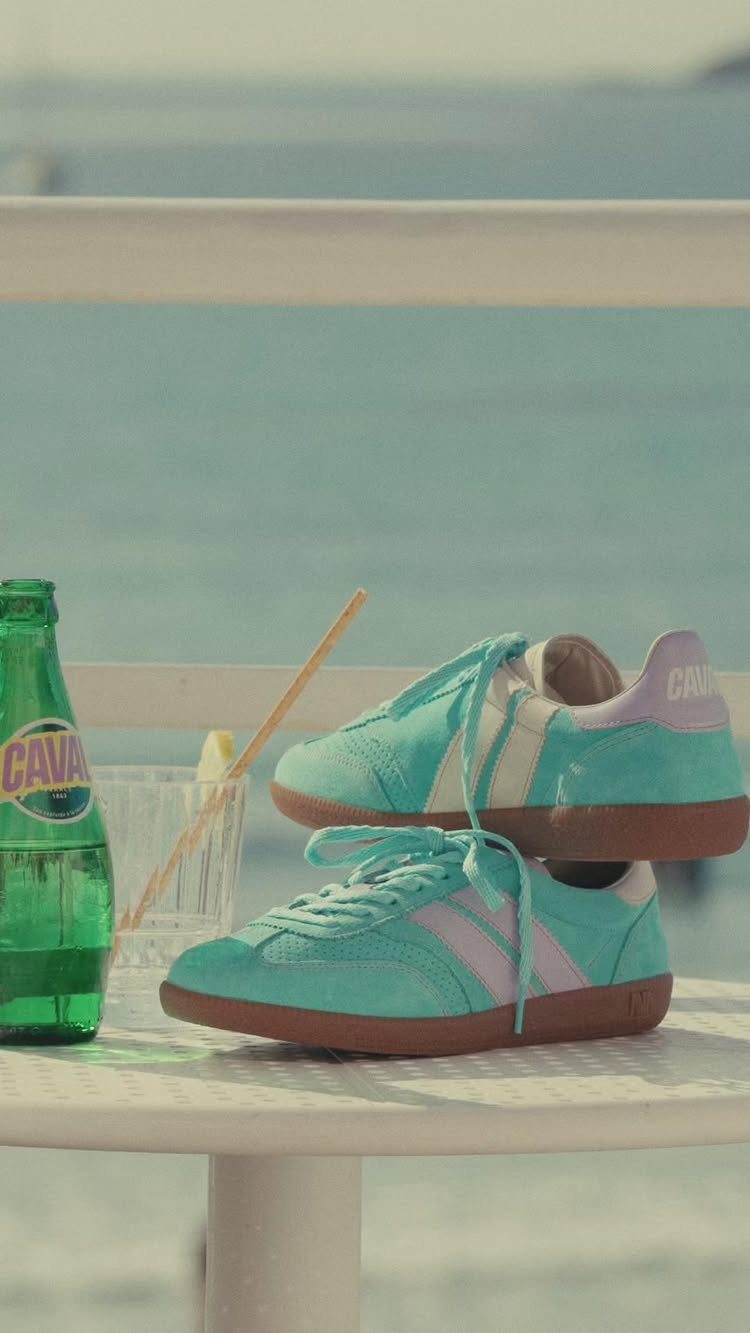
Mesh sneakers got me through a week in the Outer Banks when the rental house sat 3 blocks from the shore access path. Lighter mesh weaves dry by lunchtime if you wade in them by accident.
Slip-ons save time at security and at the house door; lace-ups hold steadier for actual hiking to dunes or lighthouses. Choose based on which you will do more of.
I favor a removable insole so I can pull it out to dry separately, and I pack a second cheap pair rather than trusting one to survive salt, sand, and daily wear.
4. Espadrilles
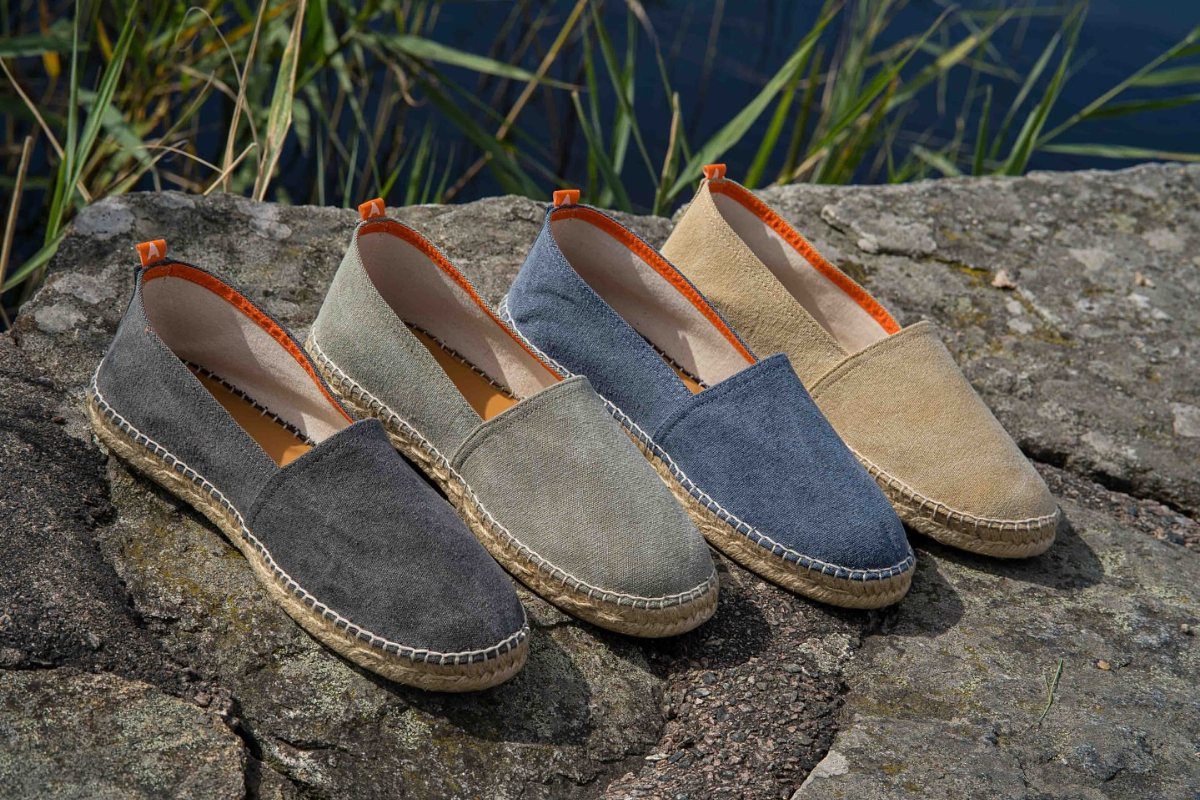
Jute soles and canvas uppers date back to the Pyrenees, which is partly why espadrilles still read as vacation rather than commute.
Charcoal, sage, denim, and beige are all easier to pair with a white sundress than the tropical prints the stores also push.
The wedge versions add height but lose stability on uneven sand; I reserve those for boardwalk dinners.
Flat espadrilles last one season of hard wear, two if you avoid water. The jute darkens and stiffens with salt, so I brush them out dry and never soak them clean.
5. Summer Sliders
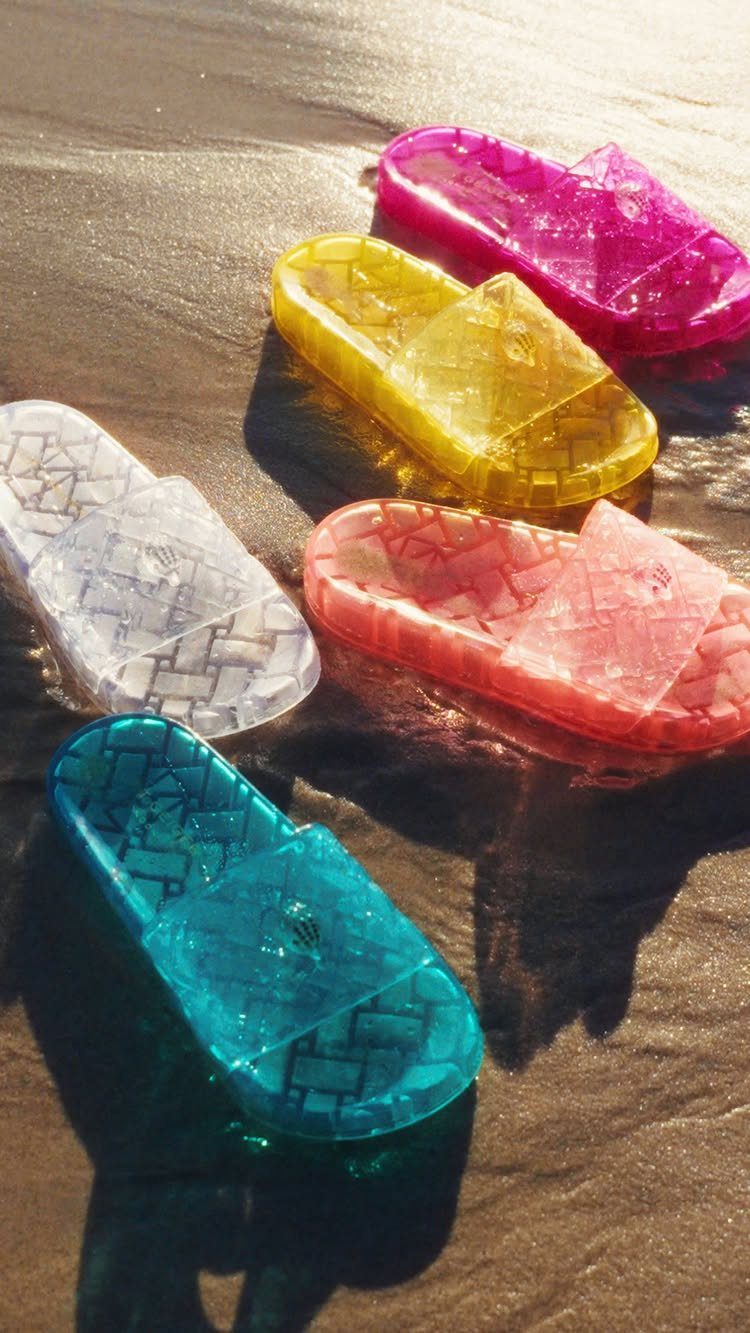
Sliders are what water shoes become when you strip away every feature except the strap and the sole.
That simplicity is the point: no fabric to hold sand, no laces, no heel cup to catch grit. Translucent jelly sliders sit in wet sand and hose clean in seconds.
I find them too loose for real walking, but for a short trip from towel to waterline and back, they are faster than flip-flops and harder to lose in a wave.
Size down if you are between sizes; the forward slide matters less than the heel slipping off mid-step.
6. Clear Glitter Jelly Sandals
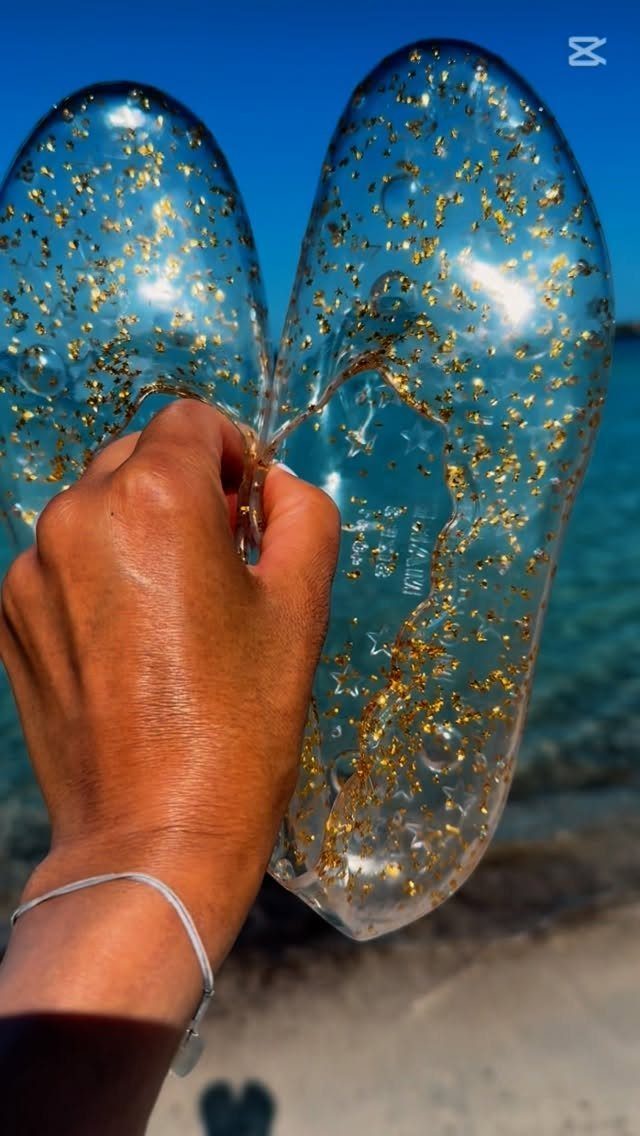
Glitter-flecked clear plastic turns what could look like a childhood cast-off into something that catches light against actual water.
The gold in this pair sits in the material rather than on it, so it will not flake off the way painted glitter does.
These are jelly sandals in construction, which means they flex, they float, and they mark every toe seam after an hour in heat.
I would wear them for the photo and the short walk to a beach chair, not for a day of active sand trudging. The PVC warps in dashboard heat; store them in the shade, not the car.
7. Crochet Slip-On Shoes
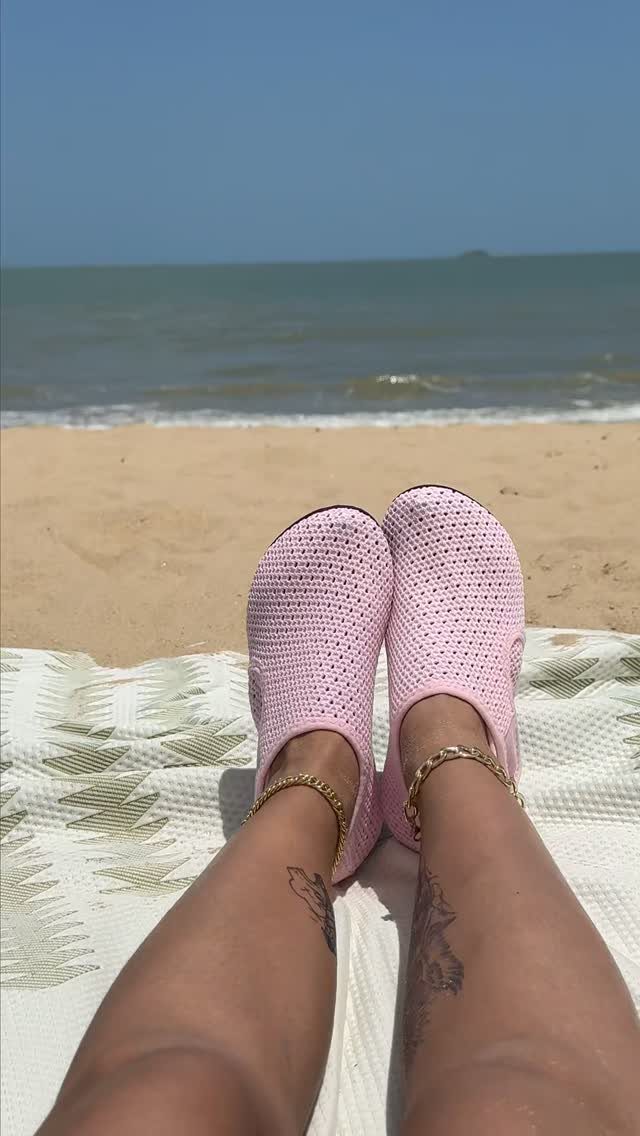
Crochet knit over a rubber or foam sole gives these the look of a house slipper with just enough structure for boardwalk ice cream runs.
The open weave breathes in direct sun, though sand will work through the holes the same way air does.
I would check whether the sole wraps up to form a toe bumper; photos from above rarely show this, and it matters for stubbing against driftwood.
A light color like pink stains easily with beach tar or sunscreen. Darker dyes hide wear but heat up faster on hot decking.
The gold anklet is a separate piece, not part of the shoe; jewelry and footwear need different care in salt air.
These suit lazy vacation days more than active ones. One pair, hand-washed and dried flat, fills the gap between flip-flops and something dressier without adding a third shoe to your luggage.
8. Braided Flat Sandals
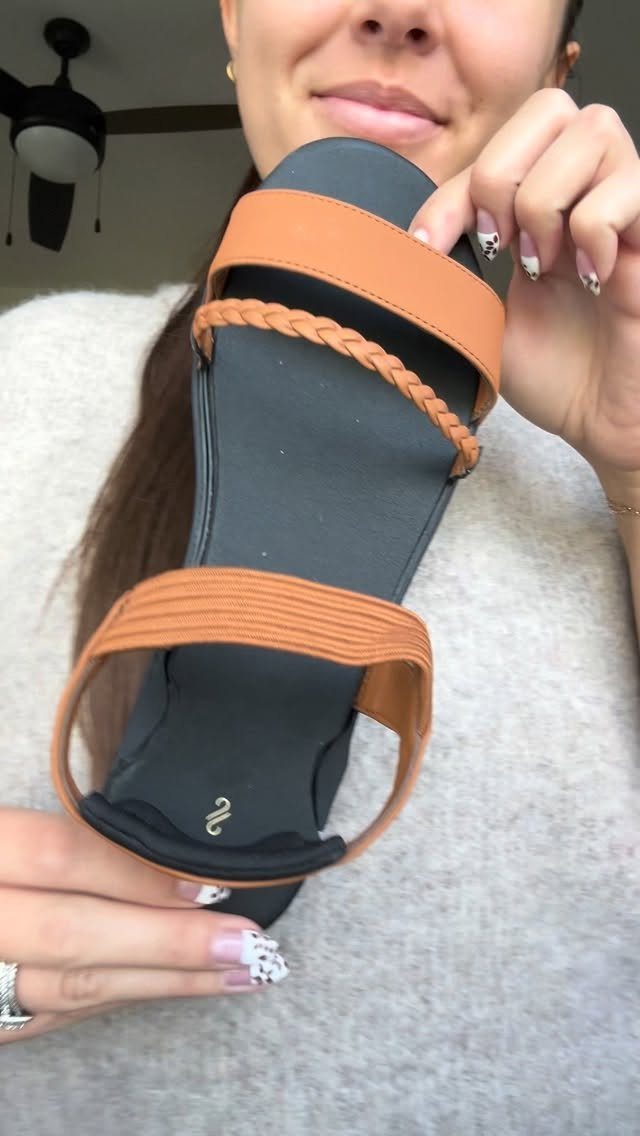
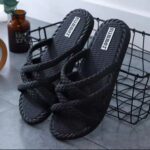
Braided straps in 2 tones, here tan and black, add texture where a single color would read as basic flip-flop territory. The flat sole keeps them packable; rolled together they take less space than sneakers.
I look at how the braid attaches to the outer sole. A woven strap that loops through the footbed lasts longer than one glued along its edge, which peels from sand and step flex by day four of a trip.
The sandal itself is plain enough to work with whatever nail polish, or none.
Check whether the braid runs under the arch or stops at the sides.
Under-arch placement can rub after a few hours of walking, especially once salt swells the fibers slightly. A quick rinse after beach wear helps, though full soaking darkens natural-dyed leather over a season.
These bridge casual dinner and daytime sand better than a slim dress sandal, worse than a molded sport sole. One pair, chosen in a neutral that matches your warm-weather clothes, removes the need to pack separate evening shoes.
Choosing the Right Shoes
Match the shoe to what you will actually do, not what you imagine doing.
Lounging near your towel calls for nothing more than a strap and sole; exploring tide pools or rocky outcrops needs grip and toe coverage that flip-flops do not provide.
Water sports demand drainage and a fit that stays predictable when wet.
For walking longer than a mile on firm sand, a sole with some structure prevents the arch fatigue that flat options cause.
If your day mixes beach time with town errands, a shoe that looks acceptable for lunch saves a change.
Slip-on sneakers work for this if your route stays mostly dry; mesh handles heat but saturates quickly at the waterline. Plan one activity-dominant pair per day rather than a single shoe for everything.
Materials and Styles
Rubber, leather, canvas, and mesh each behave differently at the shore.
Rubber takes salt and submersion without damage; it is the default for anything touching waves regularly. Leather looks better for evening but stiffens without rinsing and never fully recovers from repeated soaking.
Canvas breathes and dries faster than leather, though it stains and frays with abrasion from sand. Mesh ventilates best of all and drains quickly, but its weave traps fine grit that wears at skin.
Boat shoes occupy a middle space: leather or canvas uppers with a siped rubber sole meant for wet decks. The non-slip tread translates well to slick rock or a pitching dock, and the low profile packs flatter than athletic styles.
Suede versions read more casual; leather ones pass at a waterfront lunch without looking like you wandered in from the sand.
Comfort and Support
Sand yields underfoot, which means every step works harder than on pavement.
Shoes with some arch structure reduce the strain; completely flat soles leave the foot to collapse inward with each push-off. Cushioning matters less on soft sand than on boardwalk, where a thin sole transmits every plank seam.
For standing long periods, a molded footbed beats a flat one.
Clogs provide this in a slip-on format, with enough heel coverage to keep out hot sand. Their rigidity makes them poor for uneven terrain but fine for a fixed spot or a predictable path.
If you already use orthotics, a removable insole lets you transfer support between shoes rather than abandoning it for vacation.
Pack them with your sandals; beach heat warps foam left in a closed car. Check whether your water shoes or mesh sneakers have the depth to accept one, since many thin-soled beach styles do not.
Frequently Asked Questions
What are the best waterproof sandals?
Rubber, foam, or jelly sandals handle water without damage. The waterproof ones I look for shrug off surf and pool chemicals, and they clean fast with a hose.
A thick foam footbed helps if the beach walk turns into a mile to the rental cottages, while jelly sandals bend with your step and survive a surprise wave without sinking.
Can I wear shoes on a beach?
Yes, and choosing the right pair matters more than going barefoot.
I have worn thin rubber slides straight from pool to tiki bar, pulled on neoprene water shoes over broken shells at rocky lakes, and laced up old running shoes for a 3-mile dune hike to a lighthouse; each had its day.
Match the shoe to what you plan to do that day, not the other way around.
Are there shoes that make it easier to walk on sand?
A thin, bendy sole lets your foot roll with the ground instead of fighting it, which is the whole reason I still pack basic flip-flops when the itinerary reads: towel, book, repeat.
Thicker sport soles in water shoes or trail sneakers steady your ankle over broken driftwood or midday asphalt, though I notice the weight every time I have to shake sand out of them.
What shoes to bring on vacation?
My own packing list has rarely needed more than a waterproof slide for mornings and one pair of leather-lined flats or espadrilles for dinner on the deck.
Bringing two near-identical pairs earns nothing but extra laundry unless one is pool-proof rubber and the other can sit under a restaurant table without embarrassment.
For active days add water shoes or sneakers based on whether shells and lake beds or long walks to dunes are the bigger risk.