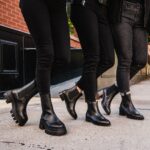
Birkenstock styling stretches from leggings and sweatshirts to wide-leg trousers and leather jackets, depending on whether you need the sandal to read intentional or relaxed.
Birkenstock Arizonas with jeans read differently than clogs under a leather jacket; the outfit shifts from grocery runs to dinner out based on what you pair them with.
The same cork footbed that molds to your heel over weeks sits under both, which is why one pair can carry you from sweatpants mornings to wide-leg trouser afternoons without looking wrong in either place.
1. Leggings and Sweatshirt with Birkenstock Sandals

The sweatshirt keeps it comfortable, but that flash of color at the ankle makes the outfit feel considered rather than thrown on.
I would keep the leggings fitted and the sweatshirt oversized; proportions matter here because the sandals add bulk. A fleece sweatshirt reads casual-luxe in a way a thin hoodie would not.
This works for grocery runs, travel days, or any Saturday when you need to look like you made an effort without actually making one.
2. At-Home Comfort
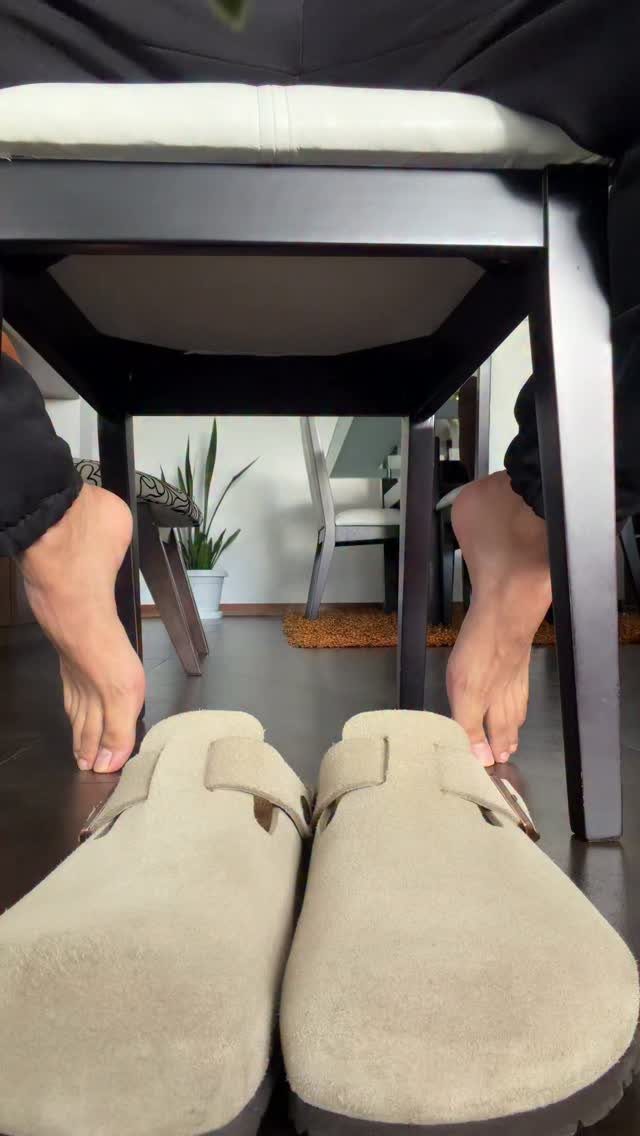
The cork footbed molds over time, which is why these replace slippers rather than supplement them.
I would choose the soft footbed version for hardwood or tile floors; the standard footbed feels firm until it breaks in, and that takes wearing.
Check that your pair fits with room for your heel to sit in the cup. Too short and the arch support lands wrong, which defeats the purpose of wearing them indoors at all.
3. Vest and Wide-Leg Trousers with Birkenstocks
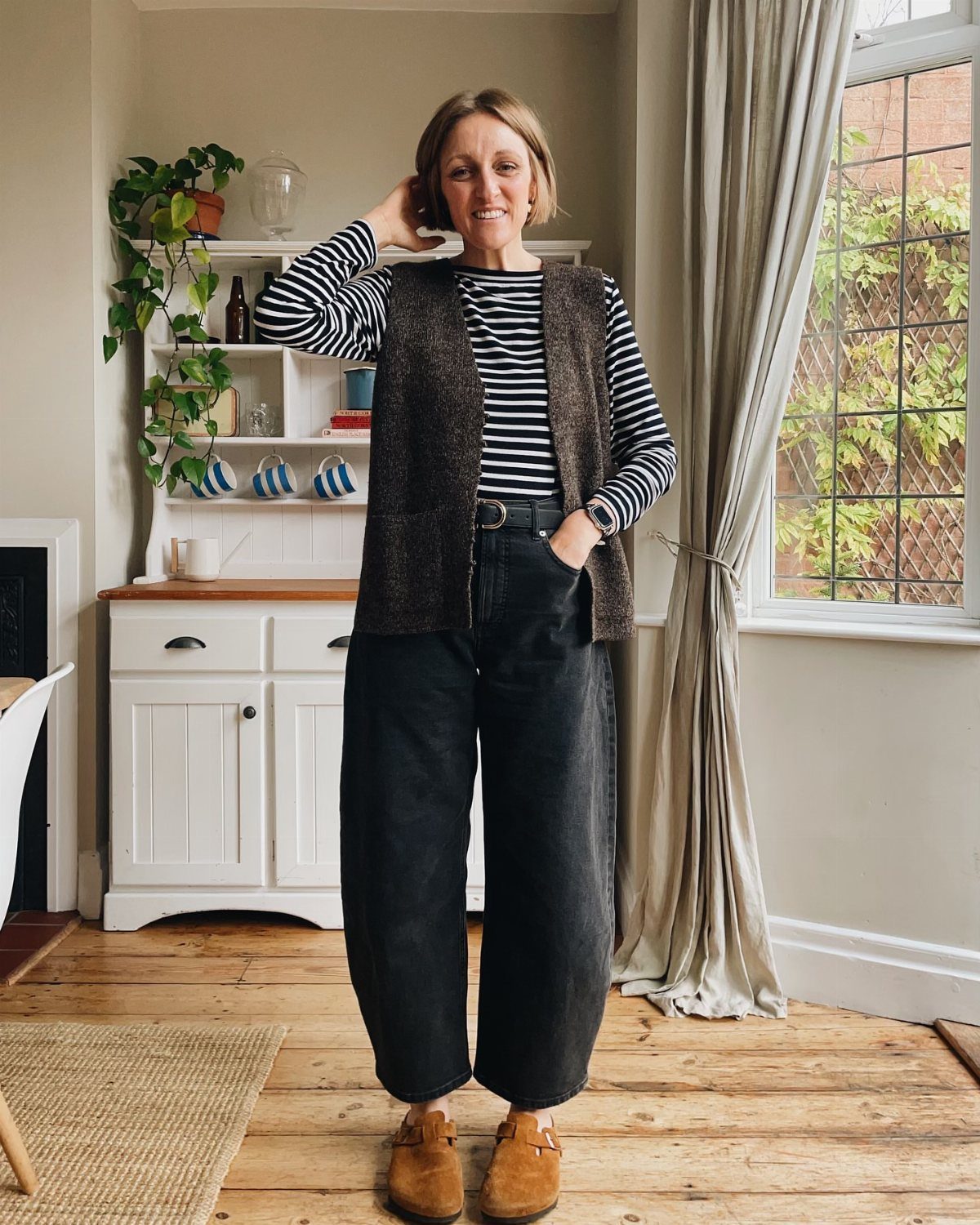
Wide-leg trousers need a shoe that anchors them without competing. The Boston clog does this by being visually heavy at the sole while the upper stays minimal.
A vest over a striped shirt adds structure that the trousers’ volume would otherwise swallow. I would keep the vest neutral; brown on black lets the stripes do the pattern work.
The relaxed polish here suits casual offices, weekend brunches, or anywhere you want to look dressed without feeling dressed up. Trousers that skim the floor work best; anything cropped breaks the line.
4. Jeans with Birkenstock Arizonas
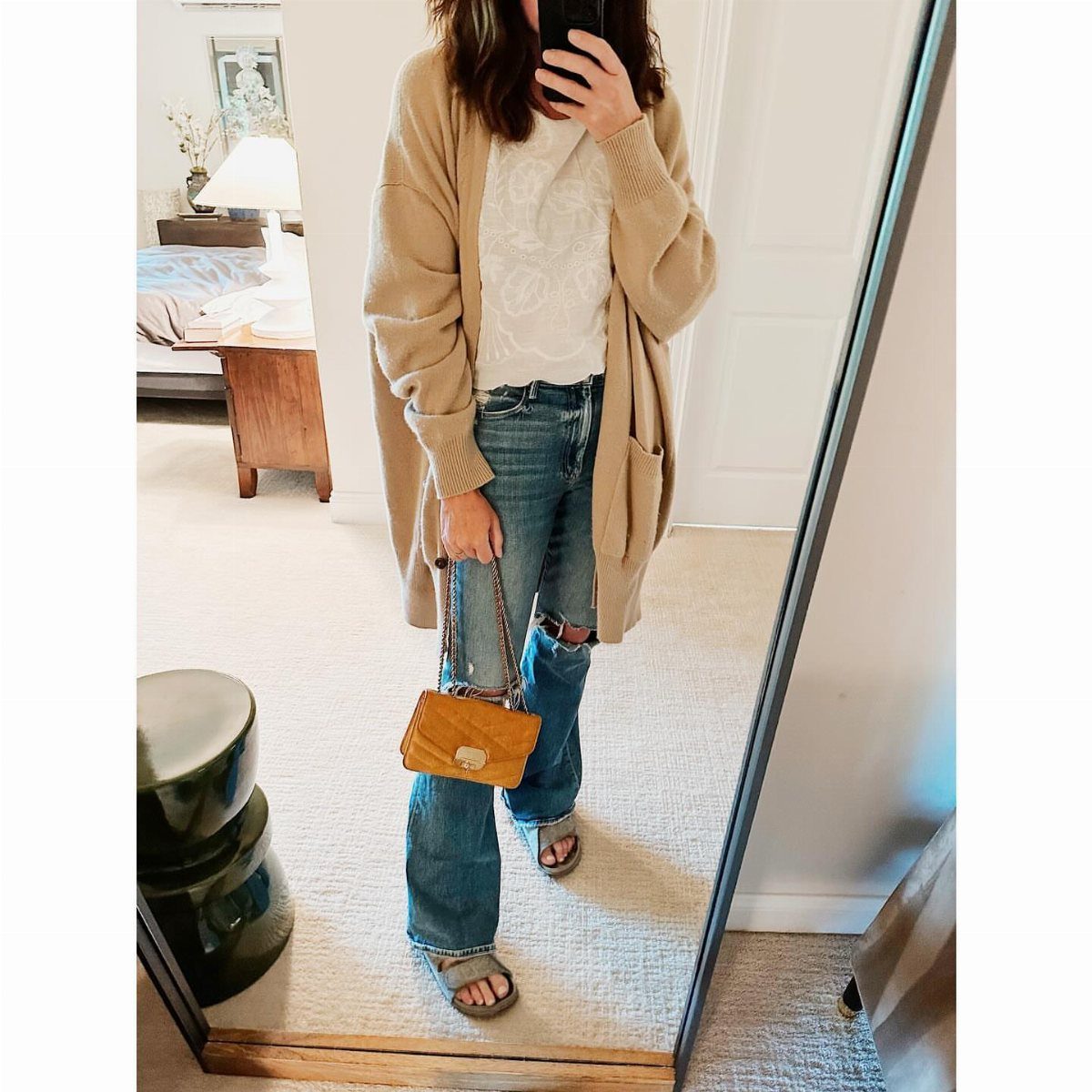
Flared jeans and Arizonas share enough vintage lineage to feel like natural partners. The two-strap slide keeps the foot visible, which matters with a flare; a covered shoe would hide where the hem falls.
A tie-front blouse adds waist definition that an oversized cardigan then softens. Either approach works, but I prefer the blouse for dates or dinner, the cardigan for errands.
The distressing on these jeans is light enough to stay casual without reading as costume. Check that your flare clears the sandal straps; snagging happens more than you would think.
5. Maxi Dress + Birkenstock Sandals
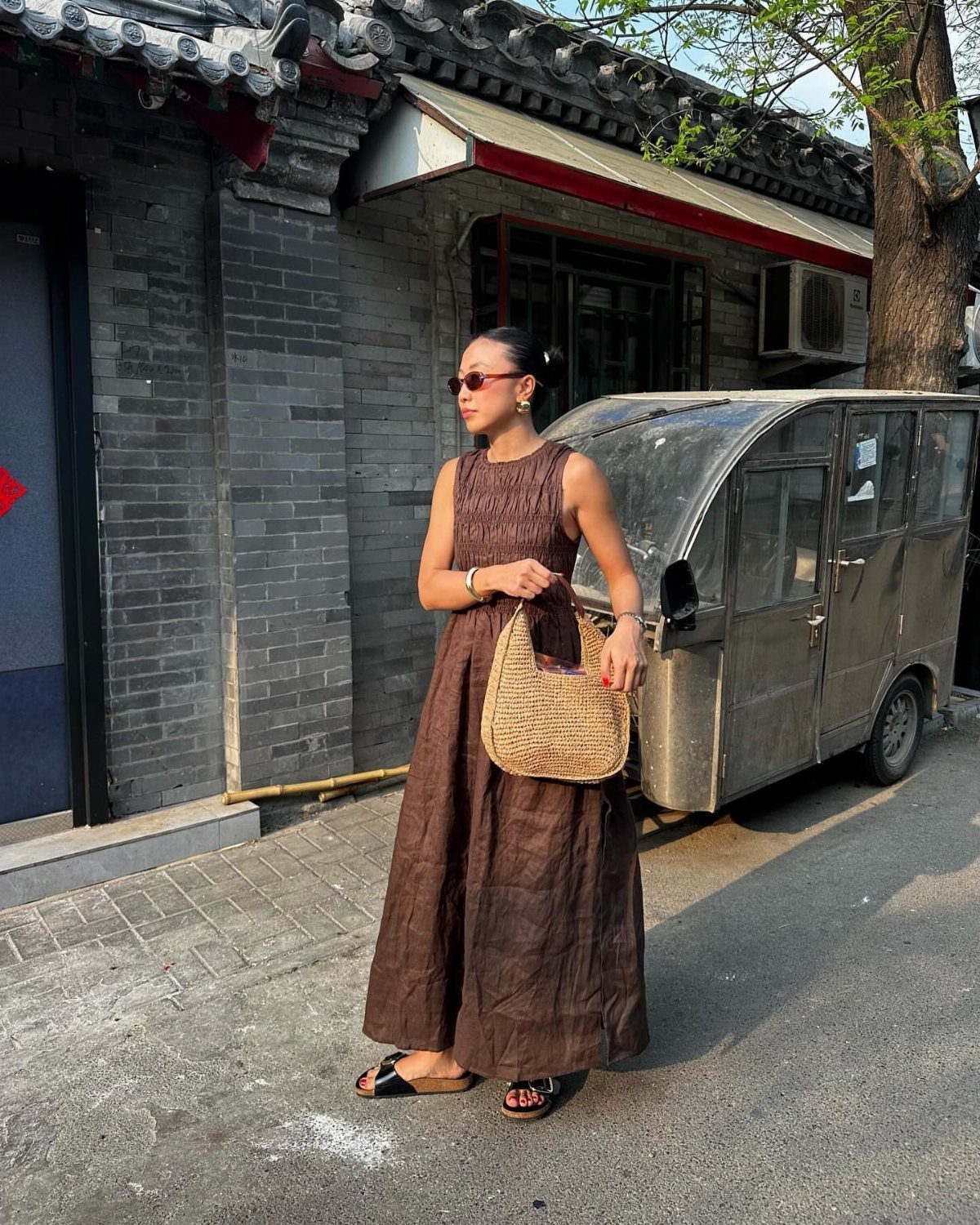
A brown maxi dress with black leather Arizonas: the contrast in weight is what makes this work. The dress flows, the sandals ground.
Woven bag in hand, city street underfoot: this is the beach-to-dinner transition that sounds impossible until you see it. I would choose leather over suede here; the finish reads more intentional against a dress that already makes a statement.
Minimal effort does not mean no thought. The dress needs to be long enough to skim the sandal without dragging; an inch too short looks accidental, an inch too long looks sloppy.
6. Birkenstock Clogs with Leather Jacket

Leather jacket, white tee, baggy jeans, white socks, beige clogs: each piece contradicts another just enough to keep the eye moving.
The jacket’s structure against the jeans’ slouch, the clogs’ domesticity against the jacket’s edge: this is how you wear Bostons without looking like you forgot real shoes.
I would check that the jeans are truly baggy, not merely loose; the proportion needs commitment to balance the jacket’s weight.
White socks are non-negotiable here. Bare feet or black socks would shift the whole look toward different references entirely.
7. Jumpsuit with Two-Strap Sandals

A sleeveless jumpsuit in a quiet color lets the sandals do the grounding work without shouting for attention.
The grey here reads intentional rather than default; it is the kind of piece you already own for days when matching feels like too much.
I would check the inseam before buying: too long and the hem pools over the straps, too short and the proportion turns juvenile.
A cropped leg works, but only if it is meant to be cropped, not merely short on you.
For a warmer version, a printed puff-sleeve jumpsuit with a straw bag shifts this toward vacation. The sandals stay.
8. Overalls with Birkenstocks

Black overalls with a white base layer is a formula that needs little beyond fit. The cap and sunglasses here are doing practical work, not costume; they keep the look from feeling like a uniform.
Beige Bostons against black denim warm the whole outfit without adding a second color to manage. I would make sure the overalls are true black, not washed; the contrast with the clog matters more than with the shirt.
The iced coffee is optional. The proportion of wide leg to closed shoe is not.
9. Shorts with Socks and Birkenstocks
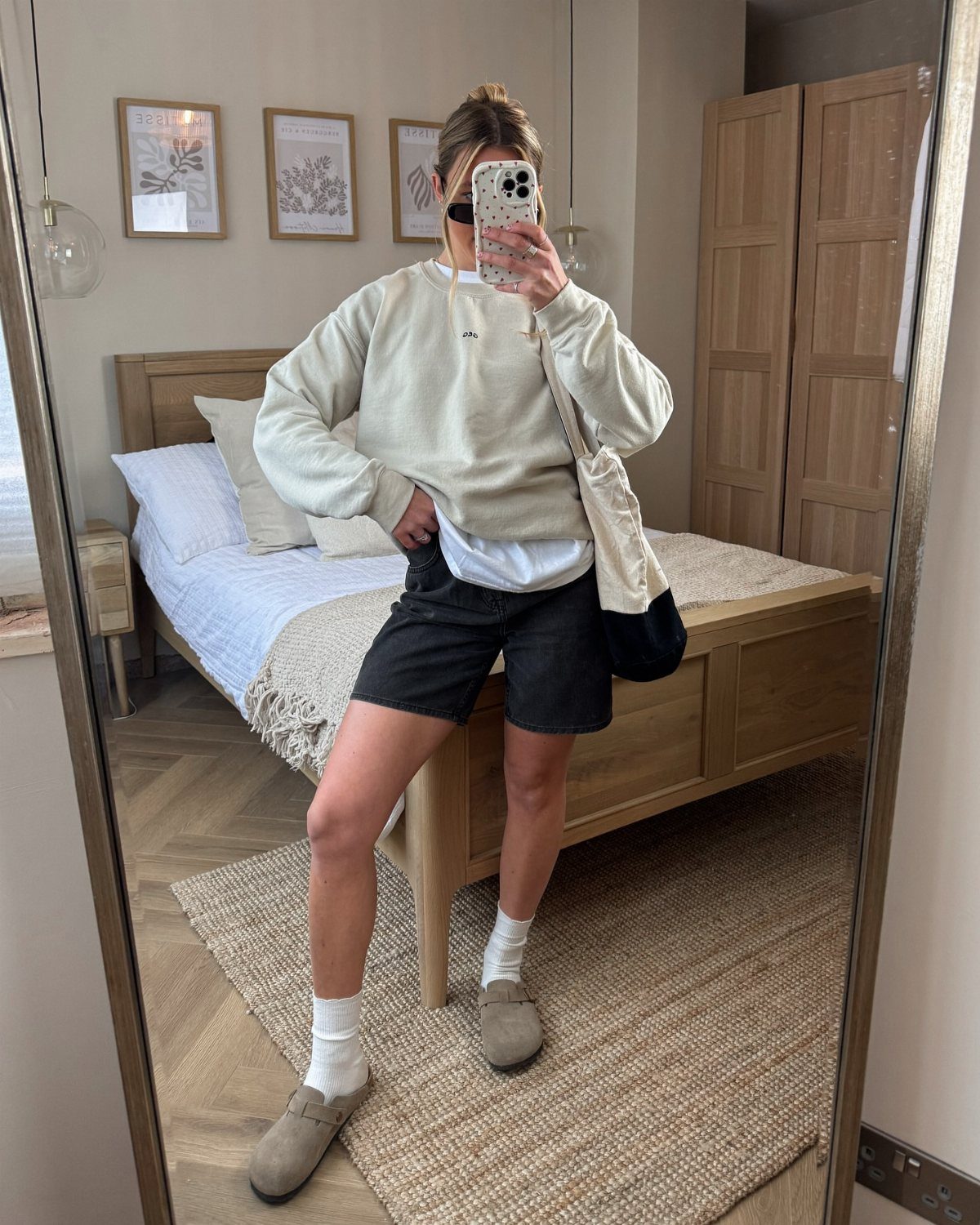
White crew socks with tan suede clogs: the combination only works because the shorts are short enough to show leg between sock and hem. Too long and the eye reads mistake; this length reads deliberate.
Suede here is softer than leather would be against the sweatshirt’s volume, though leather holds up better if you actually walk anywhere. I would choose based on whether this outfit leaves the house.
For linen shorts at the beach, the same sock-and-sandal pairing shifts lighter in color and material. The structure stays.
10. Sweatpants with Socks and Birkenstocks
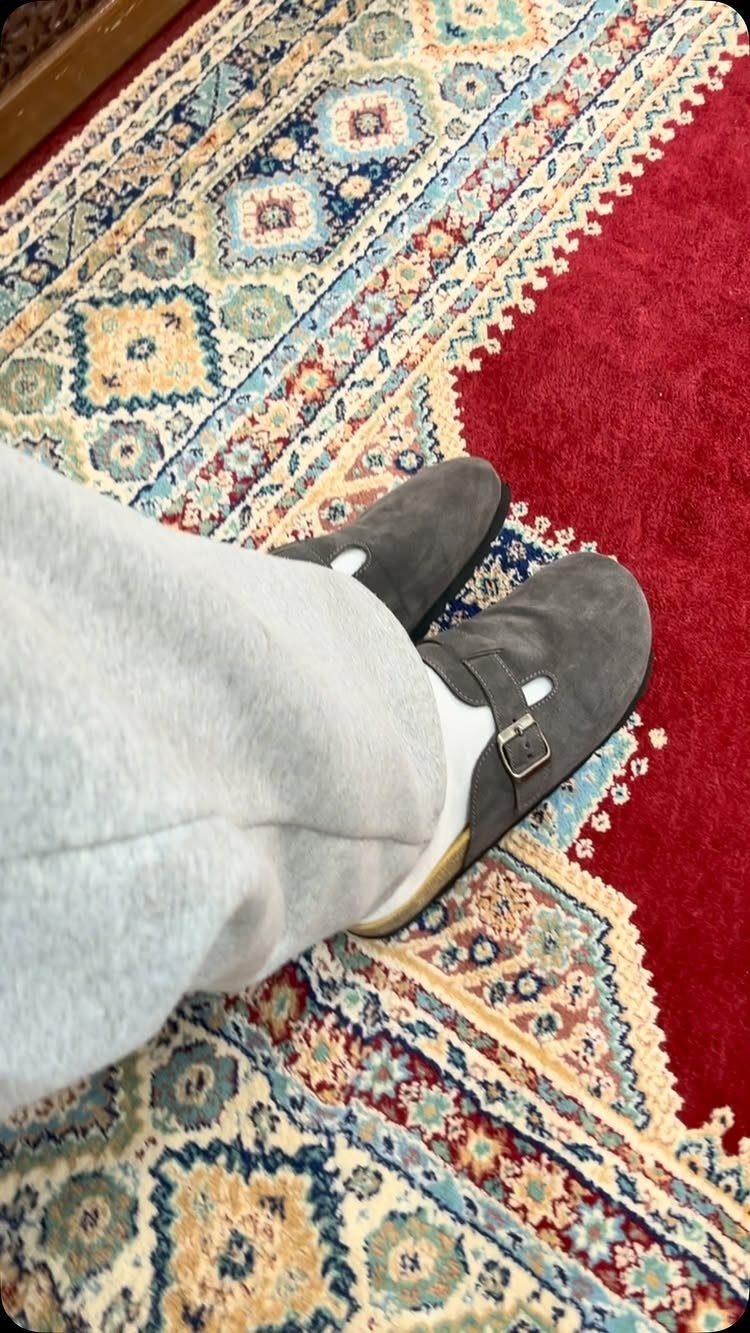
Grey on grey with white between: the socks act as a deliberate break, not a hygiene layer. Without them, the clogs and sweatpants would blur into one mass of toneless fabric.
Suede clogs indoors make sense; the nap catches light that leather would reflect too sharply against a patterned rug like this. I would keep the sweatpants cuffed or cropped, not bunched at the ankle, so the clog’s shape stays visible.
This is the outfit for mornings when you need to present yourself to a delivery driver without changing what you slept in.
Comfort and Versatility
The cork footbed is the reason these stay on my feet from morning until evening without the ache that flat sandals leave behind.
I would not wear them to a wedding, but I have worn them through full travel days and standing-desk afternoons where anything less structured would have me limping by 4:00 PM.
What surprised me was how often they shift from one setting to another without looking wrong. The same pair that works with sweatpants and socks for a grocery run also holds up under wide-leg trousers at a casual office.
The difference is usually the material; leather reads intentional where suede reads relaxed, and choosing between them is often enough to tip the outfit one direction or the other.
Timeless Style
Birkenstocks have not changed their silhouette much in decades, which is either laziness or confidence depending on how you view it.
I lean toward confidence; the Arizona two-strap and the Boston clog are still the shapes you see most often because they solved the problem of what a comfortable sandal should look like decades ago.
The neutral palette helps. Brown, black, taupe, and white do not fight with what you already own, and the absence of hardware or logos means they do not date themselves to a particular season.
I would treat the metallic finishes as a separate category; they work, but they make a statement the classic colors do not.
Foot Health Benefits
The contoured footbed is built on a raised arch and a deep heel cup, which sounds like marketing until you have worn them through a day when you would normally be hunting for a place to sit down.
The cork compound softens over the first few weeks, then settles into the shape of your particular foot; this is why borrowed Birkenstocks feel wrong and why a broken-in pair feels like something custom.
Proper alignment matters more as you wear them for longer stretches. I would not run in them, but for walking and standing, the posture support is noticeable compared to flat flip-flops or fashion sandals with a thin sole.
Celebrity Influence
The Arizona was not always a fixture outside beach towns and college campuses.
What changed was seeing them on people who had other options; once the sandals showed up in city street style and off-duty airport looks, the stigma of wearing "comfort shoes" in public started to lift.
I noticed the shift when the Boston clog in particular started appearing in outfits that were clearly styled rather than thrown on.
The combination with white socks and baggy jeans became a recognizable formula, repeated enough that it now reads as deliberate rather than lazy.
Whether that influence makes you more or less likely to wear them depends on whether you trust a trend that has been filtered through that many magazine captions.
I still choose based on whether my feet hurt, which they usually do.
Frequently Asked Questions
Which Birkenstock style is best?
Arizona and Boston are the silhouettes that have lasted, not because fashion keeps pushing them, but because the cork-and-buckle formula still answers the question better than most copies.
The Arizona keeps the foot visible, which matters with flared or wide-leg pants; the Boston anchors volume without competing for attention.
Suede reads weekend; leather reads like you meant it, which matters when the rest of the outfit is doing the same.
How do you wear Birkenstocks?
Birkenstocks work with leggings and an oversized sweatshirt for errands, wide-leg trousers and a vest for casual offices, or a maxi dress for a beach-to-dinner transition.
That cork footbed is thick, so the rest of the outfit needs to negotiate: slim pants or a fitted skirt will balance a boxy jacket, and full-length trousers that break right at the sole keep the vertical line from stalling out.
White socks with clogs is a recognizable formula now, but only if the jeans are truly baggy and the socks are actually white.
What are the different design names for Birkenstocks?
Arizona is the two-strap open slide; Boston is the closed-toe clog with the same footbed underneath.
Both come in leather and suede, and in finishes that include classic neutrals like brown, black, taupe, and white, plus metallic options that read as a separate category.
Soft footbed is the move for standing on hardwood or tile all day; standard footbed starts rigid and slowly gives until it matches your pressure points, which takes about 2 weeks of regular wear.