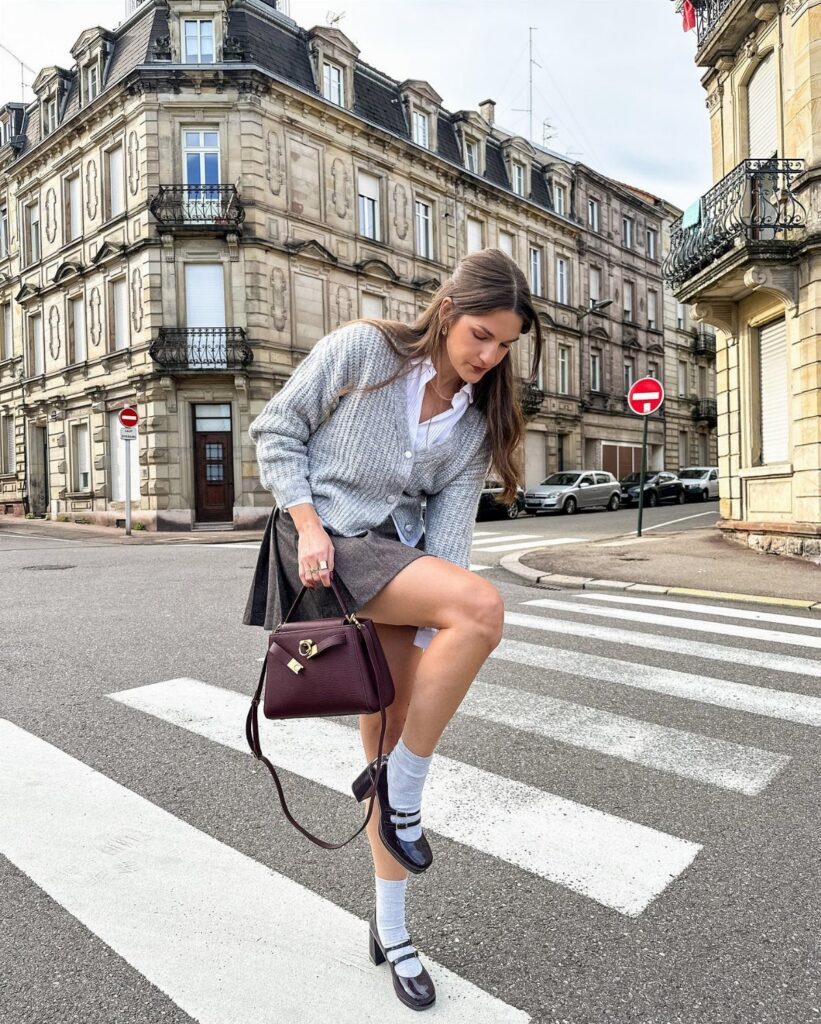
Mary Janes with socks range from barely-there ankle cotton to chunky beige ribbed crews and full knee-high wool, and the right pairing depends on whether you need the sock to disappear or to participate.
Sheer polka dot socks read almost invisible in summer, while chunky beige ribbed crews add enough warmth for cold brick in autumn.
1. Ankle Socks
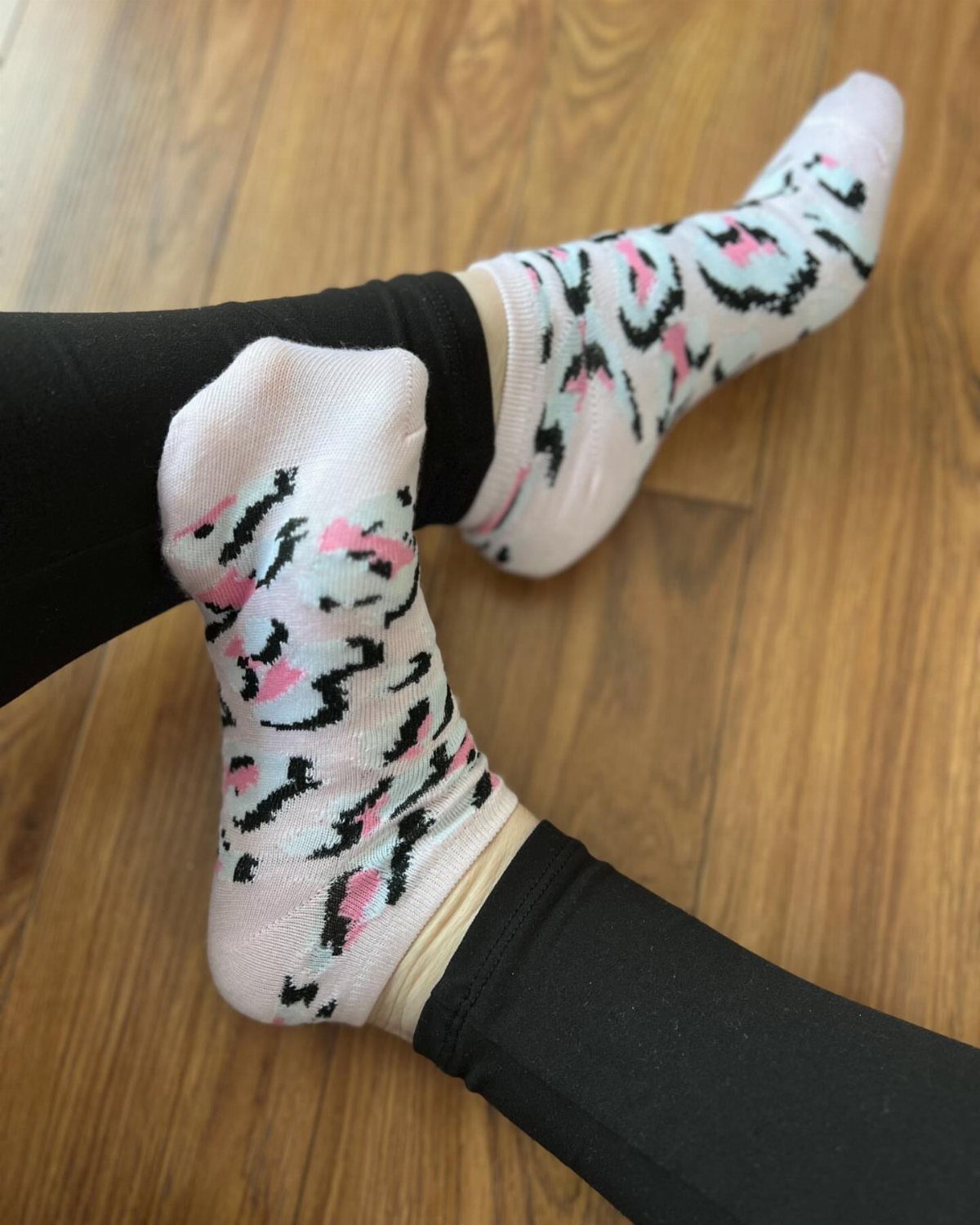
Ankle socks sit low enough that the strap of a Mary Jane stays fully visible, which keeps the shoe’s line intact while adding a thin layer against rubbing.
For warmer months, light cotton or bamboo blends in a tone close to your skin or your shoe color read almost invisible. Soft pink with a small pattern works here because the scale stays fine and the color stays quiet.
The collar of an ankle sock sits above the Mary Jane strap, covering the instep where the leather rubs; a sock that ended below it would leave that spot bare.
Prevent Foot Issues: Socks are the perfect barrier between your child’s feet and their shoes, protecting against discomfort. The Mary Jane strap that sits across the top of the foot can sometimes rub, causing irritation.
2. Red Patent Leather Mary Jane Shoes Paired with White Ribbed Crew Socks

Red patent leather Mary Janes with white ribbed crew socks carry a deliberate school-uniform energy that reads as styled rather than accidental when the rest of the outfit commits to the same register.
Cherry graphic, red shorts, red shoes, white socks, with a grey beanbag and book adding a lived-in context rather than a studio setup.
The ribbing on the sock matters here; a smooth athletic crew would slide toward costume, while the knit texture keeps the pairing in clothing territory.
For an adult wearing this, match the shoe red to one other piece, as the photo does with the shorts and the sweater graphic.
3. Ruffle Socks
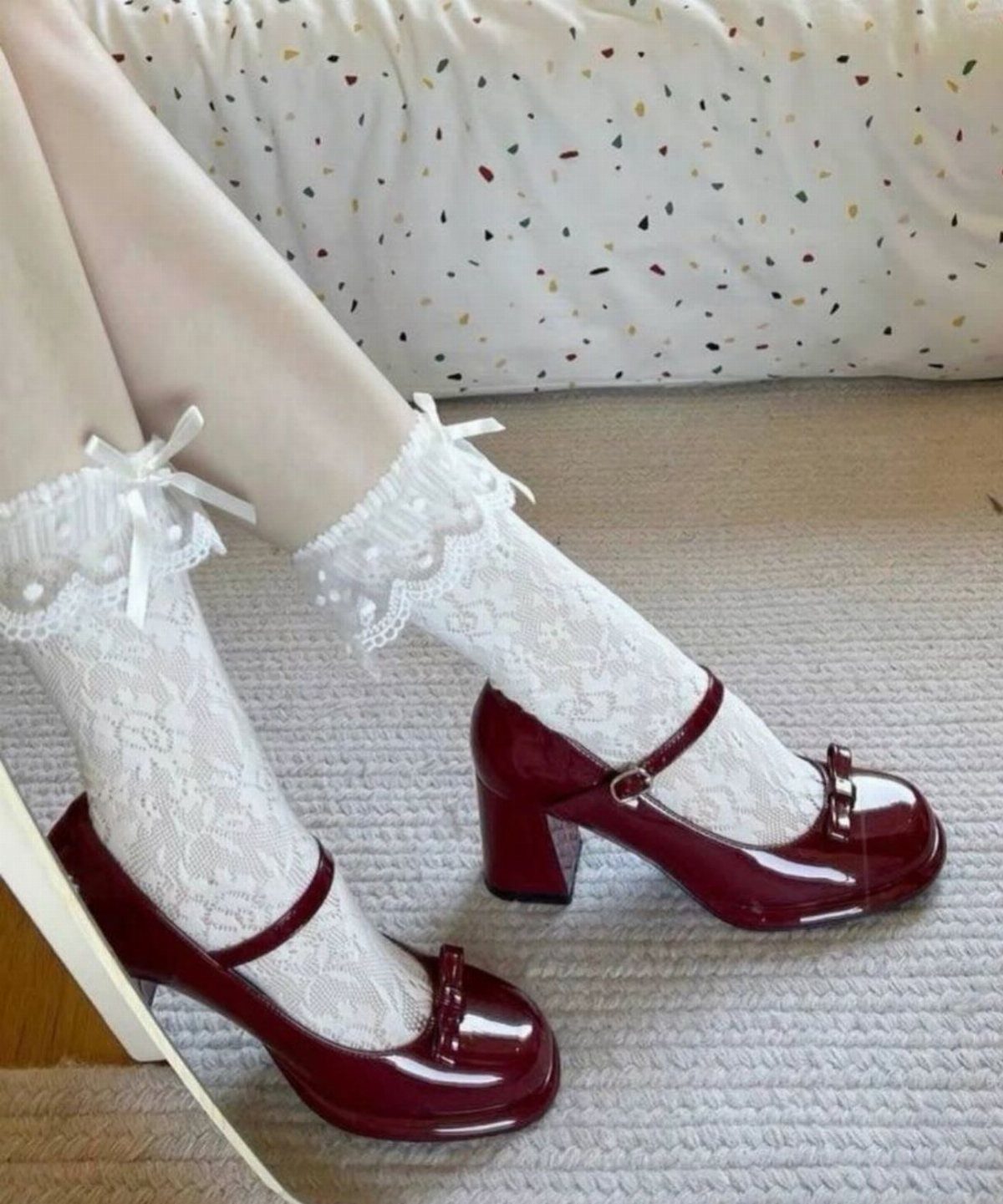
Ruffle socks ask for an occasion where some formality is expected, a first communion or a holiday gathering where the shoe itself is already dressed up.
Lace and a ribbon bow above deep red patent leather works because both elements share a finished, almost theatrical quality.
For daily wear, the maintenance would frustrate me: lace snags, white soils fast, and the bow shifts.
Keep these for events where the child will be seated or photographed more than playground-bound. Machine-washable cotton ruffles without attached trim hold up better if you want the look more often.
4. White Crew Socks

White crew socks with black patent Mary Janes is the pairing that launched a thousand Pinterest boards, and the version here succeeds because the proportions are specific: the jeans are cuffed to show a full hand-width of sock, the shoe is chunky enough to balance the sock’s visual weight, and the t-shirt keeps everything else casual.
The danger is in the sock length.
Too short and the gap between cuff and shoe strap looks accidental; too long and you move into sport territory. The photo hits mid-calf, which for most adults means a standard women’s crew, not a men’s or athletic cut.
5. Knee-High White Socks
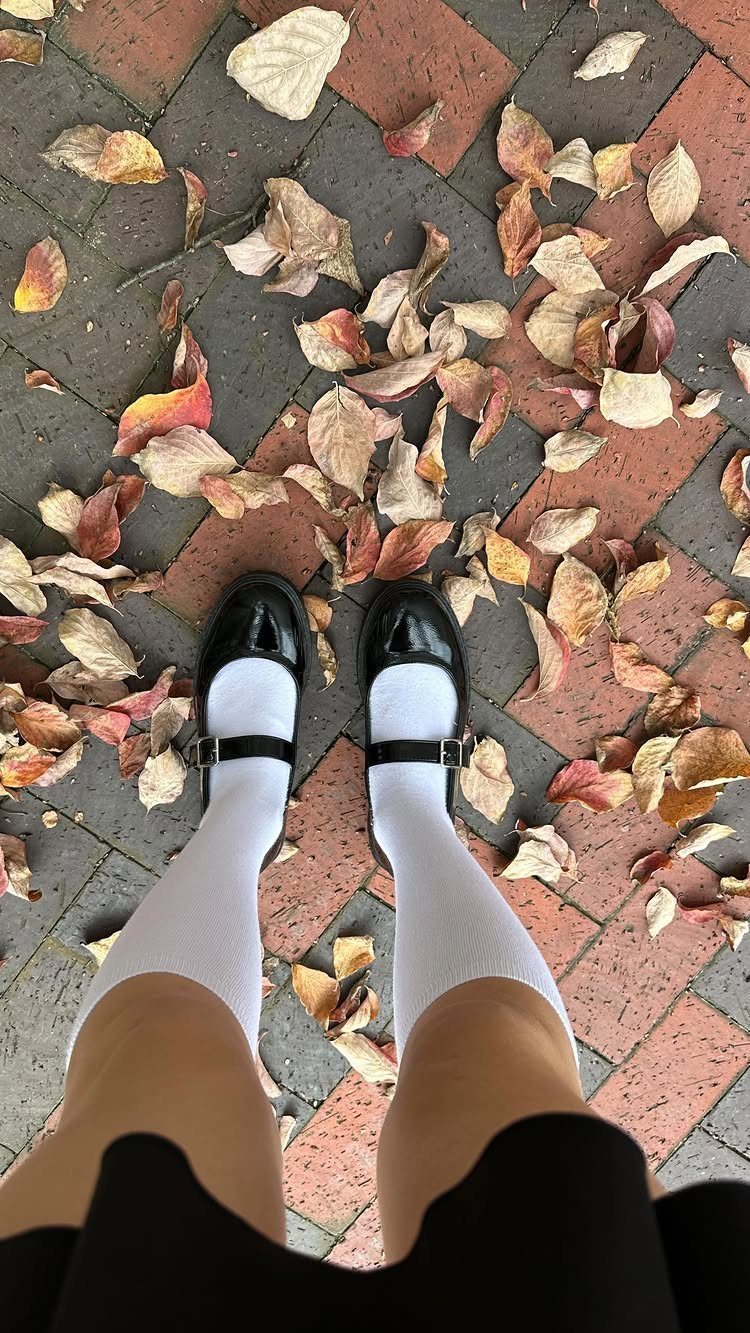
Knee-high white socks with black Mary Janes extend the leg line and add warmth for autumn, as the fallen leaves suggest.
The key decision is where the sock top lands: at or just below the knee, never bunching above it, or the silhouette collapses.
For a child, this is practical school-day dressing in cooler weather.
For an adult, the reference is specific enough that I would wear it only where the rest of the outfit steers deliberately toward that register: a pleated skirt in wool, a fitted sweater, nothing that tries to modernize or ironize the pairing.
The simplest version, black skirt and black shoe, keeps the white sock as the single accent.
6. Sheer Polka Dot Socks
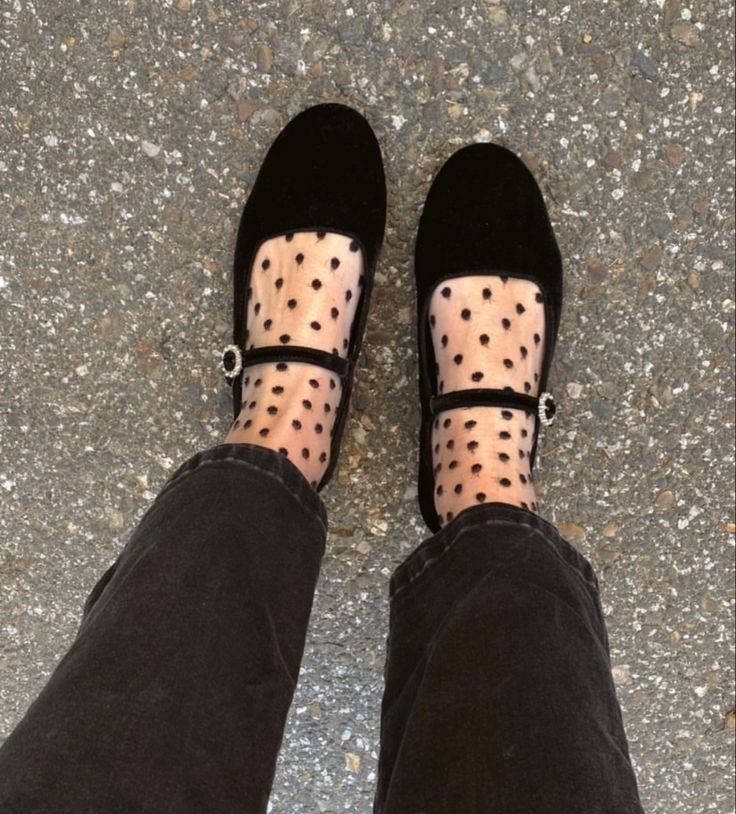
Sheer polka dot socks with black velvet Mary Janes operate on texture contrast: the flat, light-catching dots against matte velvet, the transparency of the sock against the opacity of the shoe.
Cropped pants are the right call; a full-length trouser would hide the sheer and leave only the dot pattern visible, defeating the point.
This pairing needs a clean ankle. The sock should fit close, without wrinkling at the ankle bone, and the Mary Jane strap should fasten over the sock, not through it, to keep the line neat.
For maintenance, hand-washing extends the life of sheer knits significantly; the dots are applied or woven in and can distort in a machine cycle.
7. Olive Green Socks
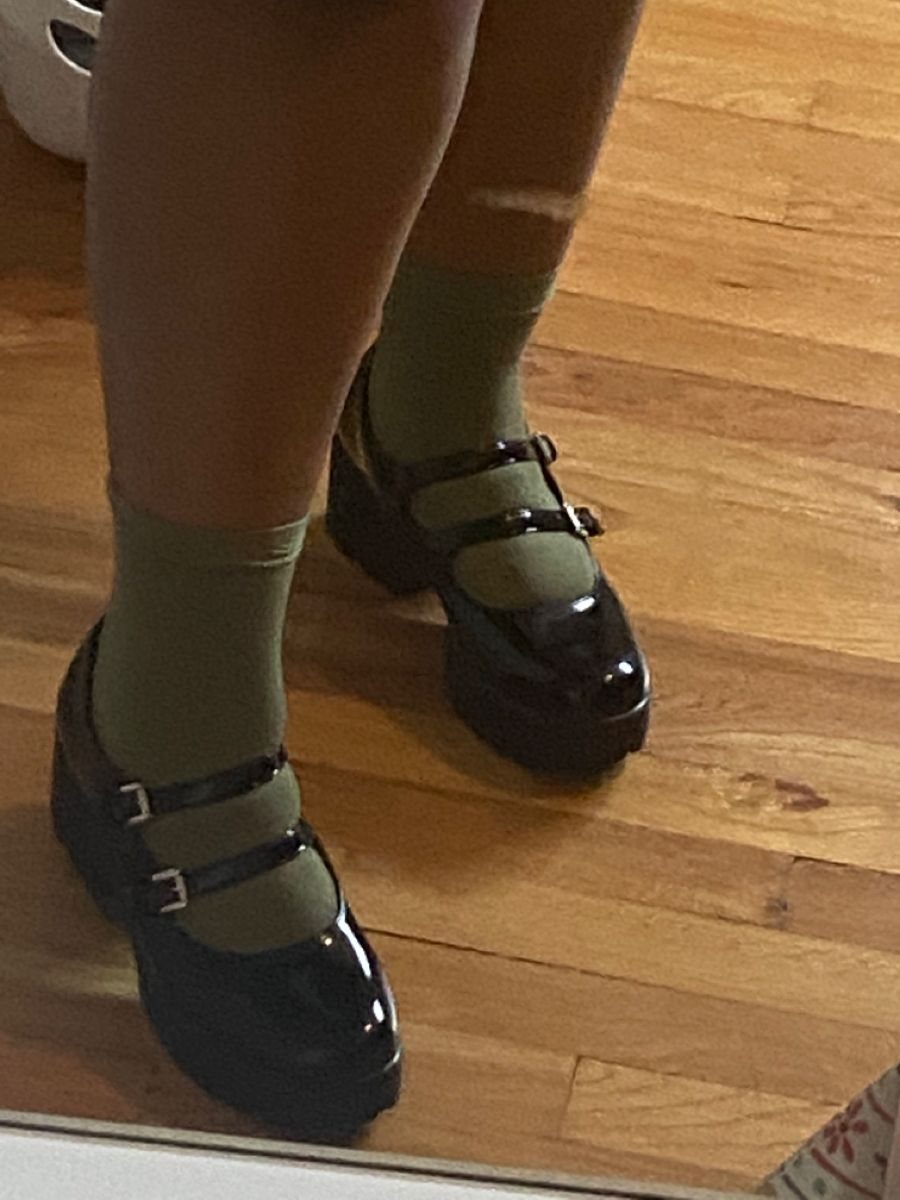
Olive green crew socks with black patent double-strap Mary Janes read as tonal rather than matching, which suits anyone building an outfit from pieces they already own.
The muted green sits close enough to neutral that it pairs with khaki, cream, or denim without fighting for attention.
Check that your sock is crew length, not ankle; the strap needs something to fasten over, and bare ankle between shoe and sock breaks the line.
Platform soles add height but also weight; the olive tone keeps the combination from feeling too heavy.
8. Socks Layered Over Patterned Tights
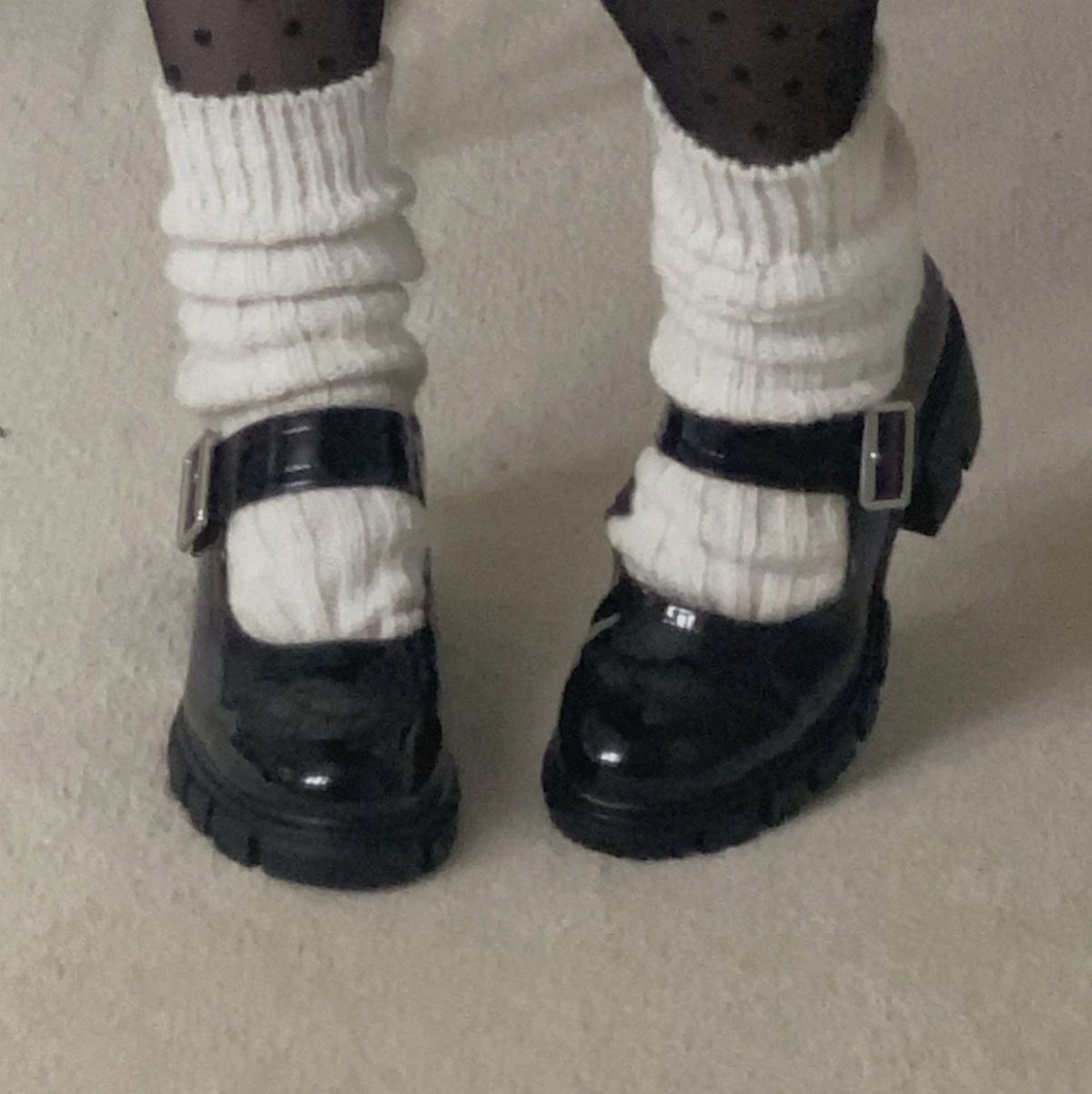
Layering thick white ribbed socks over sheer black polka-dot tights is a warmth move that happens to look deliberate if both textures are visible.
The tights need to be sheer enough that the dots read as pattern, not as dark legs under white socks, and the socks need to slouch or sit straight rather than bunch.
For this to work, the Mary Jane strap fastens over the sock, never through it, and the sock should be thick enough to hold its shape.
The combination trades away sleekness for insulation; I would reserve it for days cold enough that the outfit steers toward texture play anyway.
9. Chunky Beige Ribbed Socks
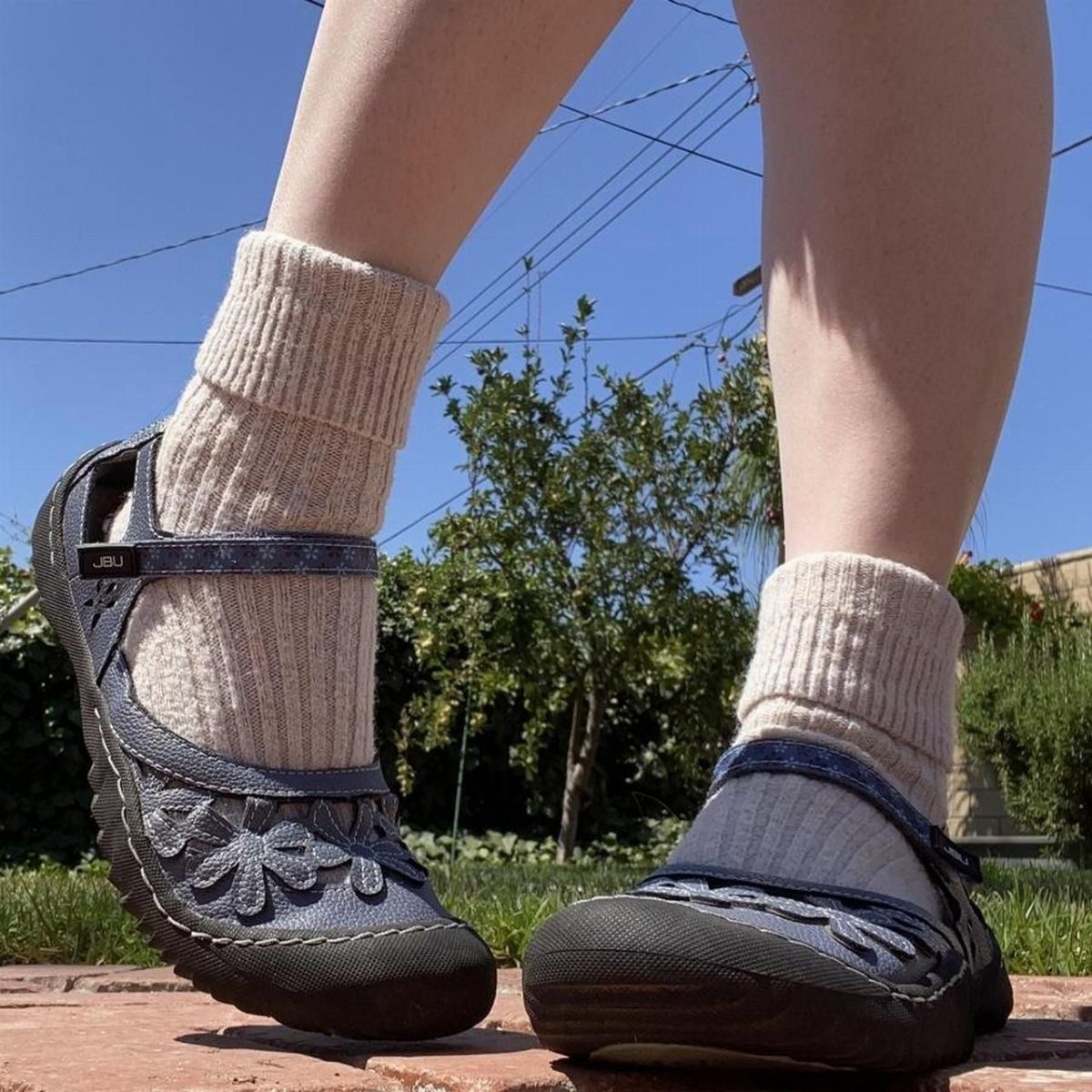
Thick beige ribbed socks with embroidered floral Mary Janes soften a shoe that could read as costume into something wearable for errands or a casual office.
The beige picks up the neutral thread in the embroidery while the ribbing adds texture that competes with, rather than copies, the floral cut-outs.
The sock needs to be substantial; thin dress socks would disappear against the shoe’s detail.
For care, hand-washing keeps the rib from flattening and the embroidery from snagging. This pairing suits autumn through spring; the extra warmth matters most on days when you are walking on cold brick or concrete.