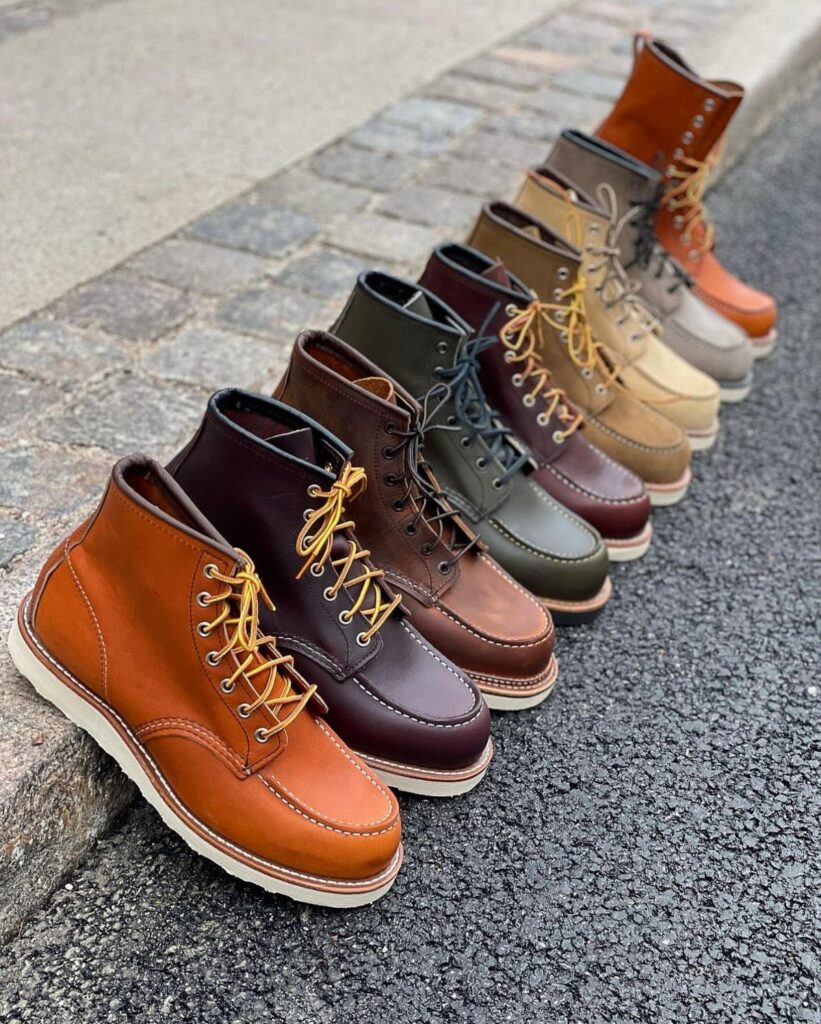
Red Wing Heritage boots run from the Classic 6-Inch Moc-Toe to the Iron Ranger at roughly $330, with factory tours available in Minnesota if you want to see how the line comes together.
The right boot depends on whether you want the moc-toe’s weekend ease or the Iron Ranger’s sharper line for dressed-up days.
1. Goodyear Welt Construction
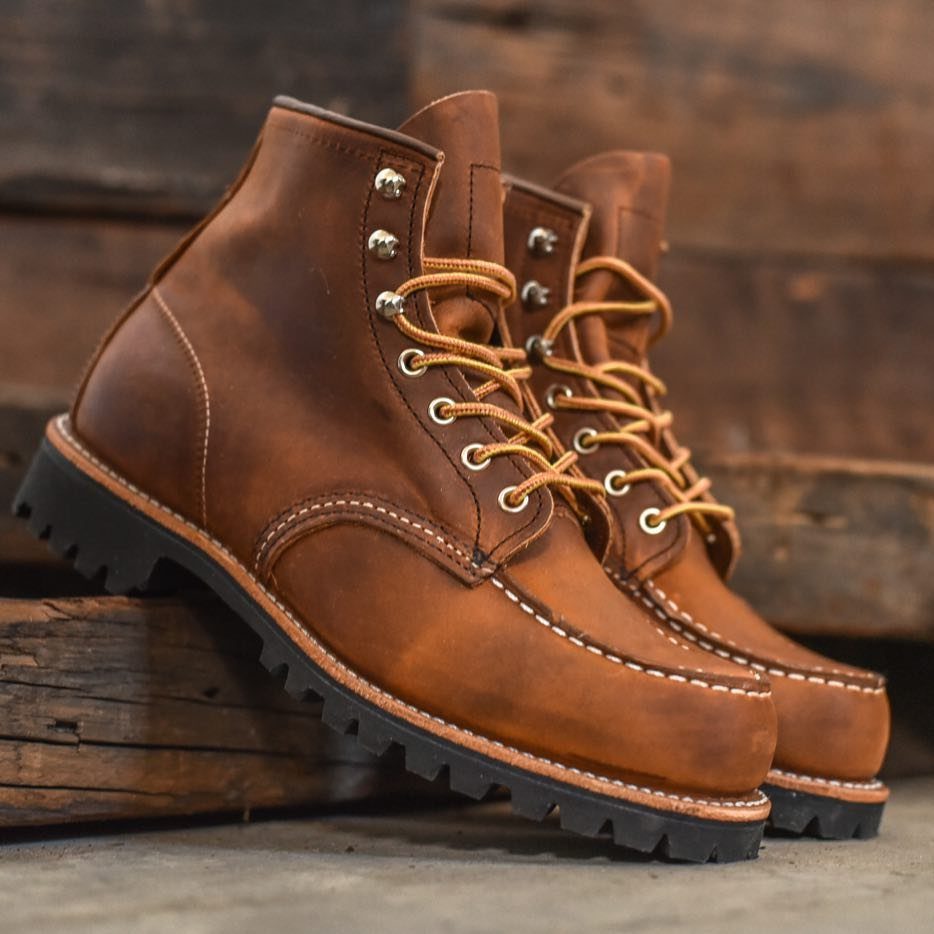
Goodyear welt construction is the method that stitches the upper, lining, and sole together with a leather strip running the perimeter, making the boot rebuildable rather than disposable.
For a boot at this price, the resole service through Red Wing matters because it replaces the sole, the welting, and reconditions the uppers for a fraction of replacement cost.
The cork midsole and leather insole gradually compress to your foot shape over months of wear, which is why these boots fit better after a full season than straight from the box.
I would not buy a heritage boot without this construction; the math only works if the boot outlasts several cheaper pairs.
2. Leather Protectors and Oils
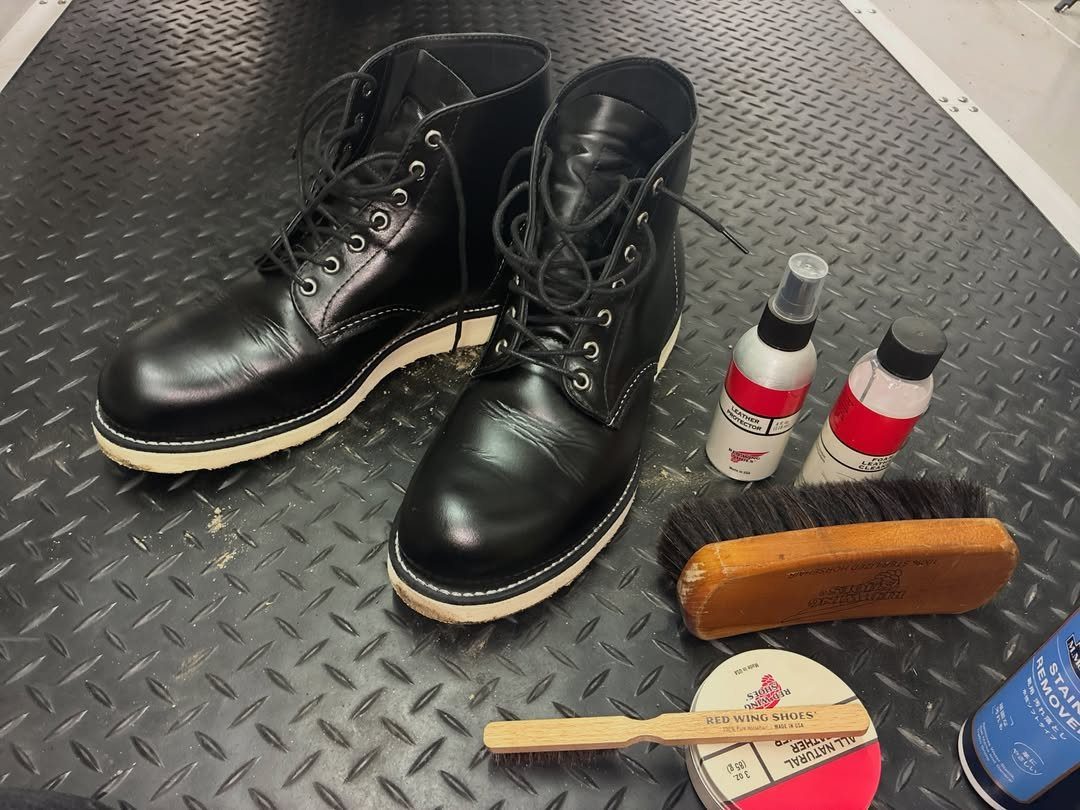
The leather protectors and oils you need for your Red Wing Heritage boots depend on which leather you chose.
Red Wing recommends their all-natural boot oil specifically for the Iron Ranger, though any calfskin-grade product also works. I keep a horsehair brush by the door and knock off dust before storing; the oiling happens twice a year, not monthly.
The $125 factory repair service includes a full-size conditioner container, so factor that into whether you buy supplies now or plan to send them in later.
3. Vibram Soles on Red Wing Boots
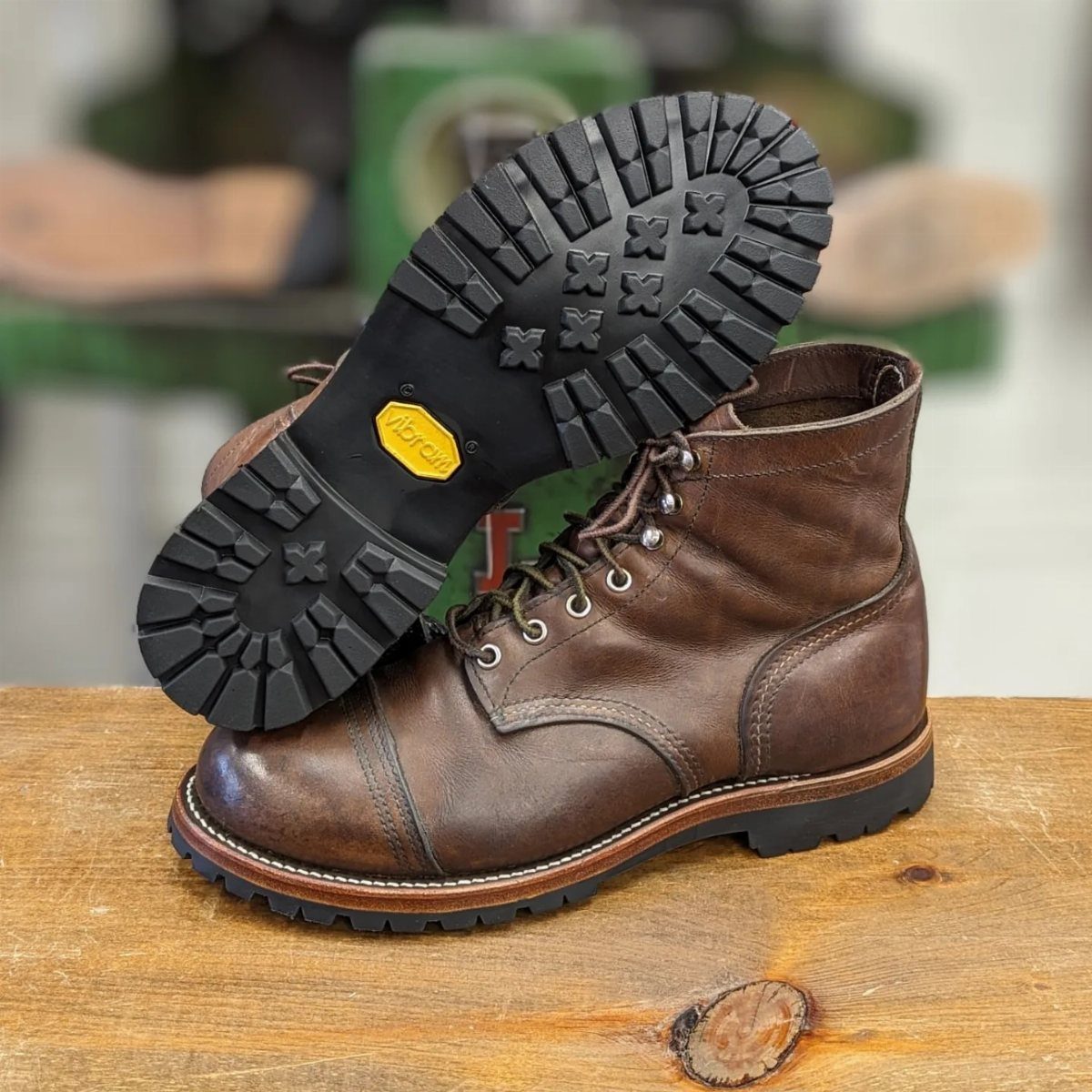
Vibram soles appear on many Red Wing styles, including the 430 mini lug found on the Iron Ranger.
The yellow logo visible on the black sole indicates the compound, not just the brand; these lugs are softer and grippier than the original 1930s iron-miner specification, which used harder rubber for factory floors.
The mini lug keeps the boot lower-profile than a full commando sole, so it works under cuffed trousers without looking like hiking gear.
For city walking and light weather, this is the sole I would choose; it trades away deep-tread mud performance for versatility you will actually use.
4. Classic 6-Inch Moc-Toe
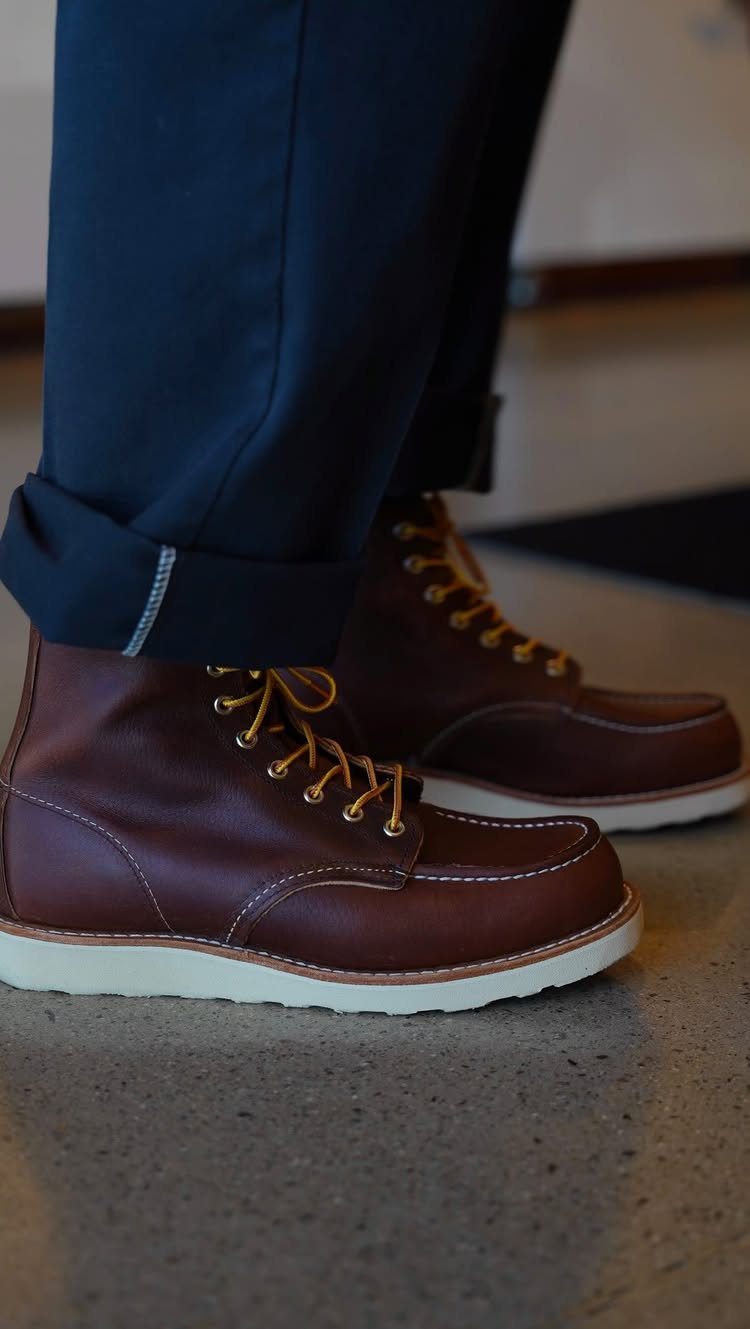
8 color options are available, from Oro Legacy to Briar, though not every size and width combination exists in each.
Red Wing recommends sizing down ½ to 1 full size from your usual; I would try both your normal size and a half-size smaller if ordering online, since the generous last can leave too much volume once broken in.
The Goodyear welt and contrasting sole edge make this the entry point for buyers who want heritage construction without the Iron Ranger’s weight.
5. Iron Ranger
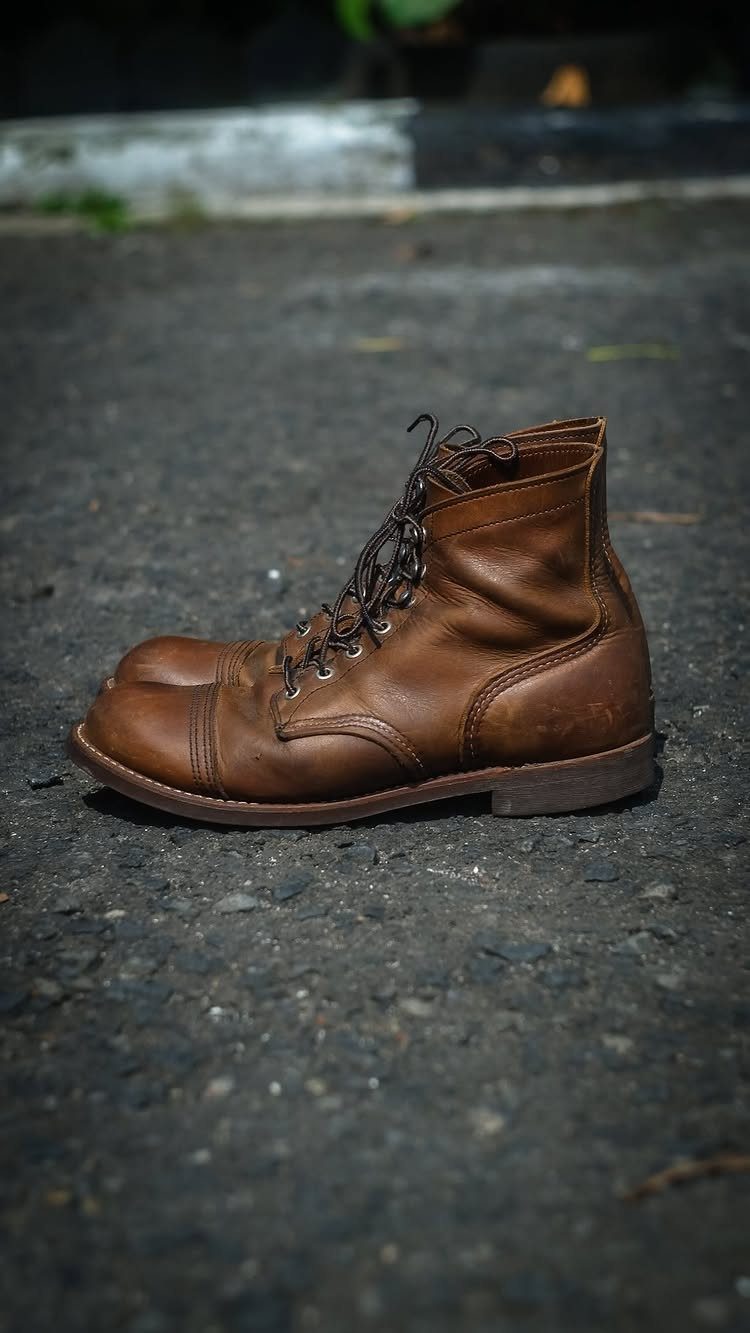
Iron miners on the Minnesota Iron Range wore the original version of this boot in the 1930s, and the modern 8111 keeps the steel shank, puritan triple-stitch construction, and brass speed hooks that made it workable in ore fields.
The cork midsole and leather insole form to your feet over time, which is why the fit should start comfortably tight with enough toe room to move freely.
The No. 8 last includes a bump toe for that movement, and the Vibram 430 mini lug sole updates the original for pavement.
At $330, this is the Red Wing style I would buy if I owned only one pair; it handles office, weekend, and light outdoor use without looking out of place in any of them.
6. Break-in Period
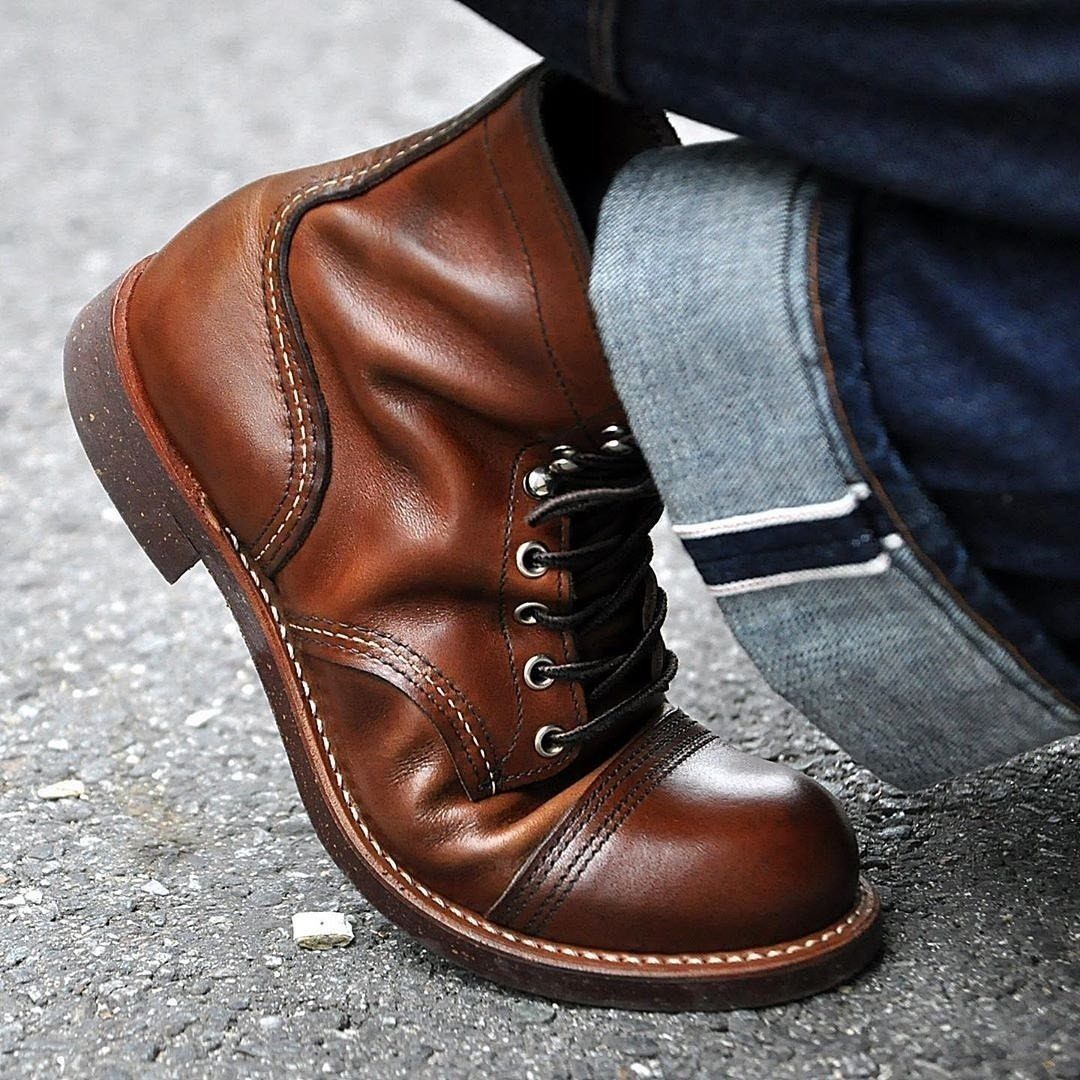
New Red Wing boots will hurt if you wear them for a full day immediately. The leather uppers start stiff, and the cork midsole needs your body weight and heat to begin compressing into the shape of your foot.
I would plan a stretch of partial wear: an hour at home, then half-days, building up before committing to a full workday or travel.
The leather softens, the footbed molds, and the boots become something you reach for rather than avoid. Soreness at the start is not a sizing error; it is the process these materials require.
7. Blacksmith Red Wing Boots
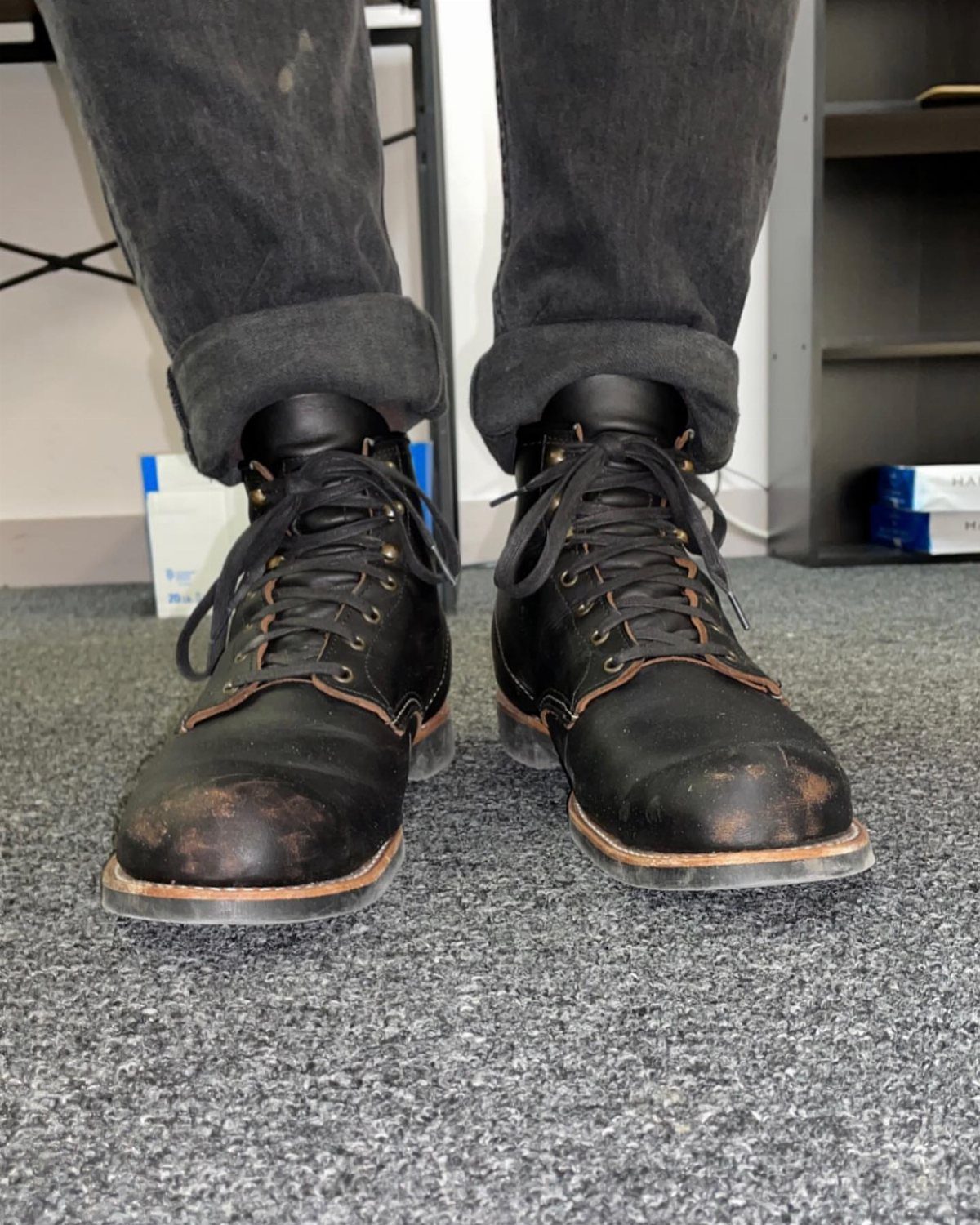
The Blacksmith sits between the work boot origins and the city wear most of us actually need.
Red Wing built it on the No. 8 last with a bump toe, same foundation as the Iron Ranger, but left the toe cap off for a cleaner line that disappears under straight-leg trousers.
The plain toe and lower heel profile suit office floors better than the Iron Ranger’s raised mini lug; the cork midsole and leather insole still mold to your foot over months, so size down ½ to 1 full size and expect the same break-in arc.
I would choose this over the Iron Ranger if my daily uniform ran more chinos than raw denim, or if I needed one boot to handle client meetings without looking like I came from a job site.
At roughly the $330 mark, the value proposition matches the rest of the Heritage line: resoleable, rebuildable, and shaped by your own wear pattern rather than a factory insert.
Black leather scuffs to a softer grey over time; oiling twice a year keeps the grain from drying, though the worn look is half the point for most buyers.
Quality and Craftsmanship
Red Wing acquired the SB Foot Tannery in 1986, the same partner Charles Beckman worked with from the start.
Red Wing still tans, stretches, and rolls its own leather on-site, which is rare now. The fitting department alone runs 30 steps before the upper reaches the lasting floor, where over 30 styles and hundreds of sizes are built.
Hand-stitching is used on many uppers because the machines Red Wing tested could not match the seam quality it wanted.
The boots then move to bottoms for sole application, then finishing for lacing, footbed insertion, and final review before distribution. The factory produces up to 2 million pairs annually across all brands.
Fashion Versatility
The Heritage line launched around 2007 through a partnership with J.Crew, positioned as standard Red Wing construction with a modern aesthetic.
That positioning stuck: the Classic 6-Inch Moc-Toe has become the collection’s most recognizable style, and the brand now appears in contexts far removed from job sites.
The Heritage range itself is made in the USA; other Red Wing-owned brands such as Irish Setter and Vasque include imported models, so check the label if country of origin matters to you.
Current Heritage offerings include the Work Chukka in Copper Rough & Tough and the Weekender Oxford in Sandstone Mohave, both built domestically.
Many people now recognize the over 100-year-old company as a family-owned business that was launched in 1905 in Red Wing, Minnesota.
Sizing Recommendations
The Classic Moc-Toe sits on the No. 23 last, shaped in the 1950s with extra space across the forefoot and instep. Ordering 2 sizes online is worth doing; once the cork midsole compresses, that roomy last can feel almost too generous.
Factory Tours
You will see leather dyeing, lasting, and sole stitching in sequence across departments. If you are sizing for a purchase, the factory store lets you try the full range of lasts and widths rather than guessing online.
Frequently Asked Questions
Why do Red Wing Heritage boots rarely go on sale?
High demand and consistent quality keep prices stable year-round.
The Heritage line has built enough reputation since the 2007 J.Crew launch that buyers pay full price rather than wait for discounts. I would not expect seasonal markdowns on core styles like the Iron Ranger or Classic Moc-Toe.
What are the best Red Wing Heritage boots?
The Iron Ranger and Classic 6-Inch Moc-Toe are the most recognized styles for good reason. The Moc-Toe offers the same rebuildable quality with a lighter profile and lower heel for buyers who want heritage construction without the weight.
How long do Red Wing Heritage boots take to break in?
Plan for several weeks of partial wear before they feel right for a full day.
My own break-in went an hour indoors, then half-days only, with full days off in between; tenderness at the ankle and heel in week one is the leather doing its job, not a sign you sized wrong.