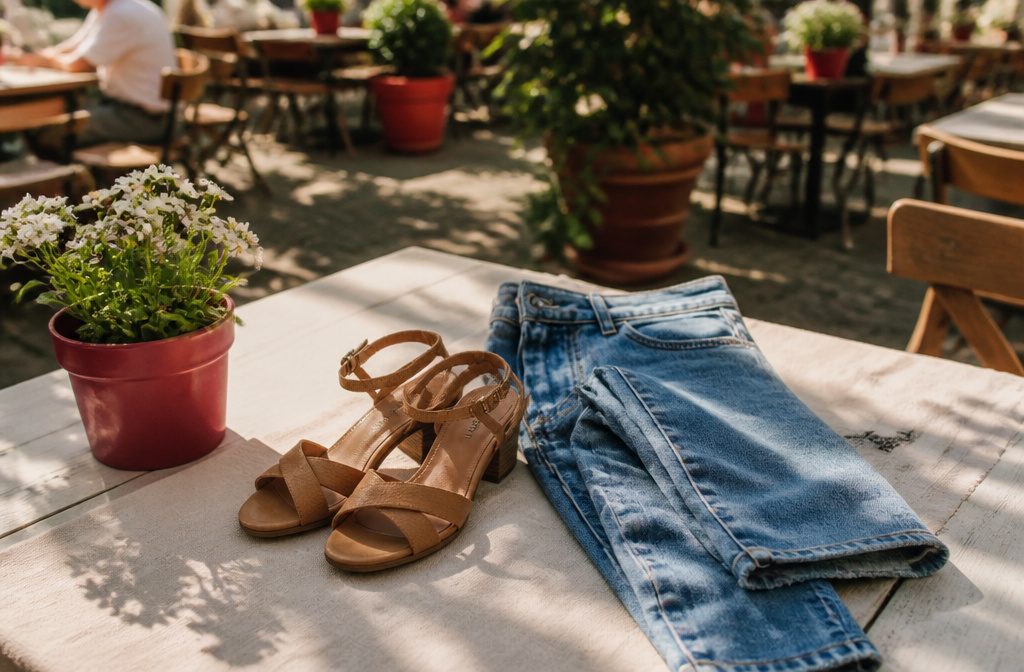
Sandals to wear with jeans are not a single category but a sliding scale from errands to offices to dinner out.
The same pair of boyfriend jeans reads thrown-on with flat slides and deliberate with a white block heel under three inches. What separates the two is whether the sandal’s structure signals intention or convenience.
White Heeled Sandals
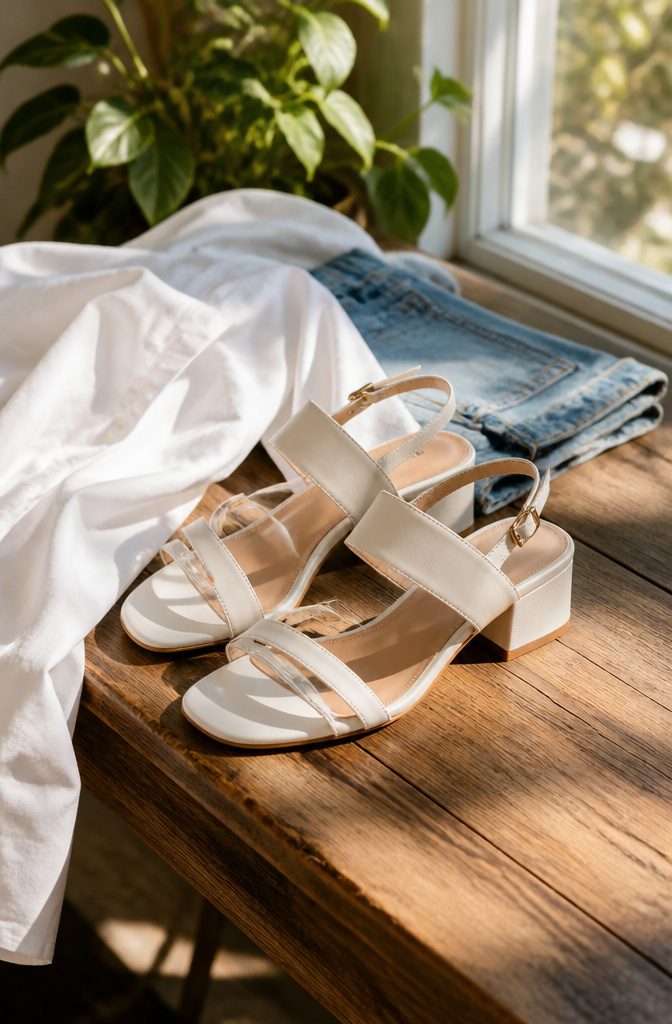
White heeled sandals pull boyfriend jeans out of weekend-only territory faster than almost any other shoe in my lineup. The contrast between relaxed denim and a clean, elevated heel creates a balance that reads intentional rather than accidental.
I reach for mine when I need to look pulled together for a lunch that might run long or a store opening where sneakers feel too far in the other direction.
The pairing works because the sandal’s open construction keeps the overall effect from feeling buttoned-up.
A white dress shirt and boyfriend jeans with this combination reads casual but considered; a simple crew-neck tee gets the same upgrade. The heel adds height and structure without the formality of a closed pump.
Comfort with denim and heels takes some planning. Boyfriend jeans with a wider leg or slight crop prevent fabric from catching under the heel or bunching at the ankle.
I have walked blocks in this combination, but the jeans need to be broken in first, and the sandal strap should sit securely across the foot without sliding.
A block heel under 3 inches handles sidewalk cracks and cobblestones far better than a stiletto, and I have learned to check that the heel height works with the jean inseam so the hem does not drag or float awkwardly.
Closed Toe Sandals
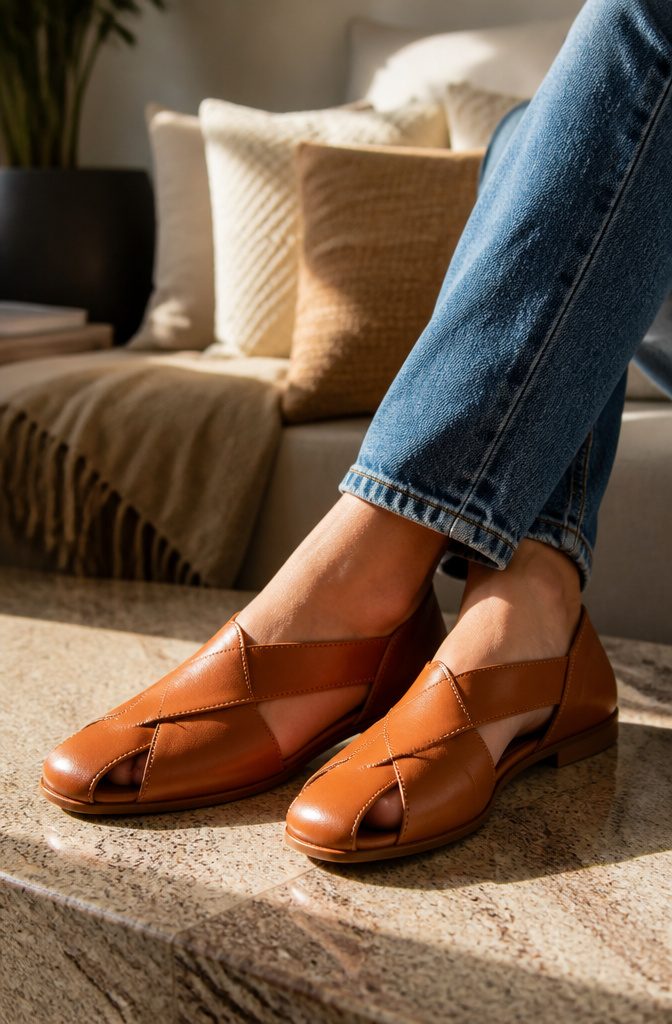
Closed toe sandals fill the gap when you want the ease of a sandal but would rather keep your feet under wraps.
I have days like this too, especially early in the season or when I haven’t had a pedicure in a while.
A covered toe with a side or heel cutout still reads as a sandal with jeans, not a shoe trying to be one, and the line of the foot stays lighter than a ballet flat or loafer.
These styles lean slightly more conservative by default, which makes them useful for offices that allow sandals but draw the line at bare toes. A crisscross leather vamp or a soft woven upper keeps the look current rather than clinical.
The comfort advantage is real: your toes don’t grip the sole the way they sometimes do in open styles, and you can walk farther without that exposed-toe fatigue that sets in on hot pavement.
For pairing with jeans, a slim or straight leg works better than a wide flare. The closed front needs a clean break at the ankle to avoid looking heavy.
If the sandal has a low block heel, the combination reads as pulled-together without trying hard; a flat version in suede or matte leather works for weekends when you want coverage without the formality of a full shoe.
Peep Toe Wedges
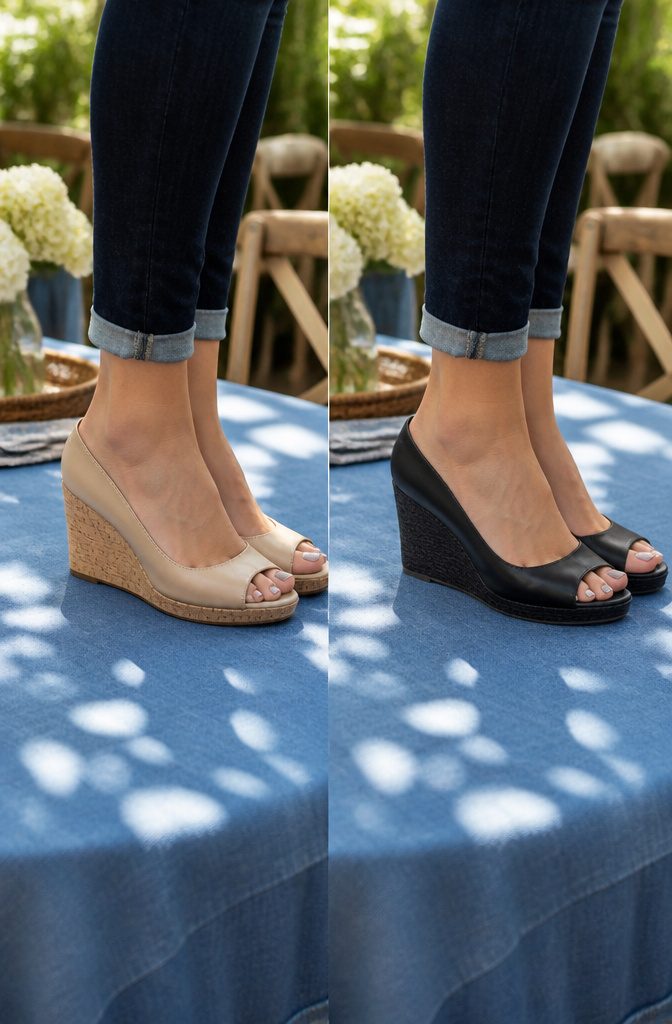
Peep toe wedges land in that useful space where jeans stop looking like weekend clothes without turning into something you regret by hour three.
The wedge distributes weight across the whole foot, not a pencil-thin point, so you get the lift of a heel with roughly the stability of a flat.
I have worn them to outdoor weddings on grass and to offices where the dress code meant "try a little," and the heel never punched through turf or wobbled on subway grates the way a stiletto would.
For smart casual settings, this is the sandal to default to. The open toe keeps it from reading as corporate, but the covered heel and substantial sole signal intention.
Pair them with dark wash skinnies or a cropped straight leg that shows some ankle; the wedge needs that visual break to avoid clunking up your silhouette.
A 2.5 to 3-inch wedge is the practical ceiling for all-day wear, and the cork or raffia versions read more casual while leather or suede tilt dressier.
The mistake is treating them like true heels and buying too tall, or like flats and choosing a platform so thick the shoe becomes cartoonish. The middle is where they work.
Ballet Flats
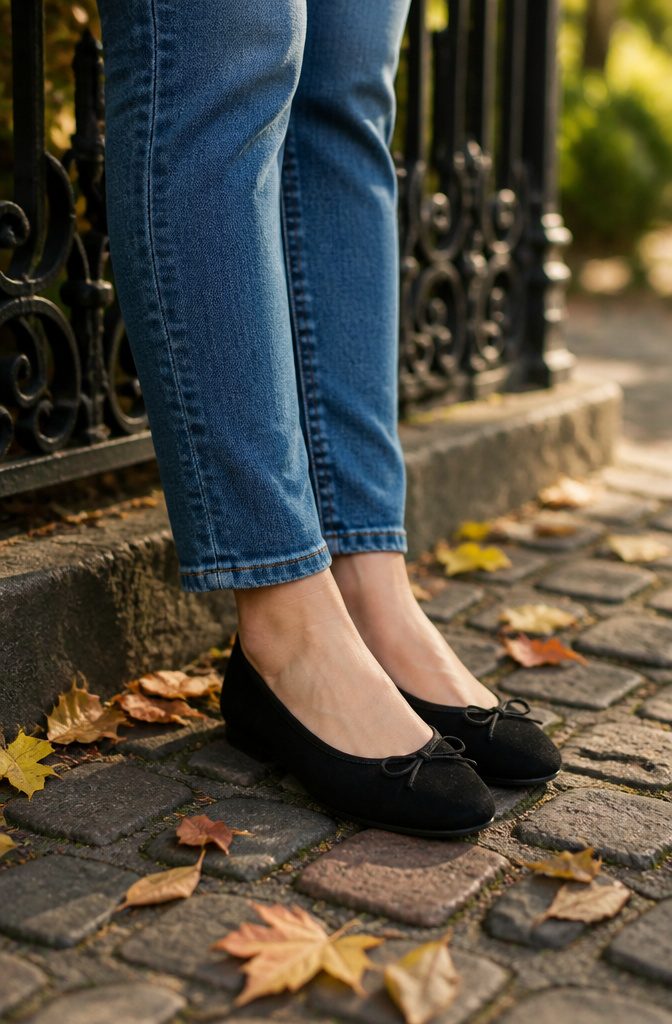
Ballet flats occupy the exact middle ground where sandals to wear with jeans often fail.
Heels telegraph effort in a way that feels excessive for a Saturday grocery run; sneakers, even the clean white ones, read like you gave up. A thin-soled flat in leather or suede splits the difference.
The shape matters more than the color. A pointed toe lengthens the leg the way a heel would, while a rounded toe can look deliberately casual, almost French.
I have watched this distinction ruin an outfit: the same pair of dark wash jeans looked pulled together with a almond-toe flat and merely finished with a blob-shaped one. The toe box, not the embellishment, carries the polish.
What makes them read as intentional rather than apologetic is structure.
A flat with no interior support collapses by 2 p.m., and that physical slump shows in how you stand. Look for a slight heel counter, something that holds the back of your foot without blistering it.
You will still walk farther than in sandals, and the jeans will hang correctly from ankle to knee without the visual interruption of a strap.
Dressy versions in metallic or patent leather work for dinner when you cannot face a block heel.
Casual ones in nubuck or canvas handle brunch. The mistake is treating them as interchangeable: the metallic reads cheap before noon, and the canvas dies under restaurant lighting.
Casual vs. Dressy
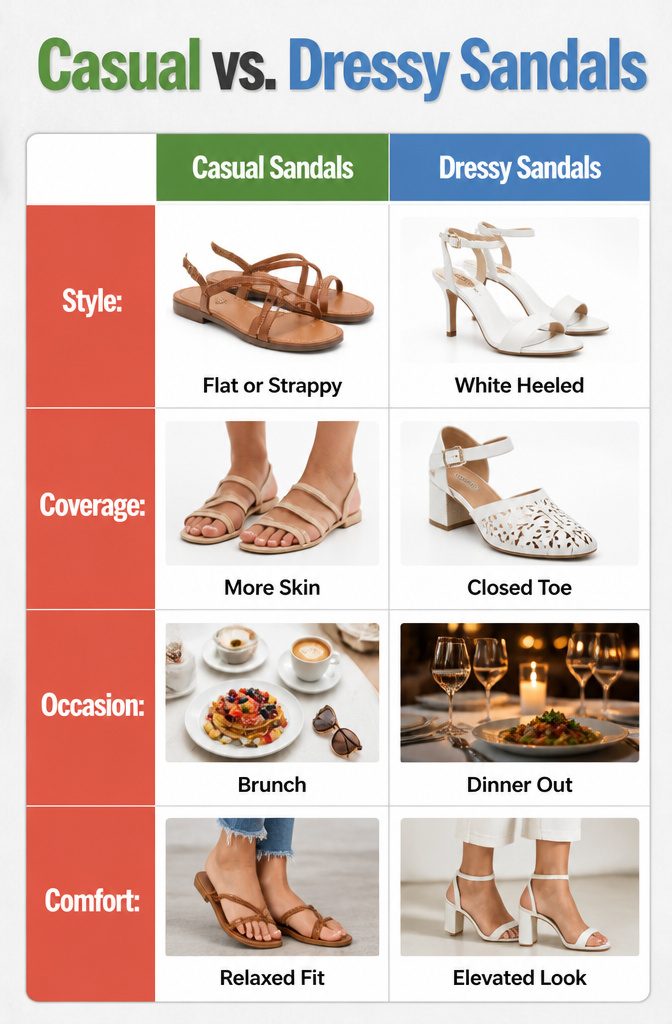
White heeled sandals sharpen a pair of boyfriend jeans into something that reads deliberate rather than thrown-on.
The heel lifts the denim, the white keeps it clean against blue wash. That contrast is what moves the outfit from casual to dressy.
Closed toe sandals sit on the other side of the line.
They cover more skin, which registers as more conservative in most offices, especially if you are self-conscious about bare feet. A peep toe wedge splits the difference, but it still exposes more than some people want at work.
The real test is where your day is headed.
Brunch with friends who are also in jeans? A flat or low strappy sandal stays in the same register.
Dinner where someone else might wear a dress? The white heel earns its place.
If you are unsure, look at what the rest of the room will be wearing on their feet. Match upward, not down.
Comfort
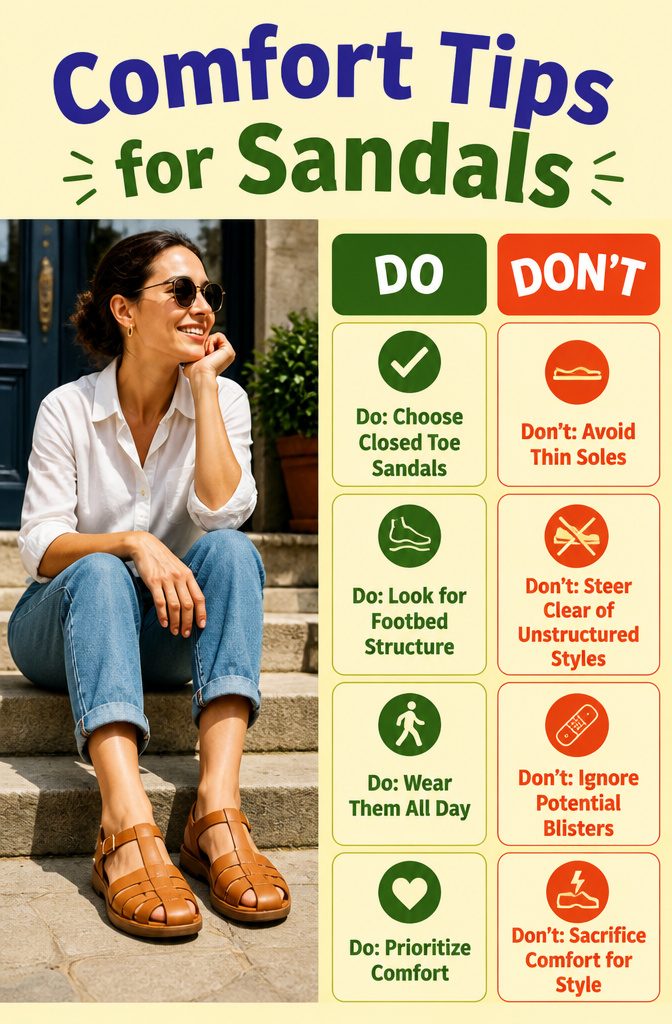
Bare feet in sandals can feel more exposed than people expect, especially after months in socks and sneakers. Closed toe sandals solve this without giving up the breeziness that makes sandals worth wearing in the first place.
The coverage sits at the front where self-consciousness tends to concentrate, while the heel stays open so the shoe still reads as a sandal with cropped or cuffed jeans.
Ballet flats operate on the same logic for anyone who wants the sandal silhouette but needs more security between the toes and the pavement.
The flat sole keeps the casual line of denim intact, and the enclosed shape means no adjusting straps or worrying about a blister forming on the knob of the ankle.
I have watched friends switch into them at lunch after a morning in heeled sandals, and the relief is visible in how they stand up from the table.
The real test of any sandal with jeans is whether you can wear them until evening without planning your day around sitting down.
A footbed with actual structure, not just a layer of foam, distributes weight across the whole sole instead of concentrating it on the ball of the foot.
That structure is what lets you walk the extra three blocks to the better coffee shop, or stand through a long checkout line, without the regret that sends people back to sneakers by Thursday.
Occasion

A weekend farmers market and a Monday morning meeting call for completely different sandals, even when both outfits start with the same pair of jeans.
Strappy flat sandals or simple leather slides work for errands, coffee runs, and anywhere you might walk more than a few blocks; they read as intentional without trying hard.
The same jeans with a heeled sandal, something with a thin strap across the toe and an ankle closure, shifts the whole look toward dinner out or a dress-casual office where open toes are permitted.
I have made the mistake of wearing dressy heeled sandals to a casual outdoor lunch and spent the whole time aware that my shoes were doing too much of the talking.
The reverse is more common: showing up to a client meeting in flat, scuffed slides that made the dark jeans look like I had grabbed the nearest clean thing.
For offices that allow sandals at all, a block heel or wedge in leather, with a closed or barely-open toe, usually hits the right note.
The heel height matters less than the material; suede or polished leather signals planning, while rubber soles and sport straps belong to Saturday.
If your workplace leans formal, the safest move is keeping a pair of heeled sandals at your desk and wearing closed shoes for the commute. That switch takes thirty seconds and saves the sandals from sidewalk wear.
Frequently Asked Questions
What sandals can I wear with jeans?
White heeled sandals, closed toe sandals, peep toe wedges, and ballet flats all work well with jeans.
White heels sharpen boyfriend jeans into something intentional, closed toe styles cover more skin for conservative settings, wedges give lift with better stability, and flats split the difference between effort and giving up.
What shoes will be trendy to wear with jeans in 2026?
The styles covered here, white heeled sandals and closed toe sandals in particular, lean toward cleaner, more structured looks rather than sportier options.
A block heel under 3 inches and a crisp white against blue denim both read current because the contrast looks deliberate.
Which footwear is best with jeans?
The best choice depends on where the day is headed. Strappy flat sandals or leather slides handle errands and long walks; heeled sandals with an ankle closure shift the same jeans toward dinner or a dress-casual office.
Match upward to what others in the room will be wearing on their feet.
What kind of sandals look good with wide leg jeans?
For wide leg or boyfriend styles, a sandal that adds structure balances the volume. A white heeled sandal works because the heel adds height and the open construction keeps it from feeling buttoned-up.
Make sure the jean has a slight crop or is cuffed so the hem does not drag or catch under the heel.