The sandals below run from a simple foam slide to investment leather that molds over years, and the one you pick depends on whether your feet swell, need a post between the toes, or refuse anything that looks medical.
1. Birkenstock Arizona
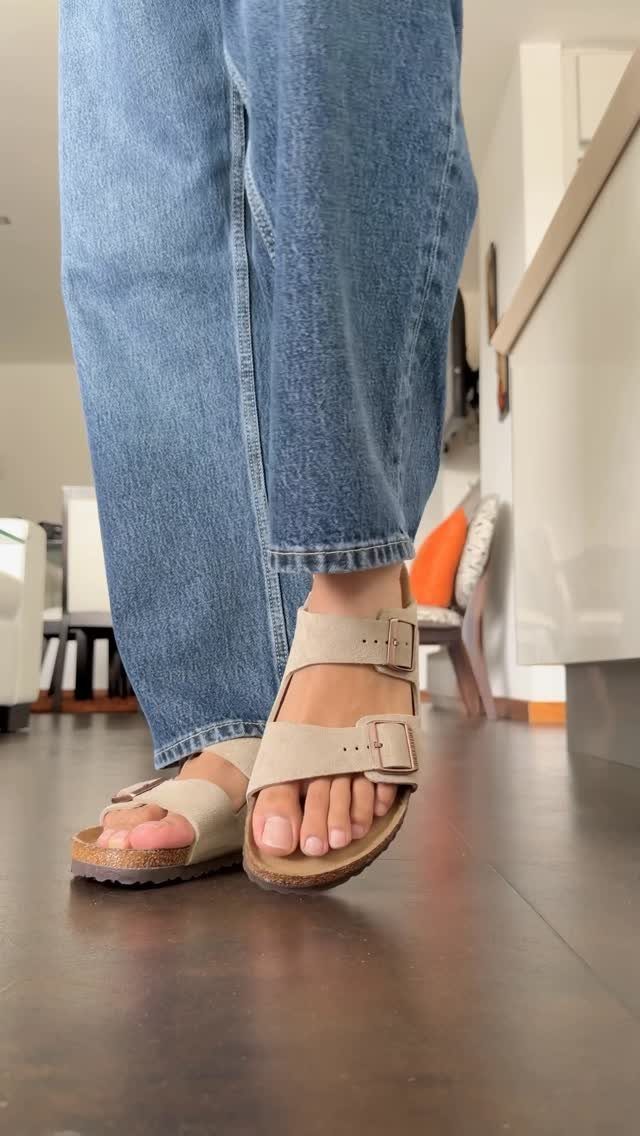
The Birkenstock Arizona works as a walking slide because the cork and latex footbed actually shapes itself to your foot over weeks of wear.
That custom mold, plus the deep heel cup that keeps your toes from splaying, is why podiatrists keep recommending these despite the clunky look.
The soft footbed version adds padding under the suede liner, which helps if you’re breaking them in for all-day use.
Two buckles mean you can adjust the fit across the instep and the forefoot separately; I find that matters more than you’d think if one foot swells in heat more than the other.
The EVA sole is lightweight but not thin, so you get shock absorption without the sandal feeling like a platform.
Available in the usual widths at Zappos, Nordstrom, and Amazon. If you need arch support and refuse to sacrifice it for style, this is the baseline everything else gets measured against.
2. Tory Burch Miller Sandal
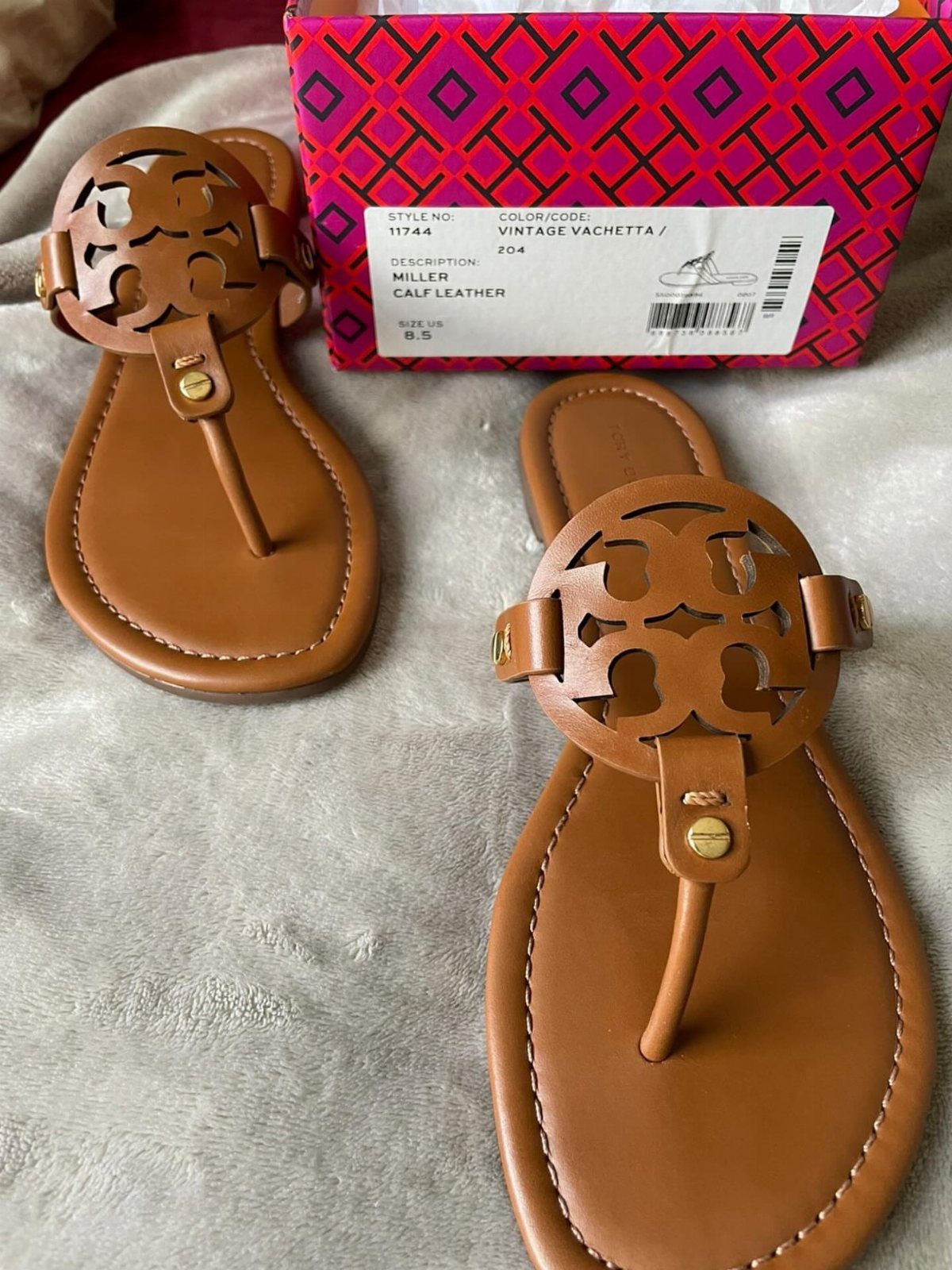
Tory Burch built the Miller sandal around a foam-cushioned footbed that sits inside a leather thong upper, which is not a combination you see often.
The signature T-logo hardware is stamped flat enough that it doesn’t press against the top of your foot the way cheaper metal badges do.
The leather footbed molds somewhat with wear, though not to the degree of cork.
What you’re buying here is a sandal that reads as polished enough for dinner while still having actual padding; the dual-density rubber sole helps with that, since it gives a bit under the heel without looking athletic.
They come in colors and prints that range from safe to loud, and the leather softens noticeably after the first week.
The thong style still demands toes that can tolerate a post between them, so if that’s your problem area, look at the newer two-strap Cloud version instead.
Otherwise, this is the option for when you need to look assembled but want something you can actually walk to lunch in.
3. Sandals with Adjustable Closures
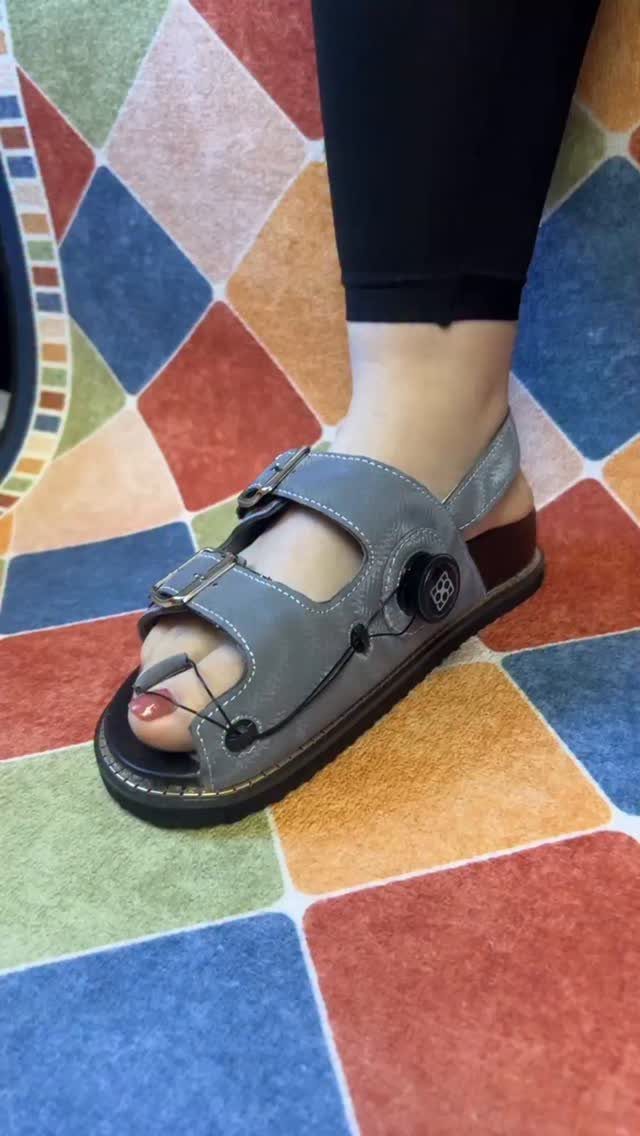
A sandal with adjustable closures lets you loosen the fit as your feet swell through the day, which happens to everyone but hits harder when you already have foot issues.
The rotary dial systems that some brands now use, like the one visible here, let you micro-adjust without fumbling for a buckle; traditional strap-and-buckle setups work fine too, but you need at least two points of adjustment to matter.
The Steve Madden Dina, which I’ve worn through Morocco and Italy, runs narrow through the forefoot but opens enough at the ankle to stay secure.
Leather uppers with a padded footbed and a micro-heel give you structure without height; the man-made sole grips better than you’d expect on cobblestones.
Check that the ankle strap sits above the widest part of your foot, not across it, or you’ll get pinching by afternoon.
If the sandal only adjusts at the ankle and the forefoot strap is fixed, pass; you need both zones to control the fit.
4. Sandals with Cushioned Footbeds
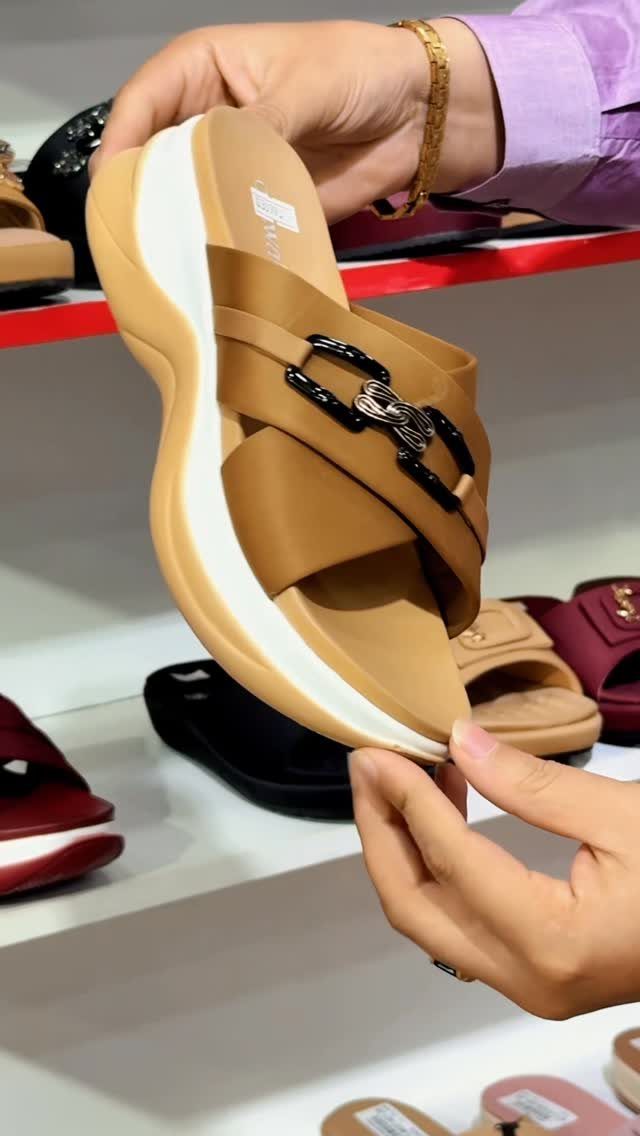
A cushioned footbed buys you hours of standing or walking that a thin leather sole simply won’t.
The Timberland Bailey Park uses Ortholite foam, which rebounds longer than standard EVA and doesn’t compress to pancake flatness by September. Compression-molded EVA in the midsole adds another layer between you and the pavement.
The buckle detail visible here keeps the foot from sliding around without trapping heat, which matters more than color when you’re wearing them all day.
Soft leather and textile lining at the contact points prevents the raw-edge rubbing that cheaper strappy sandals give you once you have been on your feet for a while.
I look for this construction in sandals I’ll wear with dresses or cropped jeans, since the footbed is thick enough to matter but not so built-up that the shoe looks orthopedic.
Check that the cushioning runs heel to toe, not just under the ball of the foot, or your weight distribution suffers.
5. Thick Sole Platform Sandals
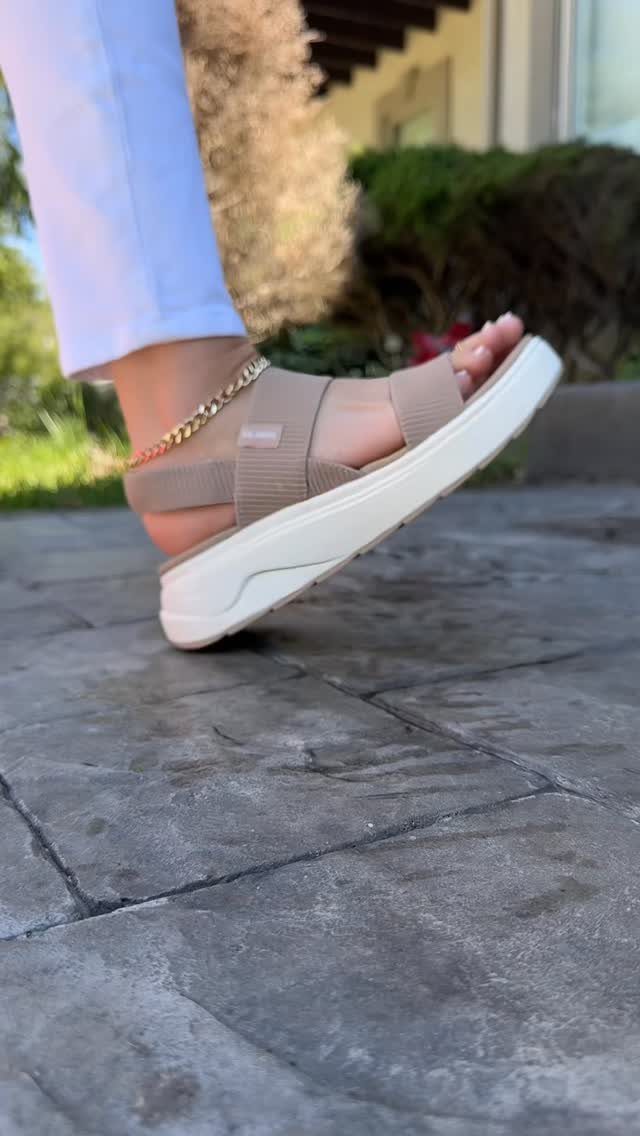
Platform sandals with thick soles like these put more material between your foot and the ground, which reduces impact but changes how you walk.
The wide elastic straps visible here stretch to accommodate width without cutting in, and the tan color reads as neutral enough for most summer wardrobes.
Before trying these, check the platform height against what you already wear; a platform tall enough to alter your gait will make ankle stability a factor.
The white sole on this pair is EVA, which is lightweight but can compress unevenly if your weight lands heavily on one side.
Walk on an actual sidewalk, not carpet, before deciding. The platform has to flex slightly at the forefoot or you’ll clomp, and clomping twists knees over time.
6. Rugged Walking Sandals
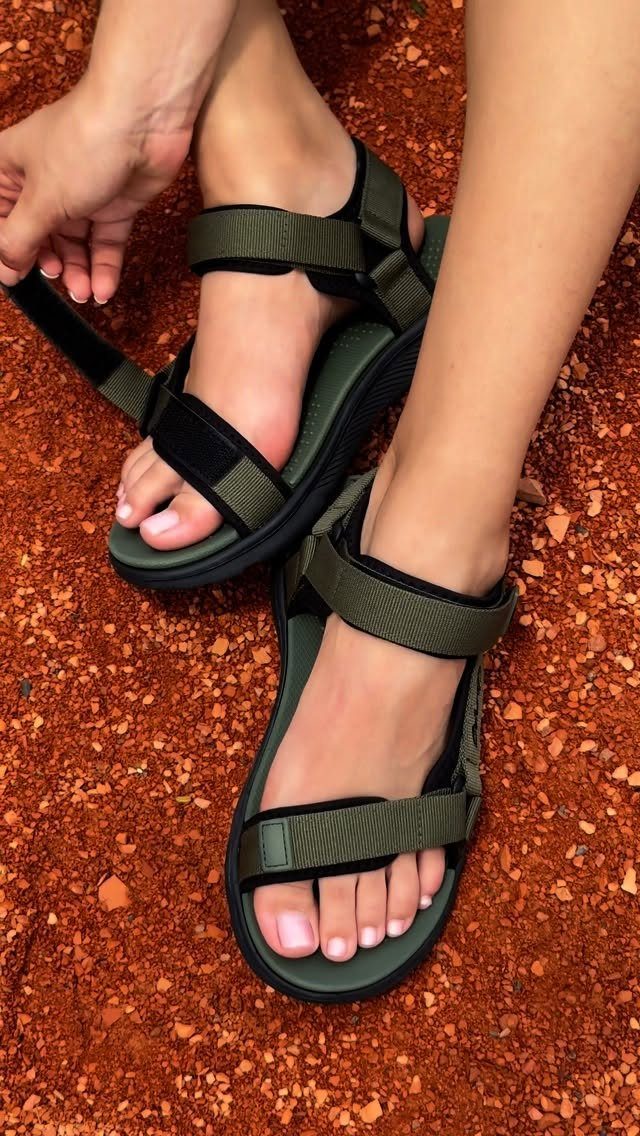
Rugged walking sandals with thick soles and multiple adjustment points, like the olive pair here, are built for uneven ground rather than pavement.
The textured outsole grips loose gravel and damp rock; the strap system lets you lock the heel and forefoot independently so the sandal doesn’t slide when you’re descending.
These trade away sleekness for function. The sole stack is visibly high, which adds protection but also weight; try one on and walk at pace before buying, since a heavy sandal fatigues the hip flexors over miles.
Check whether the footbed is contoured or flat.
Contoured supports your arch on long days; flat gives you room for an aftermarket insole if your podiatrist has already fitted you for one. The olive color hides trail dust better than black, which shows every scratch.
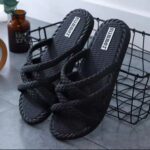
7. Wide Strap Leather Sandals
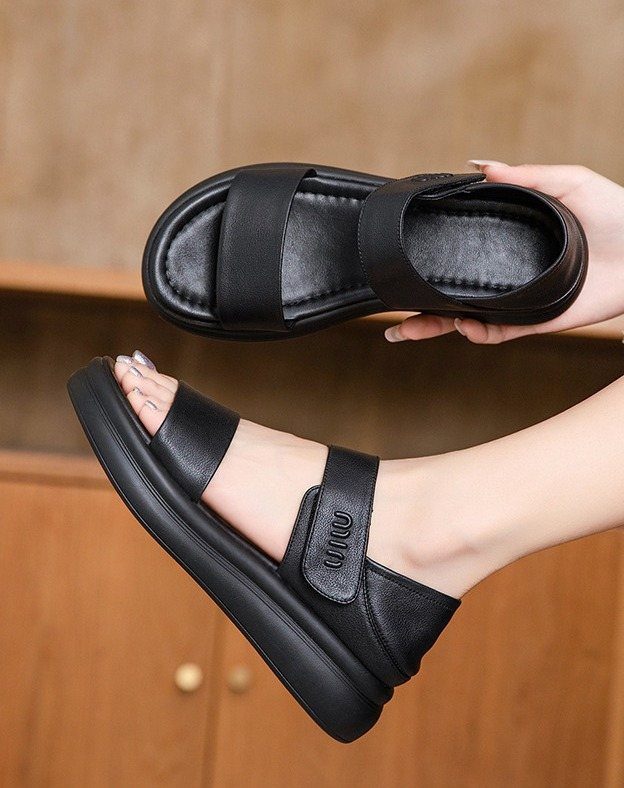
Wide straps distribute pressure across the top of the foot instead of slicing into it the way thin straps do, which matters if you have bunions, arthritis, or any swelling that changes shape through the day.
The black leather pair visible here uses 2 generous bands across the forefoot and a third at the ankle, so nothing cinches at a single point.
Look for straps at least an inch across measured where they touch skin; anything narrower forfeits the point.
Leather lining on the underside prevents the plastic-stickiness that makes synthetic straps slide and rub once you have been walking for an hour.
The thick sole adds height without the pitch of a heel, but check that the footbed itself is shaped rather than flat, or your arch collapses under the weight.
The embossed lettering on this pair sits raised enough that it might print on bare skin after long wear; a smooth strap avoids that entirely.
Wide leather straps and a flat platform sole let these dress up past casual: they work with cropped trousers or a midi skirt without looking like you gave up on style for the sake of your feet.
Frequently Asked Questions
What brand of sandals do podiatrists recommend?
Birkenstock still owns this category, and the Arizona is the model that comes up first: cork and latex footbed that slowly takes the shape of your foot over the first month or two.
The deep heel cup keeps your toes from spreading out flat, and the soft footbed option slips a layer of padding under the suede liner so the break-in hurts less.
That mix of gradual custom fit and actual architecture is why other sandals still get compared to it, not the other way around.
What are some good women’s sandals for problem feet?
Birkenstock Arizona, Tory Burch Miller, Steve Madden Dina, and Timberland Bailey Park all address different foot issues.
The Arizona works for arch support and custom molding; the Miller adds foam cushioning to a polished thong style; the Dina adjusts at ankle and forefoot for swelling; and the Bailey Park uses Ortholite foam that rebounds longer than standard EVA.
Match the sandal to your specific problem: toe sensitivity, swelling, arch collapse, or impact absorption.
What are the most comfortable sandals to wear all day?
Heel-to-toe cushioning that stays thick after months of use, plus two or more straps you can loosen when feet swell, separates sandals you can tolerate from sandals you forget you have on.
A micro-heel adds structure without adding real height, and an adjustable ankle strap lets you set the fit before a day of walking; the padded footbed is what made the Steve Madden Dina workable for back-to-back city days.