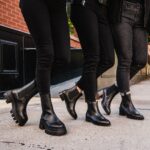
The pairs here run from stamped synthetic to exotics that cost as much as monthly rent, and the right one depends on whether you need a boot that survives actual barn work or one that reads western at a city concert.
1. Boots with Dresses
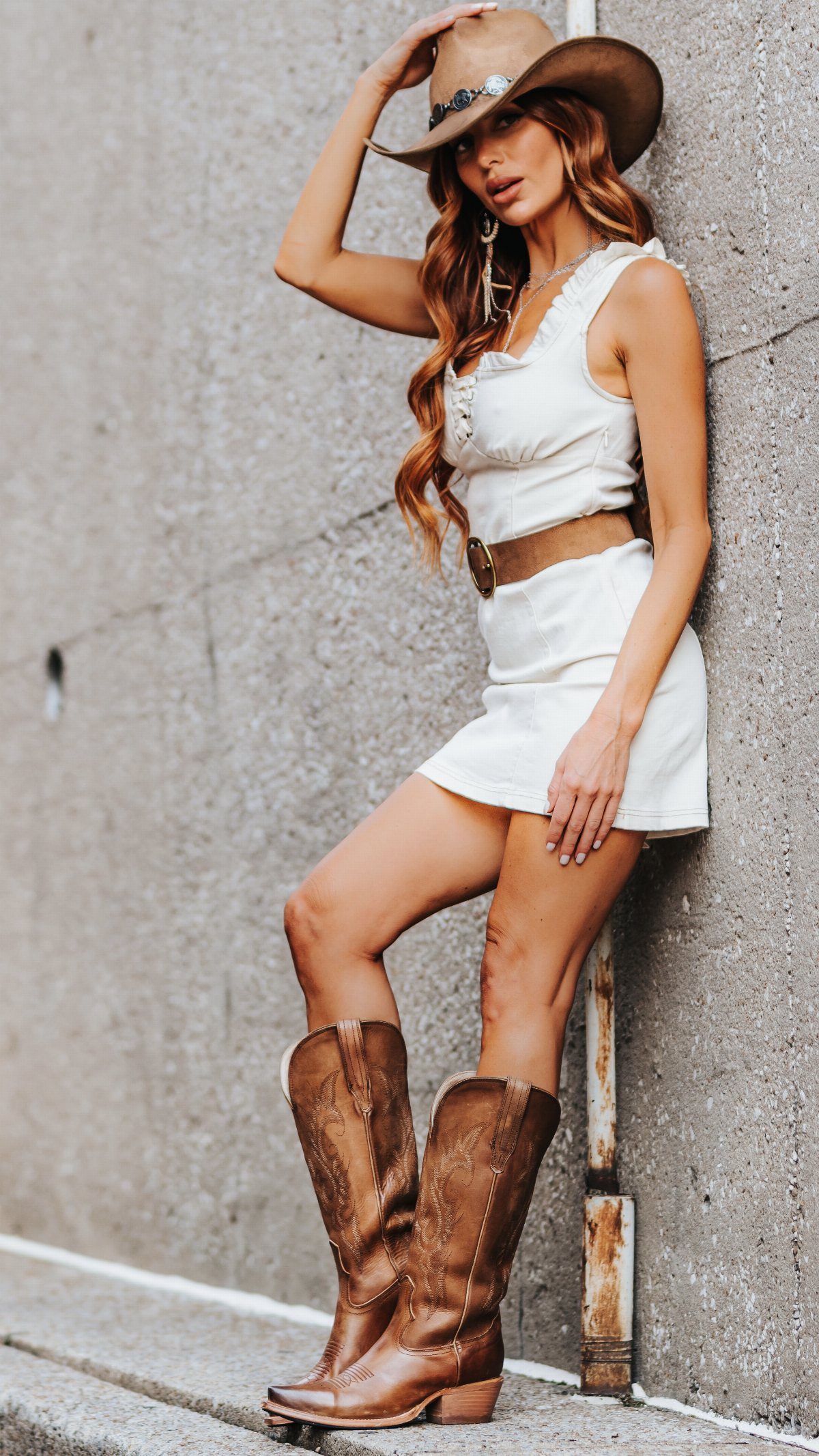
A white mini dress with tall brown boots and a matching hat reads country concert or outdoor wedding guest, not costume, because the belt breaks the white and the boots carry real weight against the concrete wall.
I would keep the dress simple and let the boots do the pattern, or invert it with a printed dress and plain tan leather.
For daily wear, swap the hat for a denim jacket and the same boots with jeans. The belt still matters: it separates color blocks and gives the eye somewhere to rest.
2. Cowgirl Boots
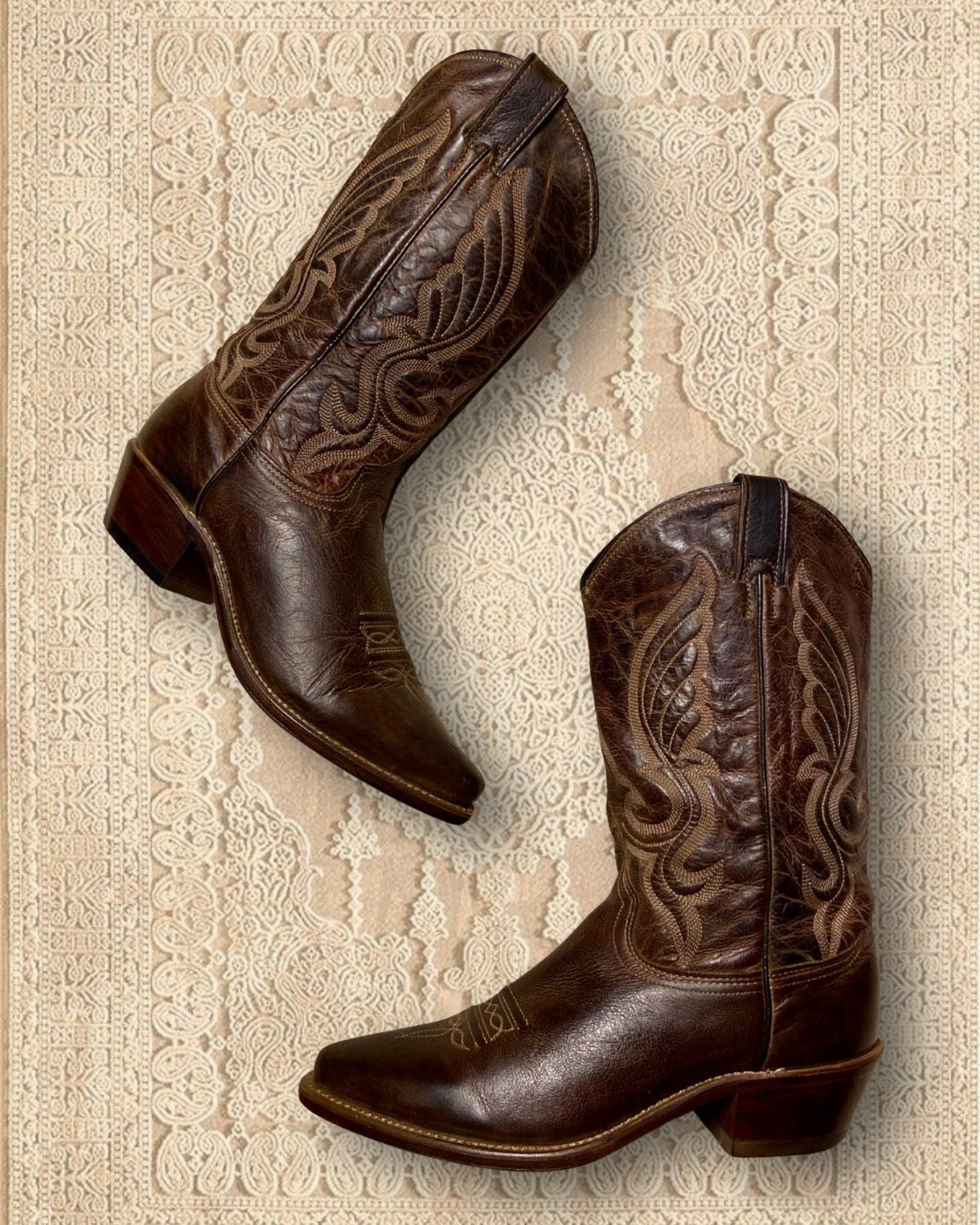
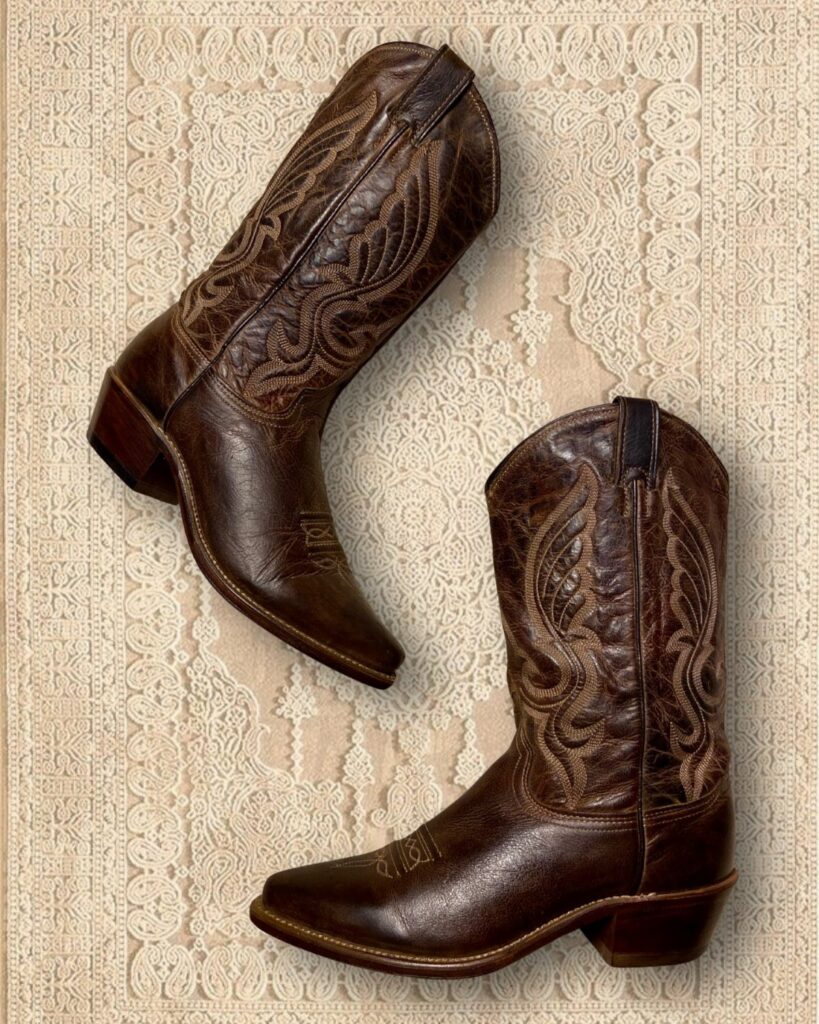
Embroidered shafts carry the most craft in a pair of cowgirl boots, and that craftsmanship stays visible even when the shaft is tucked under jeans.
The stitching is the point of cowgirl boots, not a bonus; I would choose my pair by the detail at ankle height, since that is what shows under jeans or a midi hem.
Colors run from dark brown through tan and into black, with suede as a softer, less weatherproof option. A mid-tone brown pairs with navy or olive without the flatness of true black.
3. Cowboy Boots
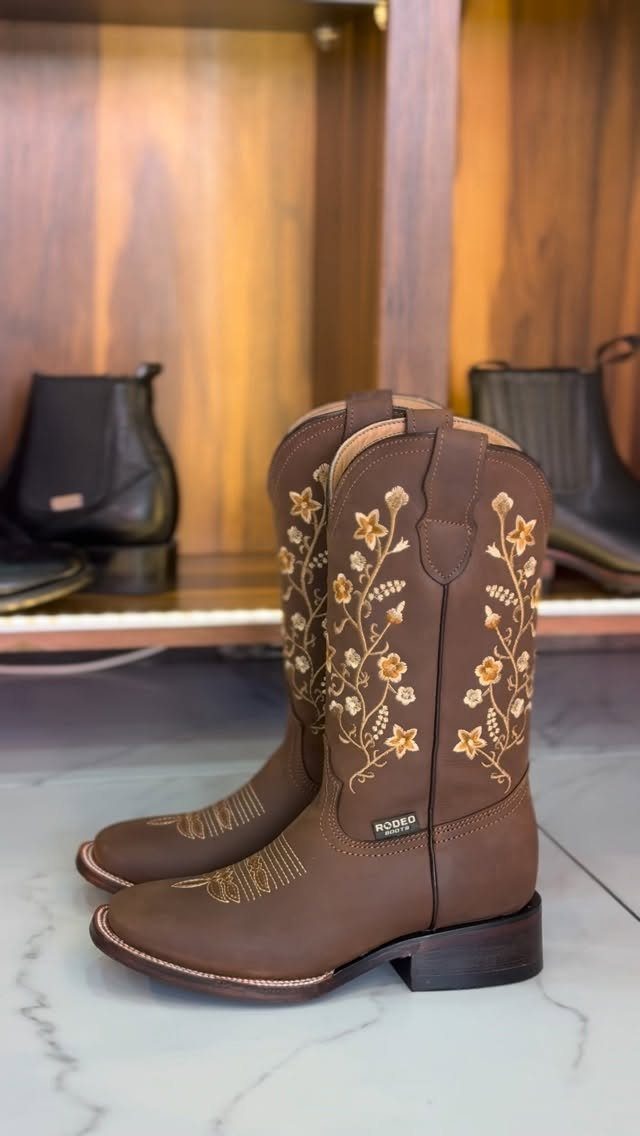
Yellow floral embroidery on brown leather marks these as traditional cowboy boots, built with a pointed toe that slides into a stirrup and a shaft tall enough to protect against brush.
The construction favors function first; the decoration came later and stayed.
For men buying their first pair, I would check that the toe tapers enough for your jeans but not so much that walking a full day pinches.
The leather softens with wear, so a slightly stiff new boot is correct, not a mistake.
4. Ankle Boots
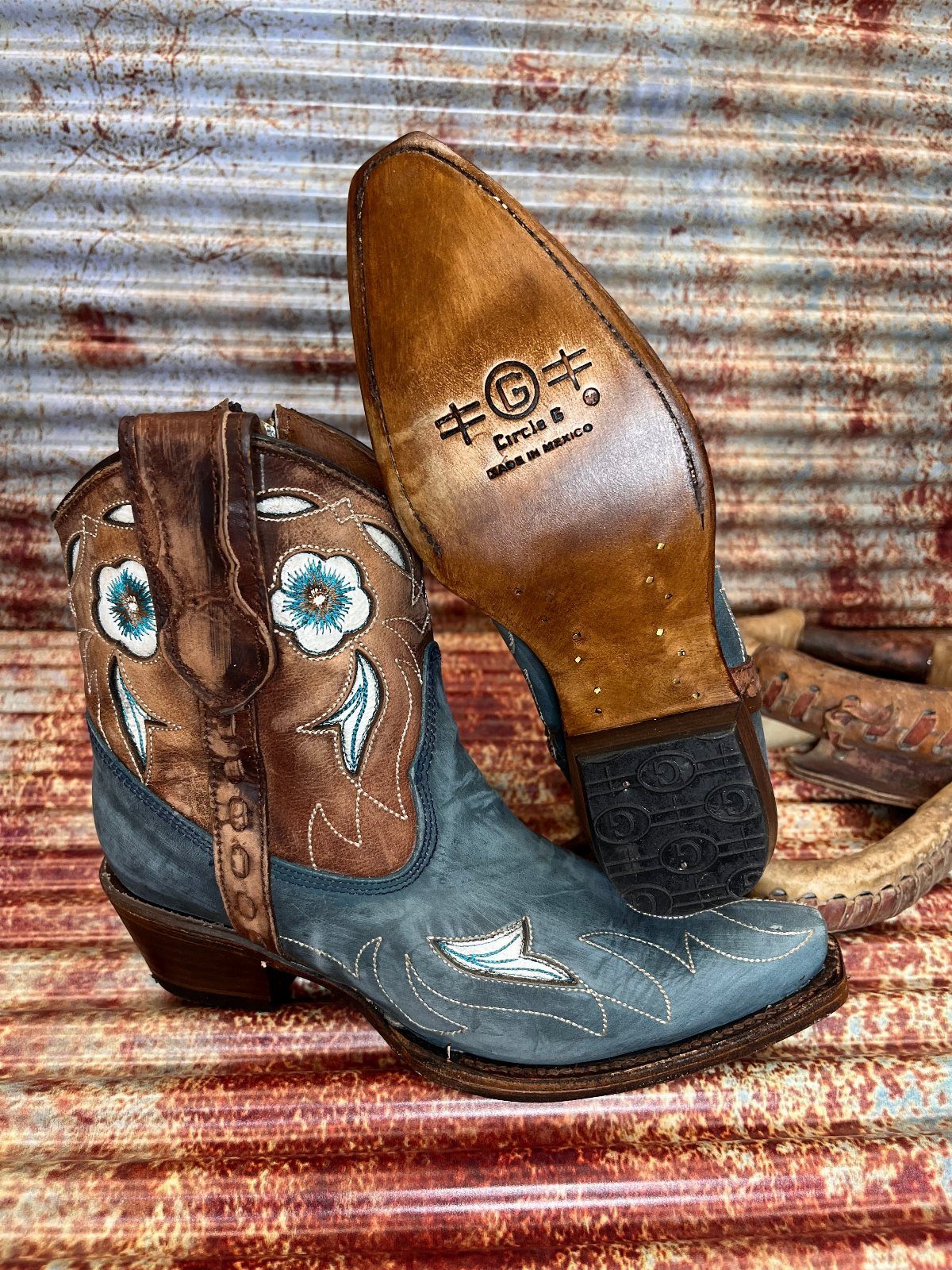
Ankle-height western boots with white floral embroidery on blue and brown leather solve the problem of cowboy boots that feel like a commitment. The shorter shaft works with cropped jeans, midi skirts, and dresses that full boots would overpower.
The sole reads "Circia B MADE IN MEXICO," which suggests hand finishing; I would verify the country of origin if that matters to your budget, since Mexican-made boots often sit between mass production and custom work in price.
The red tassel variation I have seen adds a dressier option for evening.
5. Leather Boots
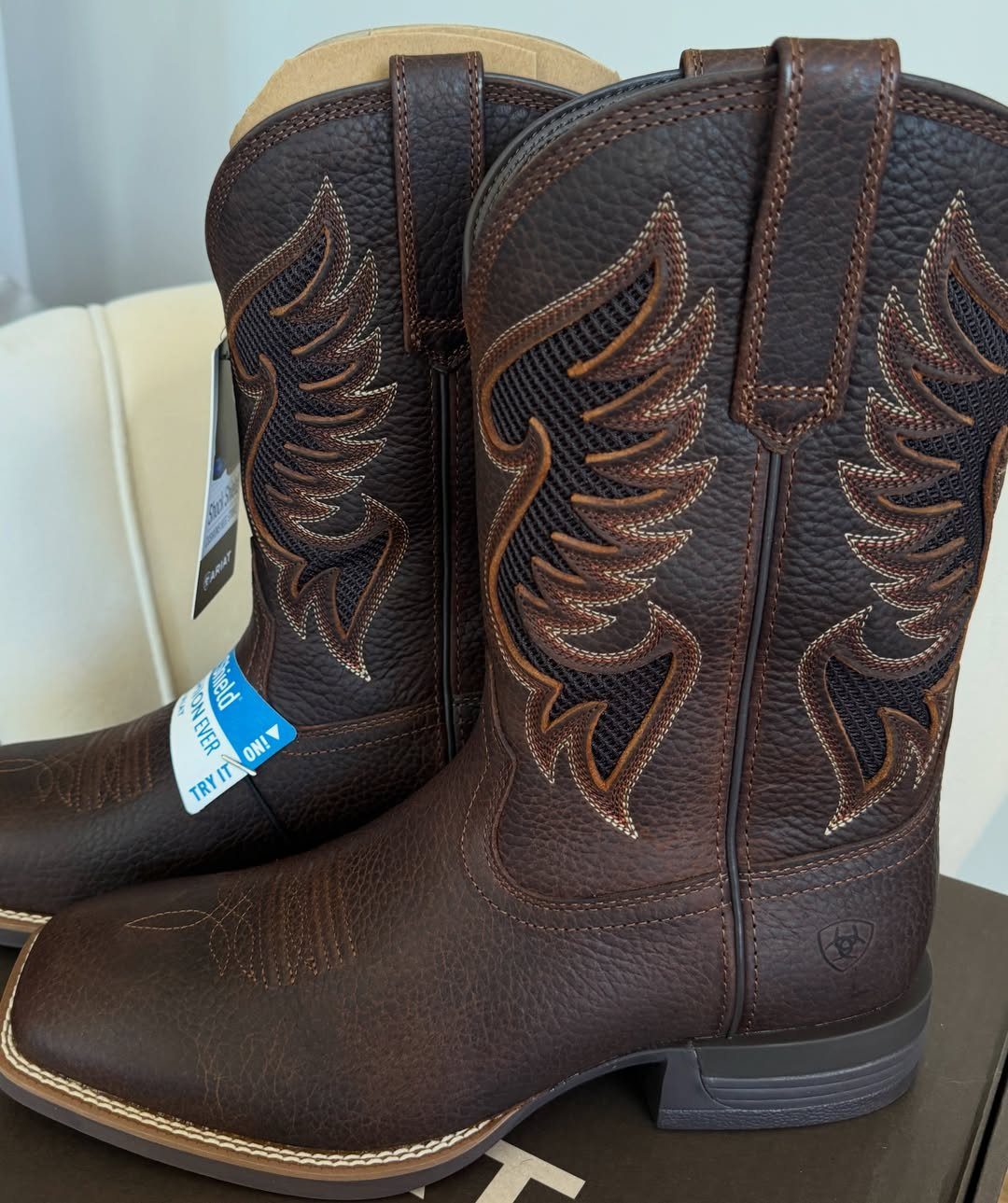
Ariat’s Shock Shield tag on dark brown leather with mesh panels signals work boot engineering slipped into western styling. The mesh vents heat; the stitching and paneling keep the look traditional from a few steps back.
For all-leather alternatives, I have seen cowhide shafts with tan leather toes that pair cleaner with lighter denim.
The speckled pattern is harder to match than solid brown, so I would choose it only if your wardrobe already runs toward cream, tan, and off-white tops.
6. Modern Cowboy and Cowgirl Boots
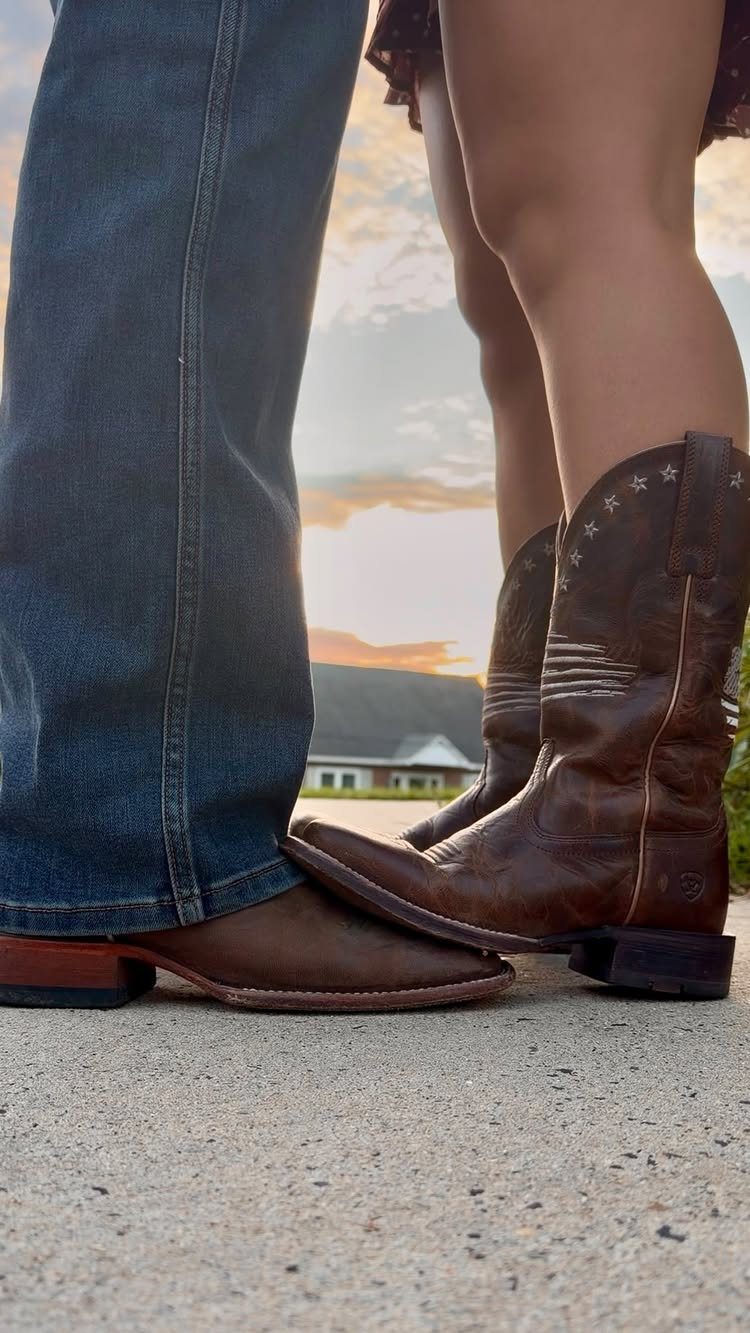
Modern western wear works as couple styling when the 2 pairs share a color family but stop short of matching exactly.
The brown leather boot with tonal embroidery and a snip toe narrows the shaft and raises the heel slightly; it reads city boot barn, not ranch.
For younger buyers, the neutral grey pairs with black denim in a way traditional brown resists. The distressed finish hides scuffing, which matters if these are your daily boots rather than occasional wear.
Cowboy Boots Fashion Trends
All-black western dressing works for concert nights when the textures vary enough to read as intention, not absence of choice.
A fringe jacket over a tank creates movement against static denim shorts; the silver buckle catches light the leather absorbs. I would keep the boots knee-high and the heel chunky for hours on concrete floors.
The pointed toe and pull-on shaft are practical details, not styling flourishes. A boot you can get into without hardware matters at a festival port-a-potty; the toe shape matters less for walking than the heel width does.
For city wear, I would break the monochrome. Brown boots against white or grey against black denim read deliberate where all-black can read uniform.
Choosing the Right Fit
I would try boots late in the day, when feet have swollen to their working size, and wear the socks I plan to use.
The leather softens, but the last does not reshape.
A pinch across the ball of the foot stays a pinch; looseness at the heel, though, can be corrected with a half-insole or a thicker sock. I would walk a hard floor, not carpet, before deciding.
Shaft height changes the fit question. Tall boots need to clear the calf at its widest point without gaping at the ankle; ankle boots need to sit close enough not to rub the heel bare.
The Circia B sole I noted is hand-finished, which can mean slight variation pair to pair. I would check both boots, not assume symmetry.
Frequently Asked Questions
What’s the difference between cowboy boots and cowgirl boots?
The pointed toe was made to slide into a stirrup and the tall shaft to block brush; that function-first build is what still defines the classic style.
Cowgirl boots carry their craft in the embroidered shaft, and the stitching is the main feature rather than an extra.
What shows below a jean hem or at the edge of a midi skirt is the detail at ankle height, so that is where I look when I am choosing a pair.
What are the types of cowboy boots?
Brown leather with yellow floral embroidery, a pointed toe, and a shaft tall enough for ranch work: that combination is the traditional look most people picture.
Work-engineered versions add mesh panels for heat venting or rubber heel caps for arena floors.
Are cowboy boots out of style in 2026?
No. White leather cowboy boots are suggested for summer 2026 outfits, and wedge heels are flagged as potentially coming back.
What are cowboy boots called for women?
They are called cowgirl boots. The name marks the shift from men’s functional construction to women’s decorative emphasis, particularly the embroidered shaft that shows under hems.