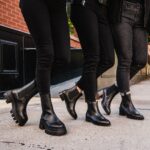
The ten pairings below include flat lug-sole boots, block heels and stiletto ankle boots, and the right one depends almost entirely on your jean cut: skinny, cropped, wide-leg, straight or flared.
1. Skinny Jeans
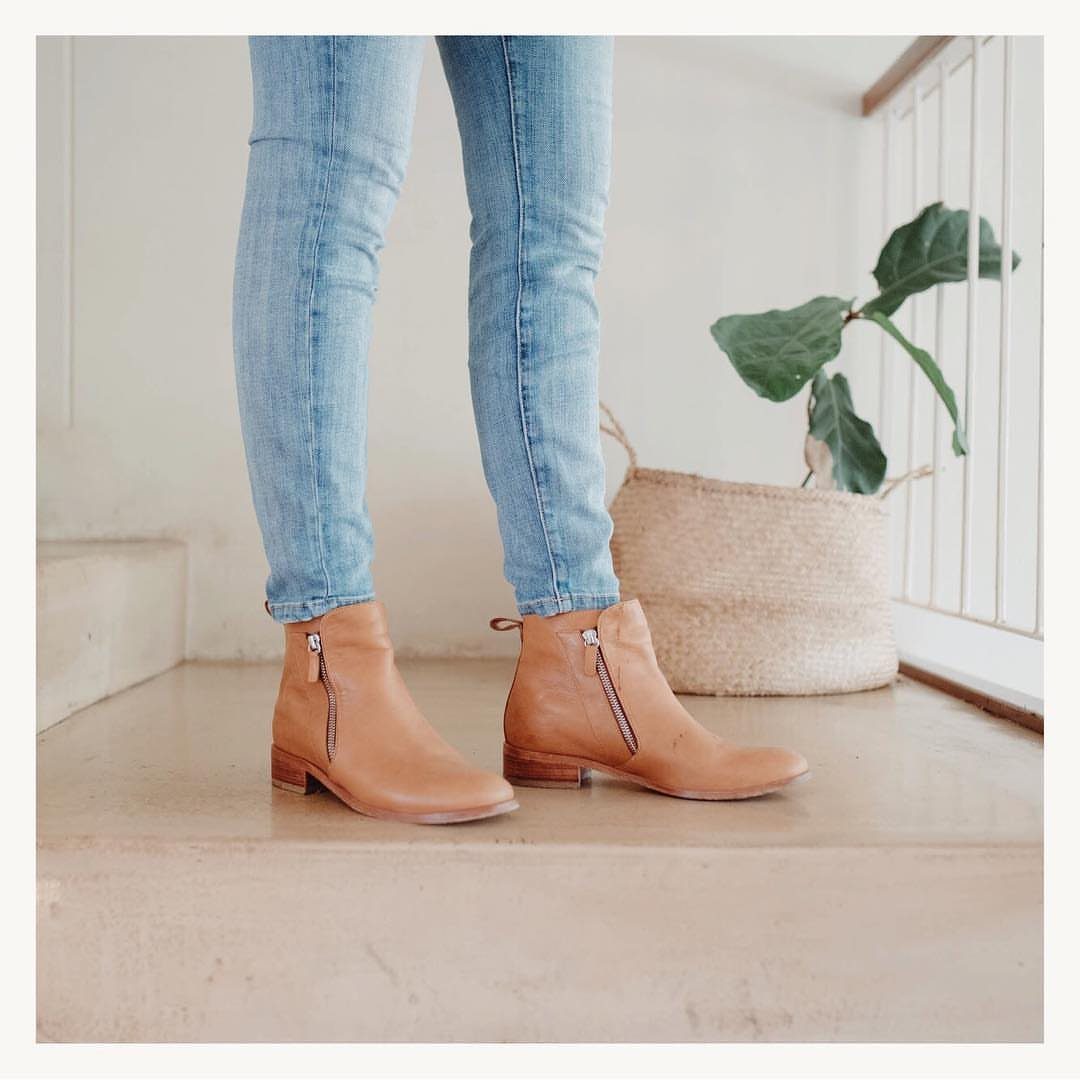
Skinny jeans ask for boots slim enough to slip underneath without bunching. A sock bootie or any shaft that hugs the ankle keeps the line clean and avoids the heaviness that comes from tucking into something wider.
High-waisted cuts help here, since they balance the narrow leg and give the whole outfit a shape that reads intentional rather than leftover from a decade ago.
If your skinnies are on the longer side, rolling the hem under works, though I find it trickier to get right than simply buying the right boot.
I aim for one continuous vertical line from knee to toe, not a visible break where denim meets leather.
2. Cropped Jeans

Cropped jeans do the opposite of hiding your boots; they frame them. The cuff sits clear above the boot or the jean covers it entirely; anything in between looks accidental.
A slim ankle boot or sock style keeps the proportion balanced, since the cropped length already interrupts the leg line and more bulk just competes for attention.
Flat chelsea boots are the easy fallback when you want comfort without the height. For a sharper look, a shorter block heel adds structure without the wobble of a stiletto on morning pavement.
3. Lug Sole Boots

A lug sole boot carries weight literally and visually, so the jeans need to cooperate. Straight-leg cuts that end right at or just above the boot let the pants fall cleanly over the shaft without puddling.
Extra fabric bunched around that thick tread looks like you are standing in holes, which undercuts the deliberate, almost industrial silhouette the lug sole is meant to create.
Cropped or slightly shortened jeans solve this cleanly. The boot does the work of anchoring the outfit; the denim’s job is to get out of the way.
4. Cuffing Your Jeans with Ankle Boots
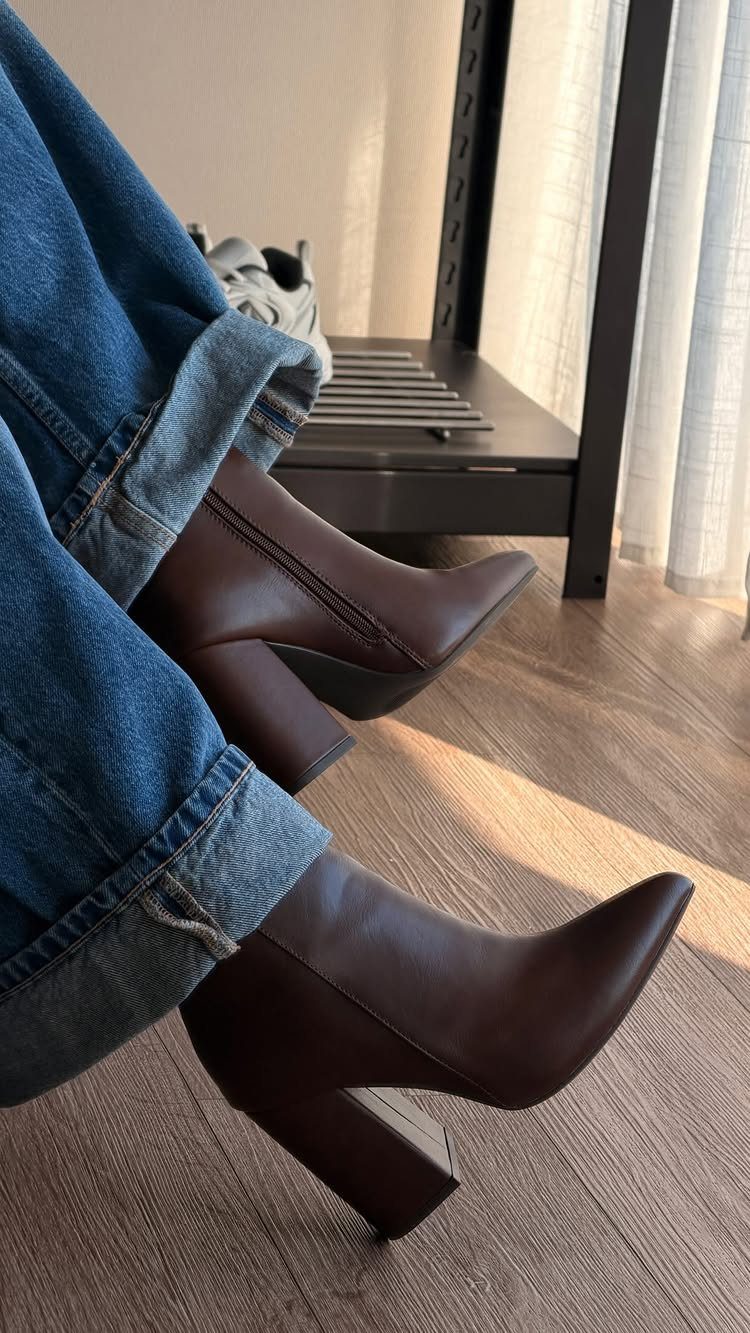
Cuffing used to be the automatic move for ankle boots, and it still works when the jeans are too long or the boot is worth showing off.
A single substantial roll beats a stack of thin ones, which read as indecision rather than intention. Wide-leg denim can take a deeper cuff without looking wrong; narrower jeans need a neater, shorter turn.
Check where the cuff lands relative to the boot shaft. The break should be deliberate: either the cuff sits clear above the boot or the jean covers it entirely.
The in-between zone, where a sliver of boot peeks out below a half-cuff, tends to chop the leg at its widest point.
5. Straight-Leg Jeans

Straight-leg jeans and ankle boots share an understanding about proportion: neither is trying to be the entire outfit.
The jean should hit above the ankle, flush with or slightly covering the boot’s top edge, so the transition reads as continuous. Pointed-toe boots extend this logic, adding length that balances the straight cut’s refusal to taper.
Dark washes with a blazer move this combination into offices that allow denim; lighter washes stay weekend.
The boot’s heel height matters less than its toe shape here, since the straight leg gives you room to choose without distorting the silhouette.
After seasons of cropped hemlines skimming over ankle boots and straight-leg jeans paired with tall boots, the city’s most stylish are flipping the script. Picture perfectly slouched denim slightly rumpled at the knees and cinched inside sharp leather boots—there’s something effortlessly intentional about it.
6. Pointed-toe Boots with Flared Jeans

Flared jeans need a toe that points forward, not down.
Round-toe booties with that widening hem read instantly dated; an almond toe softens the transition if you already own a pair, but pointed is the shape that pulls the eye along and keeps the leg line going.
Kitten heels and block heels both work with the flare’s drama, the former playful, the latter more grounded.
I would choose a shorter shaft for this pairing, since the flare’s volume competes with anything that rises too high. The boot should end where the jean begins its widen, not fight it for territory.
7. Stiletto Ankle Boots with Jeans
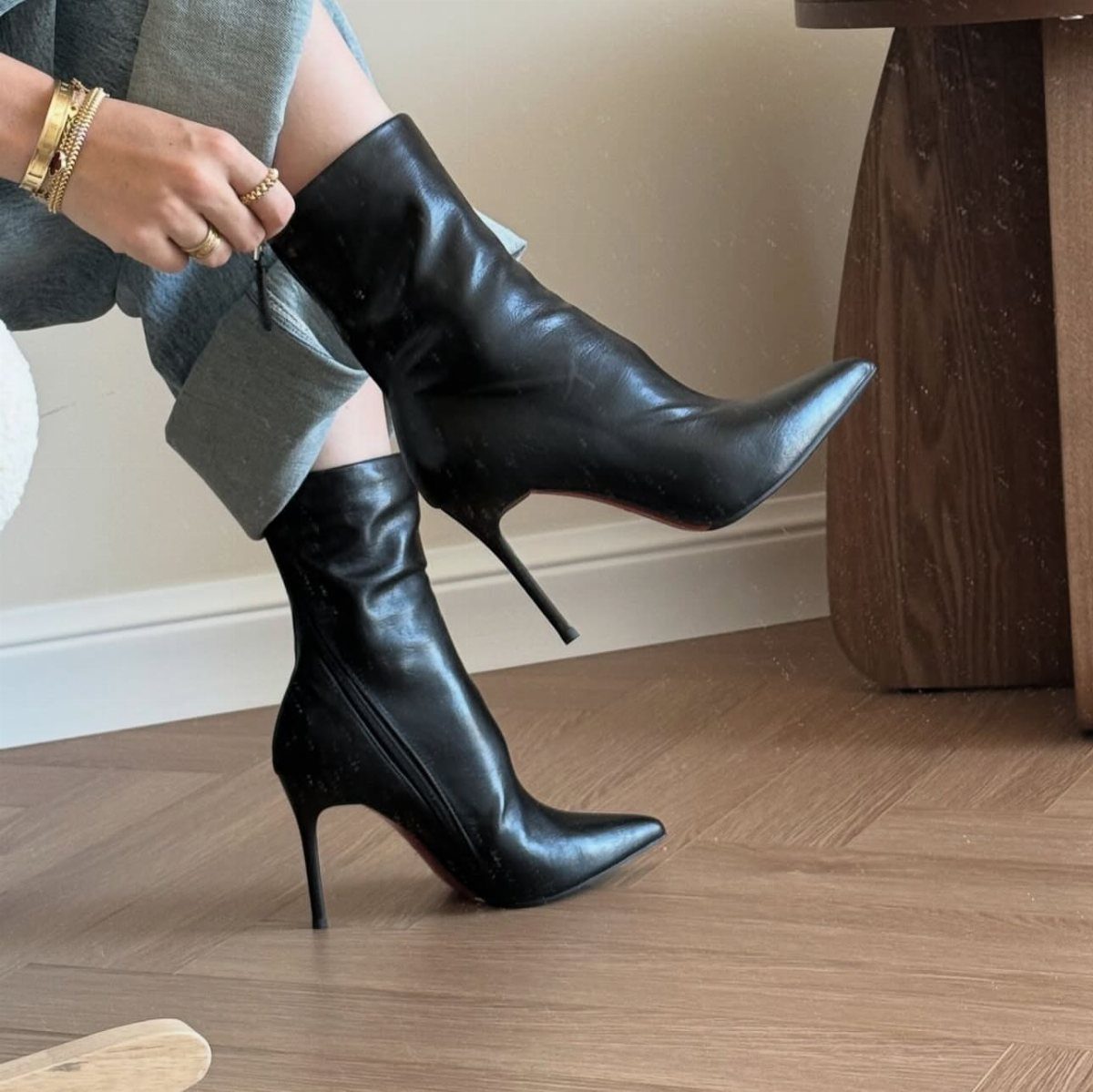
A stiletto ankle boot turns even basic grey denim into something sharper than the sum of its parts.
The pointed toe and narrow heel add length where the cropped cut shortens it, so the leg line stays intact rather than interrupted.
I would keep the wash dark or medium; light denim with this much heel can read nightclub at noon.
The boot itself should sit close to the ankle, no slouch or excess shaft material, or the sleekness you paid for gets lost in folds of leather.
8. Block Heel Ankle Boots
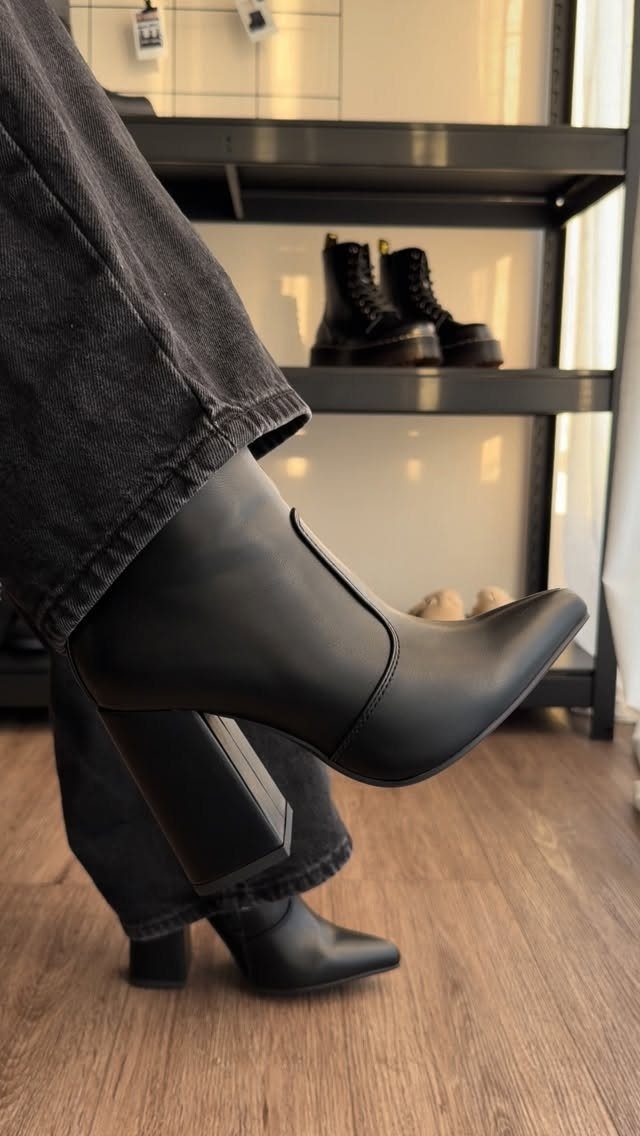
Block heels under 2 inches keep you upright through a full day without the wobble of a stiletto, and the pointed toe still draws the eye forward.
Dark grey or washed black denim lets the boot do its job without competing for attention.
The shaft should stay slim; extra bulk at the ankle breaks the line and turns the block heel clunky rather than grounded.
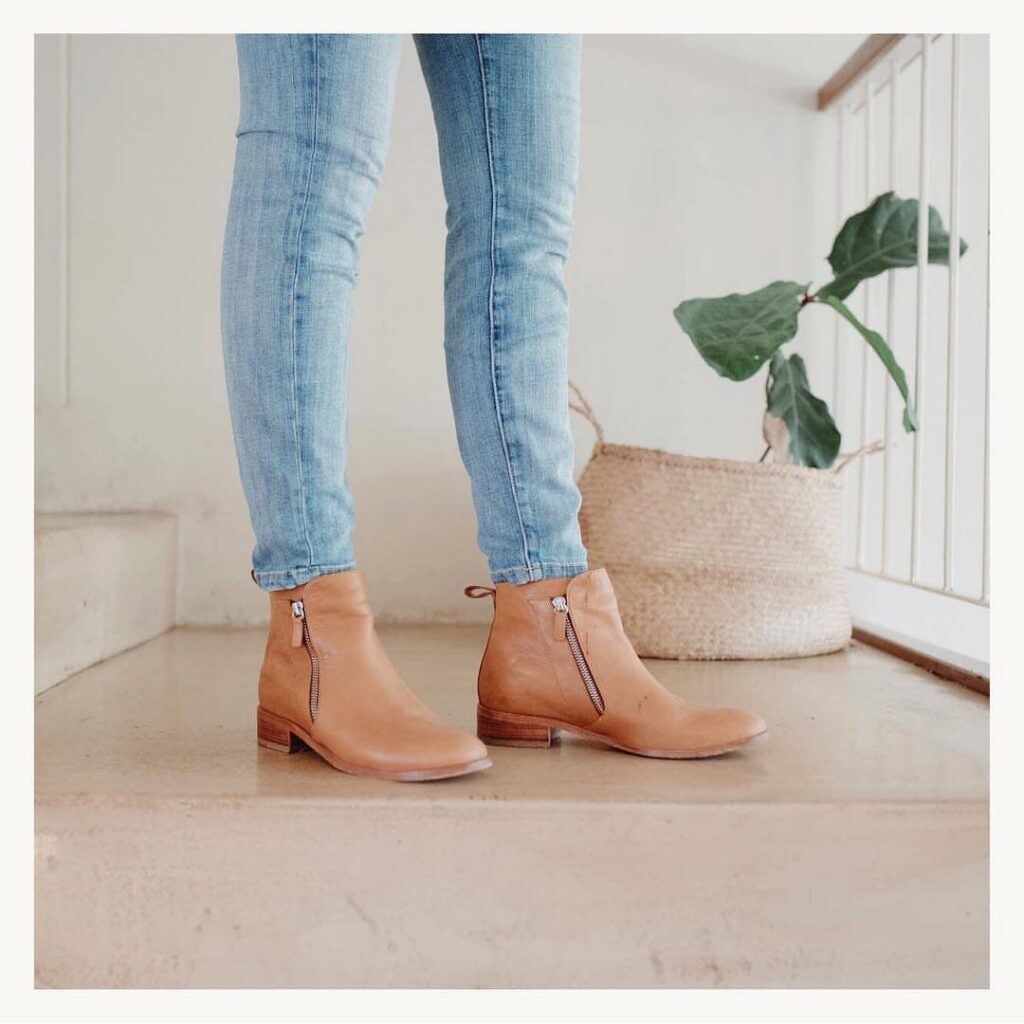
Side-zip styles slide on faster than pull-on boots when you are dressing in a hurry, and they sit neater under a straight or slightly cropped jean hem.
9. Statement Heel Boots with Jeans
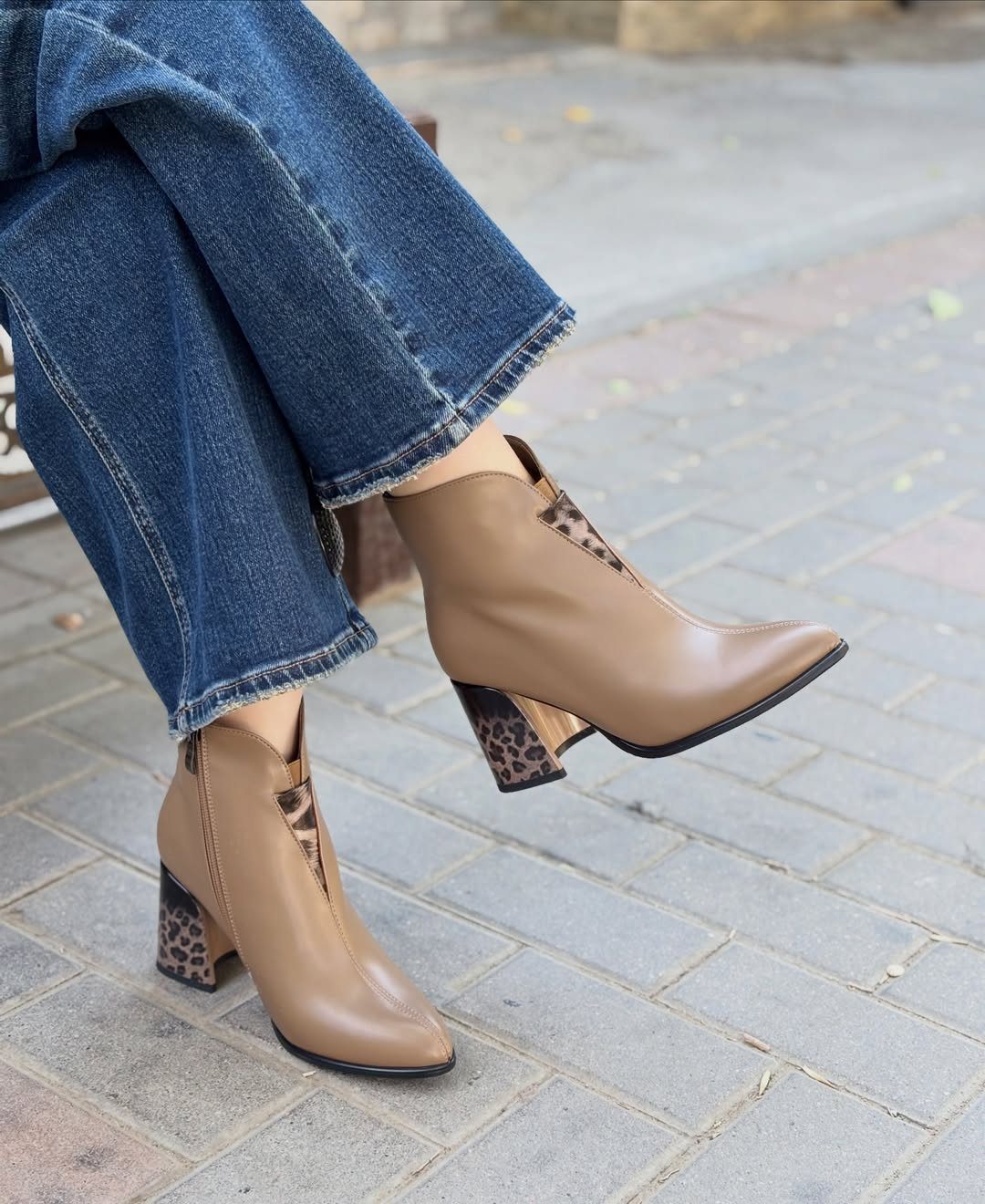
A leopard-print heel on an otherwise plain tan boot is the kind of detail that works because it is confined to one small zone.
Blue cropped jeans give it room to show without the pattern fighting a darker wash or a longer hem.
The block heel here is practical enough for daytime, and the pointed toe keeps the look pulled-together rather than costume.
I would treat this as the one loud piece in the outfit; everything else stays solid and quiet, or the effect tips from intentional to crowded.
10. Wide Leg Jeans
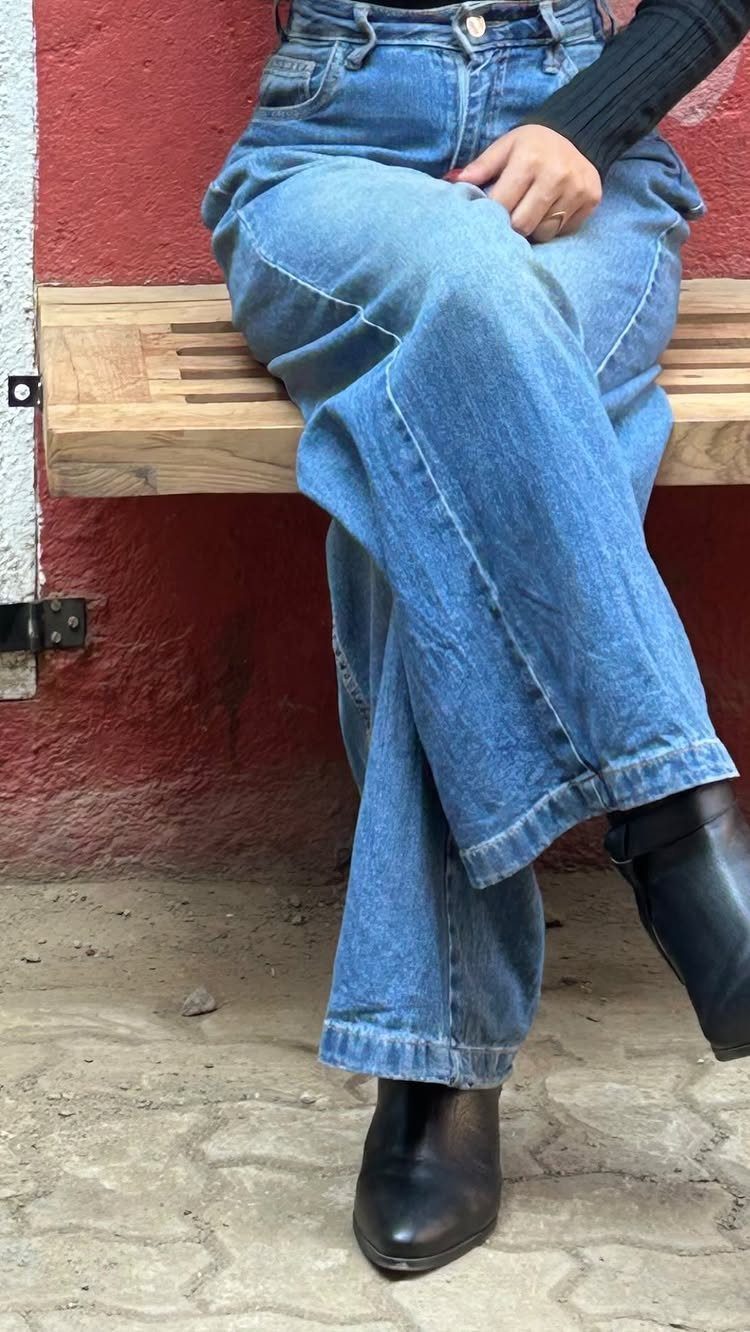
Wide-leg denim needs a boot that keeps the ankle narrow so the volume above it reads as shape rather than width.
A slim black leather boot with a pointed toe and a heel, block or stiletto, draws the line downward; a chunky rounded boot pools the eye at the ankle and turns the silhouette boxy.
The jean should graze the boot’s top or break just above it, never hover with skin showing. High-waisted cuts help, since they reset the proportions and keep the wide leg from swallowing your frame.
11. Lace-Up Ankle Boots
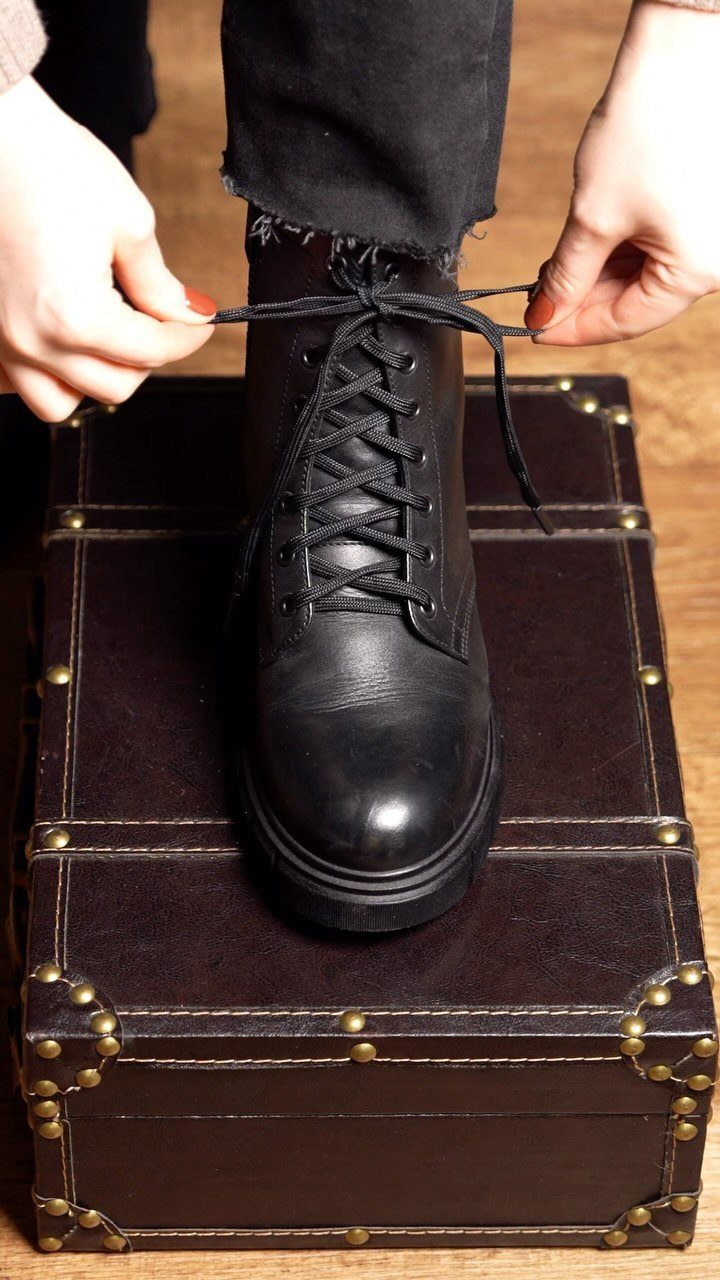
Lace-up boots give you control over how tightly the shaft hugs the ankle, which matters when you are tucking denim of any weight inside or wearing it cropped above.
Black leather with black laces stays versatile; a frayed hem above it adds texture without introducing a second color to manage.
I would lace them snug enough that the tongue does not gape, but not so tight the leather creases awkwardly when you walk.
The lacing itself is the detail here, so I skip extra hardware or prints and let the construction read.
Choosing the Right Ankle Boots
Sock boots and zip-up mid-calf styles pull this off; low-cut Chelsea boots from decades past often sit too low and too loose, letting denim bunch or break the eye line.
For baggy or wide-leg jeans, the pointed toe balances weight at the hem so the silhouette does not collapse.
Color Coordination
Black boots with black jeans read as one continuous line, which is slimming and slightly more dressed-up than blue denim.
Brown in cognac or chocolate works too; the contrast is present but not loud. Burgundy or deep red adds color without overwhelming, and animal print, leopard especially, gives personality to an otherwise plain base.
Metallic accents make a statement that stays controlled because the shine is confined to your feet. I would pick one of these moves per outfit and keep the rest solid.
Styling Tips for Different Occasions
For everyday wear, flat or low-heeled boots with straight-leg jeans, a sweater, and an oversized coat solve the cold-ankle problem that comes from pairing ankle boots with skinnies.
A simple tee works in milder weather. For a relaxed look, baggy or distressed denim with platform boots and the hem tucked in shifts focus downward.
Heeled boots, stiletto or block, dress up the same jeans for evenings or sharper occasions; the change is in the lift, not necessarily in the denim itself.
Avoiding Gaps
Snugness matters too.
A loose shaft lets fabric pool or fold, which creates the same visual interruption as a gap. Zipped or sock styles control this better than pull-on boots with excess material.
Frequently Asked Questions
How should boots be worn with jeans?
The cleanest look comes from letting the hem kiss the top of the shaft, so your leg reads as one unbroken shape from knee to toe.
Skinny jeans ask for boots slim enough to slip underneath without bunching; straight legs should stop dead at the shaft or a finger’s width above it; cropped lengths deliberately overlap to put the boot on display.
One thick cuff, folded with purpose, frames the boot nicely; a pile of skinny rolls looks like you could not decide what length you wanted.
Are ankle booties still in style in 2026?
Yes, though the shape that reads current has shifted.
A narrow pointed toe on a low or mid heel has outlasted enough seasons to earn its place; rounder toes or slouchy shafts from a few years back now look like they are trying too hard.
Wedge heels may be returning as of 2026, but the narrow, structured shaft remains the safer long-term buy.
What jeans should a 50 year old woman wear?
Straight-leg, cropped, and wide-leg jeans all work with ankle boots and avoid the upkeep that skinnier cuts demand.
High-waisted versions of any of these help balance proportion and read intentional rather than leftover from an earlier decade. Dark wash denim under a tailored blazer passes in offices that allow jeans at all; save the lighter fades for Saturday.