The 11 pairings below run from a light-wash denim uniform to metallic pink boots against a tiered skirt, so the deciding factor is how much structure your outfit already has: volume below needs a fitted shaft, bare calf needs a high waist, and busy layers need one quiet piece to steady them.
A hem that kisses the top of the boot or stops just above it keeps the leg line from cutting itself into sections.
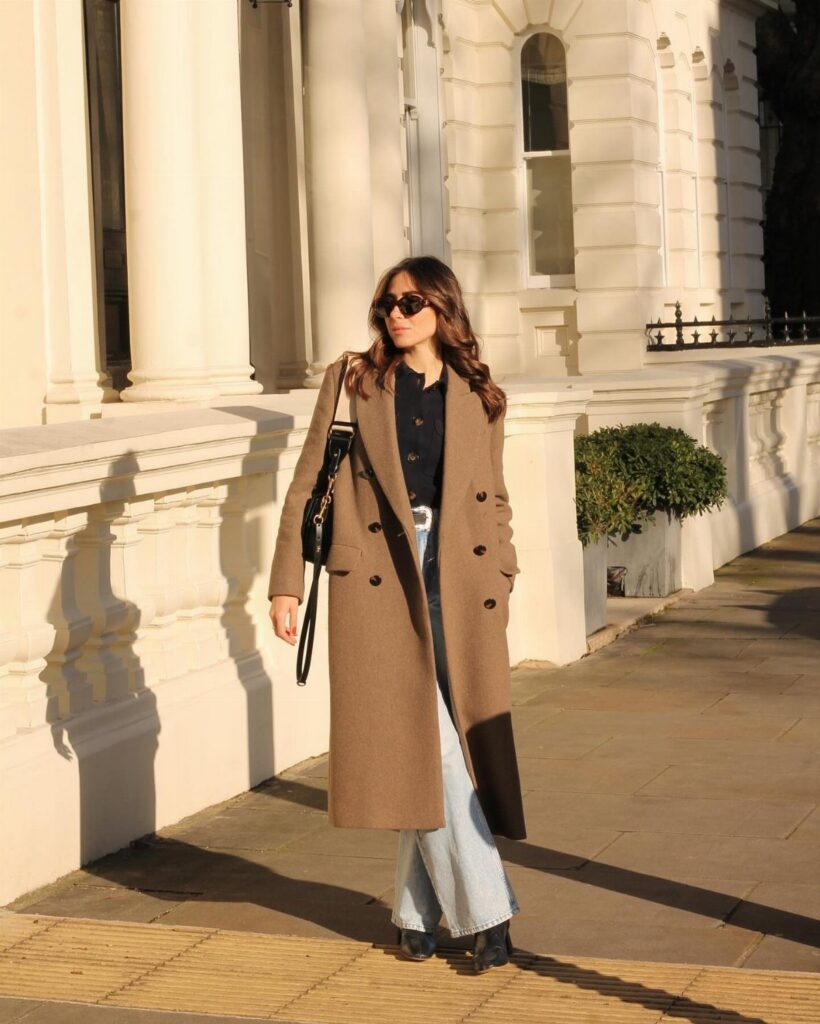
1. Ankle Boots with Wide-leg Jeans
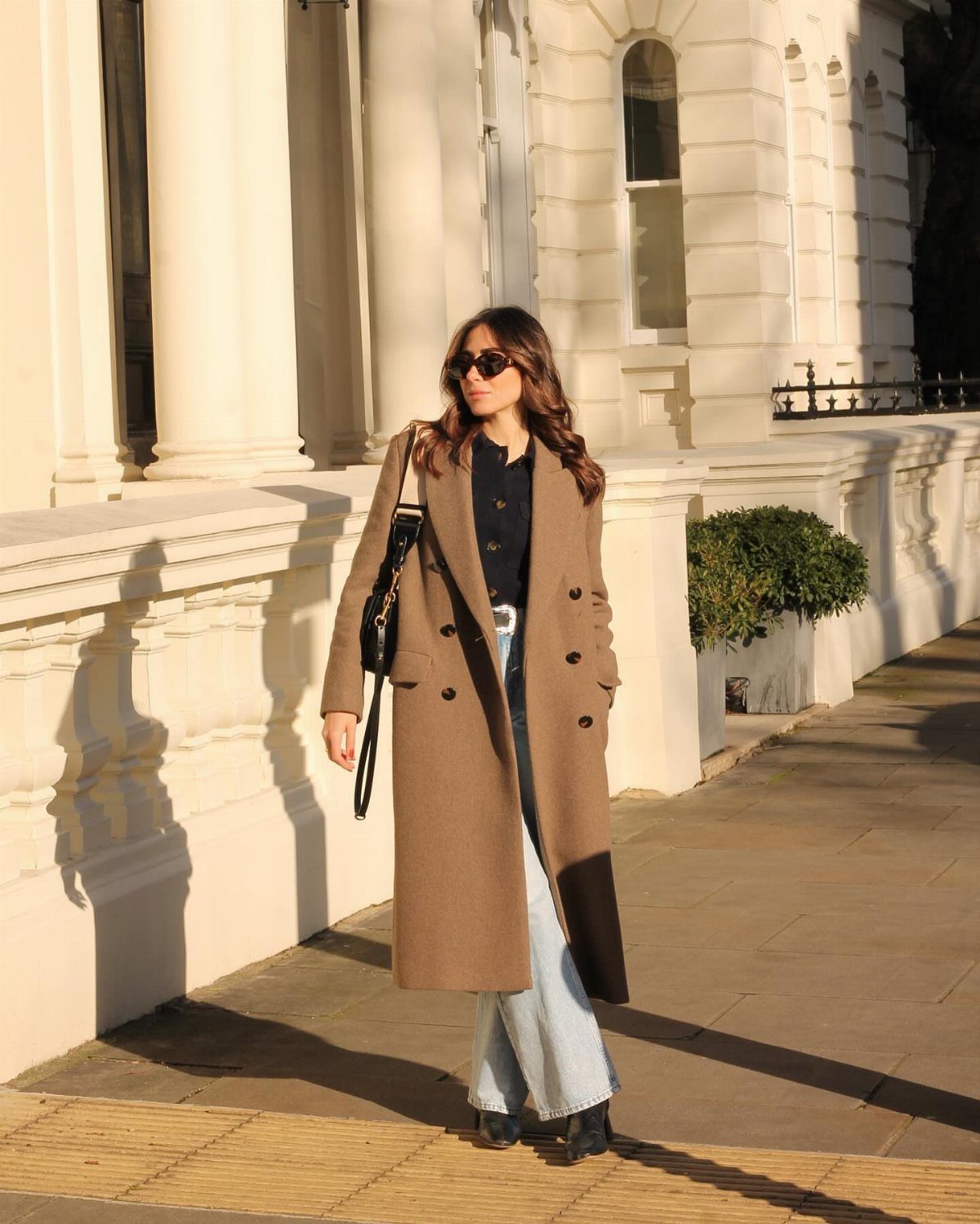
Wide-leg jeans need a boot with a fitted shaft so the fabric falls clean instead of pooling. The point of this pairing is balance: the volume below meets structure at the ankle, and the eye reads a single long line.
Black leather works here because it keeps the boot from looking like an afterthought peeking out. A slight crop to the jean, or a hem that skims the top of the boot, keeps the silhouette intentional rather than accidental.
2. Shoe Boot with a Skirt
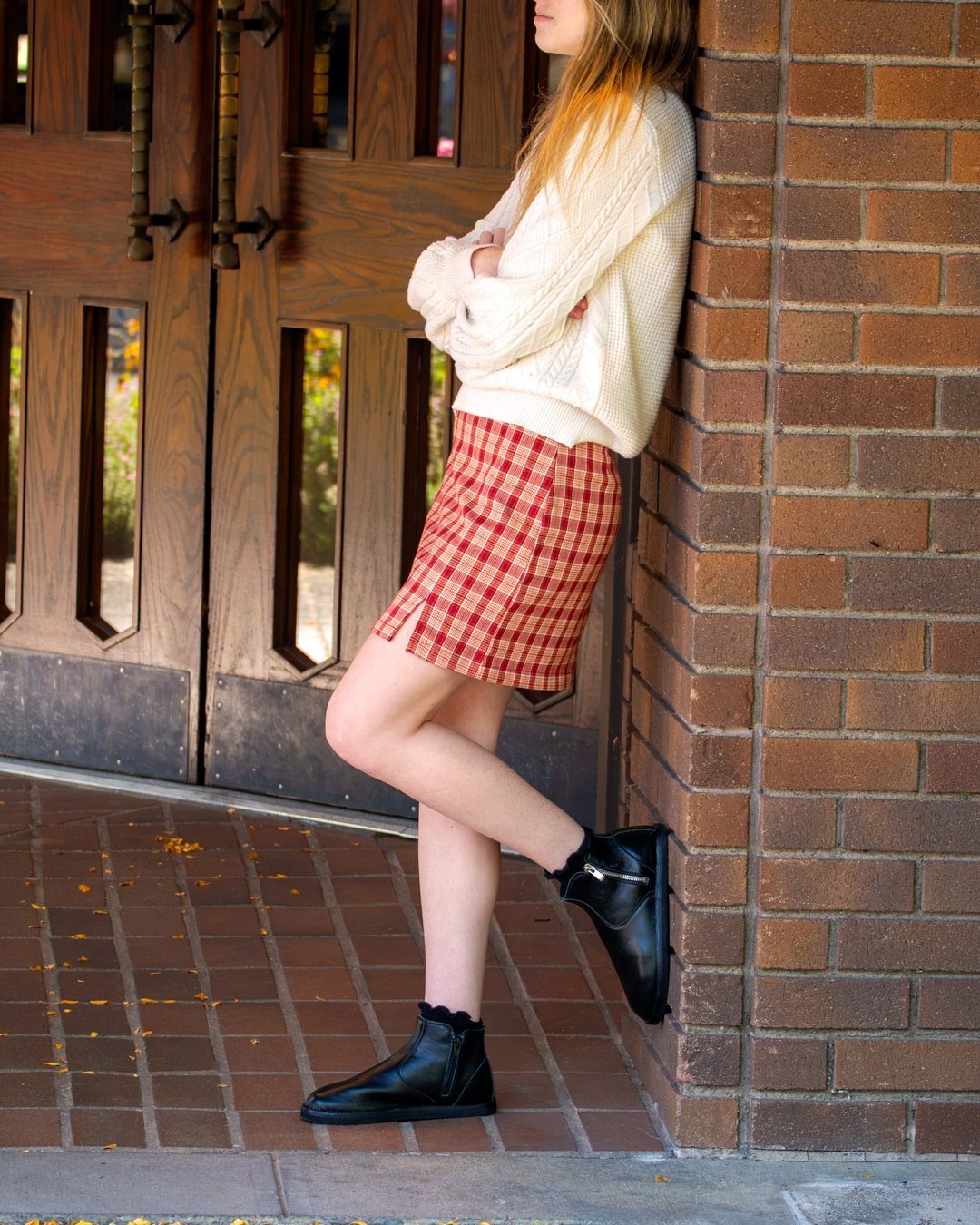
A shoe boot sits in an awkward middle zone between pump and bootie, which is why bare calf and a high waist save it.
The A-line skirt does the actual work: it creates a shape that reads complete without tights, and the boot’s low shaft becomes a punctuation mark instead of a gap.
Before trying this, check that your skirt hits above the knee by at least a few inches; anything longer and the proportion turns stumpy. Brick or teal in a cropped jacket adds the color this combination otherwise lacks.
3. Cropped Jeans with Booties
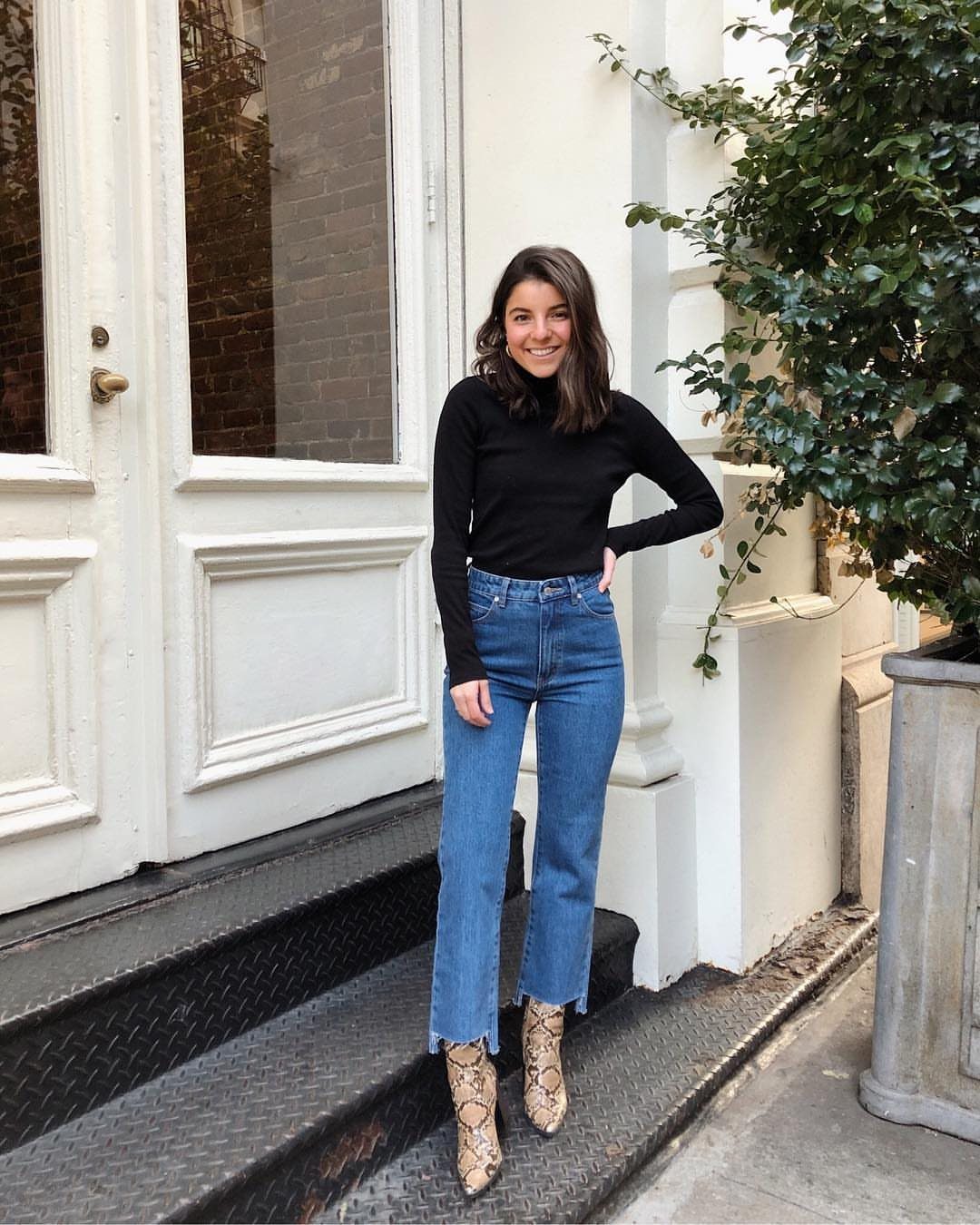
I aim for the hem to kiss the top of the boot or fall a half-inch above; more than a sliver of ankle showing and the leg line starts to chop itself into pieces.
Snakeskin adds interest because the cut is simple and the outfit is otherwise neutral.
Raw hems help here, they read as intentional rather than a jean that shrank. Lower shaft booties show more ankle, which is fine, but the gap is the detail that needs controlling.
4. Flared Jeans with Wedge Heel Ankle Boots
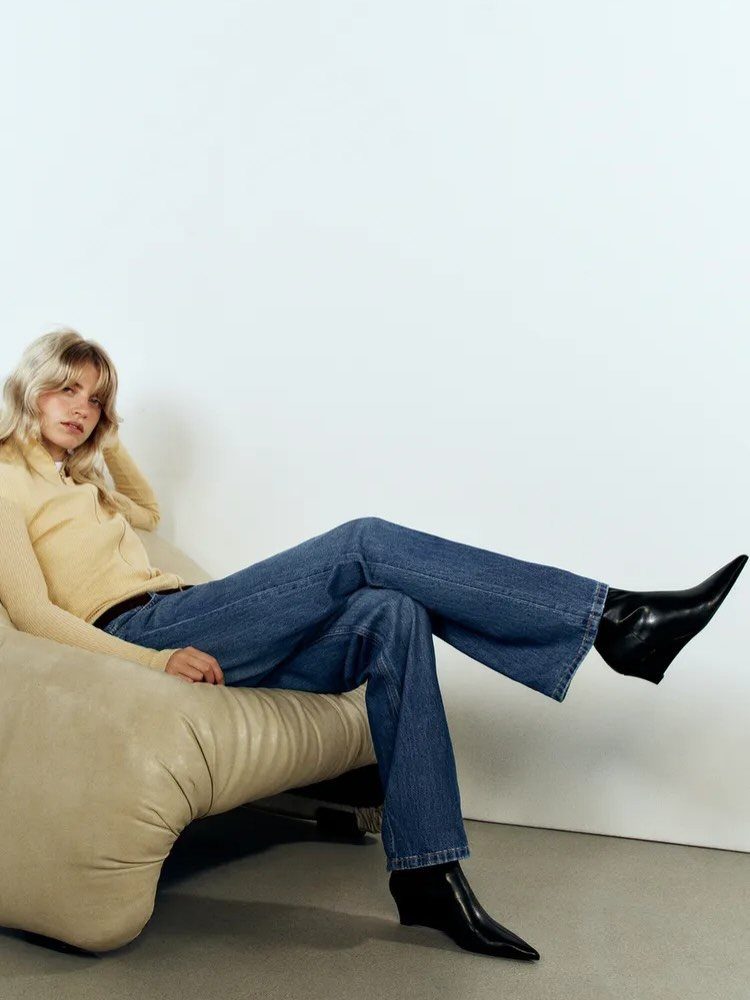
Flared jeans and wedge booties work because each side of the equation gives the other something to push against: the leg widens, the heel lifts, and the result reads as length rather than bulk.
The hem should graze the ground or sit just above; too short and the wedge loses its purpose.
A tucked-in turtleneck or cropped sweater keeps the waist defined, which matters more with this much volume below. For something looser, a boho blouse trades some structure for ease.
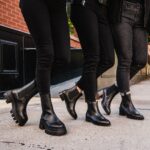
5. Ankle Boots with Skinny Jeans

Skinny jeans with ankle boots is the pairing that made ankle boots mainstream, and it still works because the clean line from hip to toe elongates the leg.
Full-length skinnies need a roll or a tuck; the overlap where jean meets boot shaft bunches and looks messy.
Black on black is my cold-weather default, it reads as one continuous piece and takes no thought in the morning. Lace-up boots add hardware interest that a plain shaft lacks.
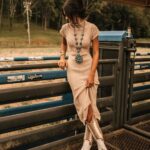
6. Maxi Dress with Ankle Boots
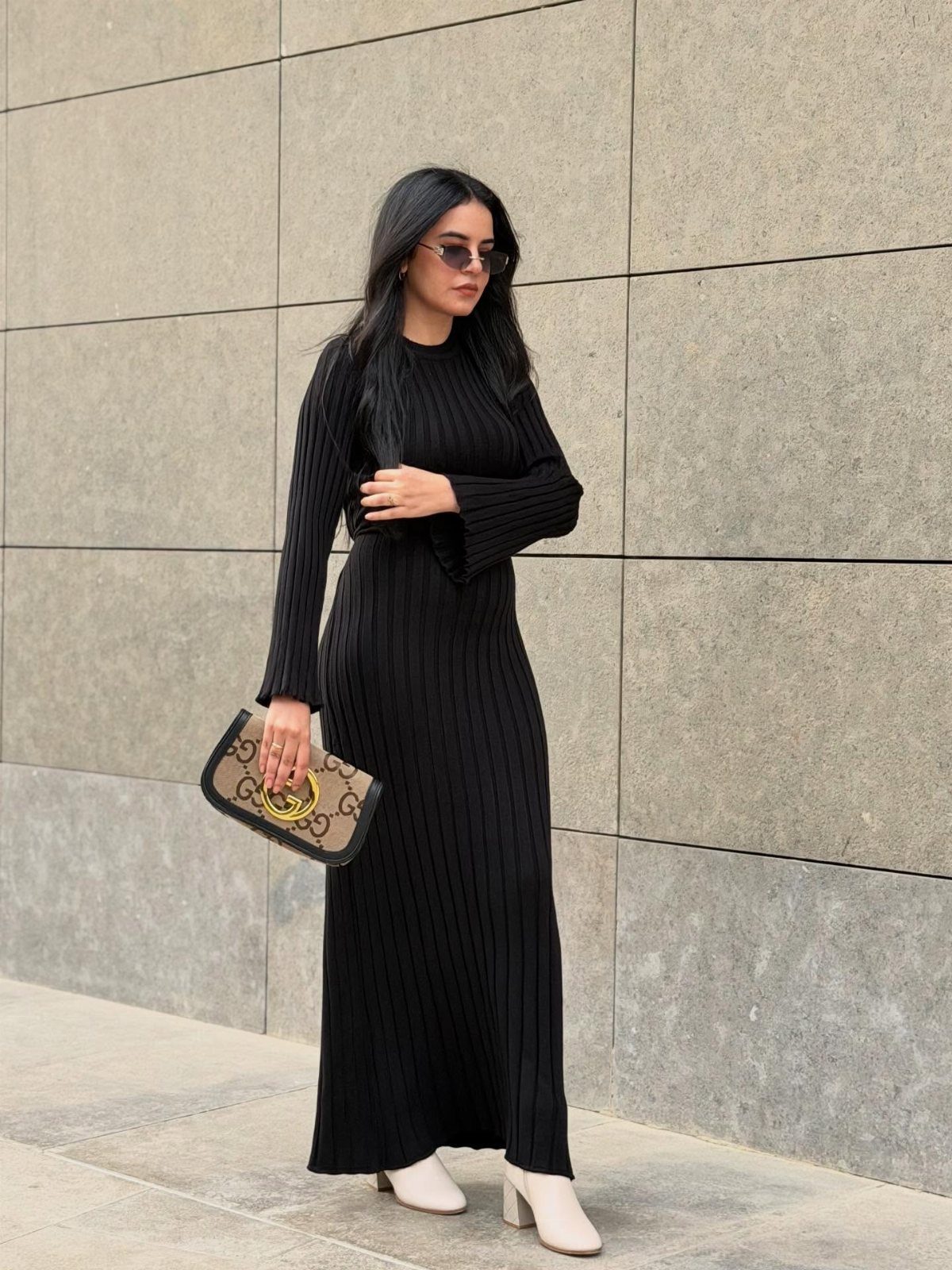
With only toe and heel peeking out from under all that length, those small visible pieces carry the whole look, so I pick them with more care than the dress itself sometimes.
Cream block heels against black ribbed knit is a weight match: the dress has body, the boot has substance, neither overpowers.
I add a belt at the waist, because without some break in the line, the dress and boots merge into one long shapeless column and the shoes might as well not be there.
For lighter fabrics like silk or chiffon, switch to a slimmer, lower-profile boot; the same principle applies, but the execution changes.
7. Leggings with Platform Ankle Boots
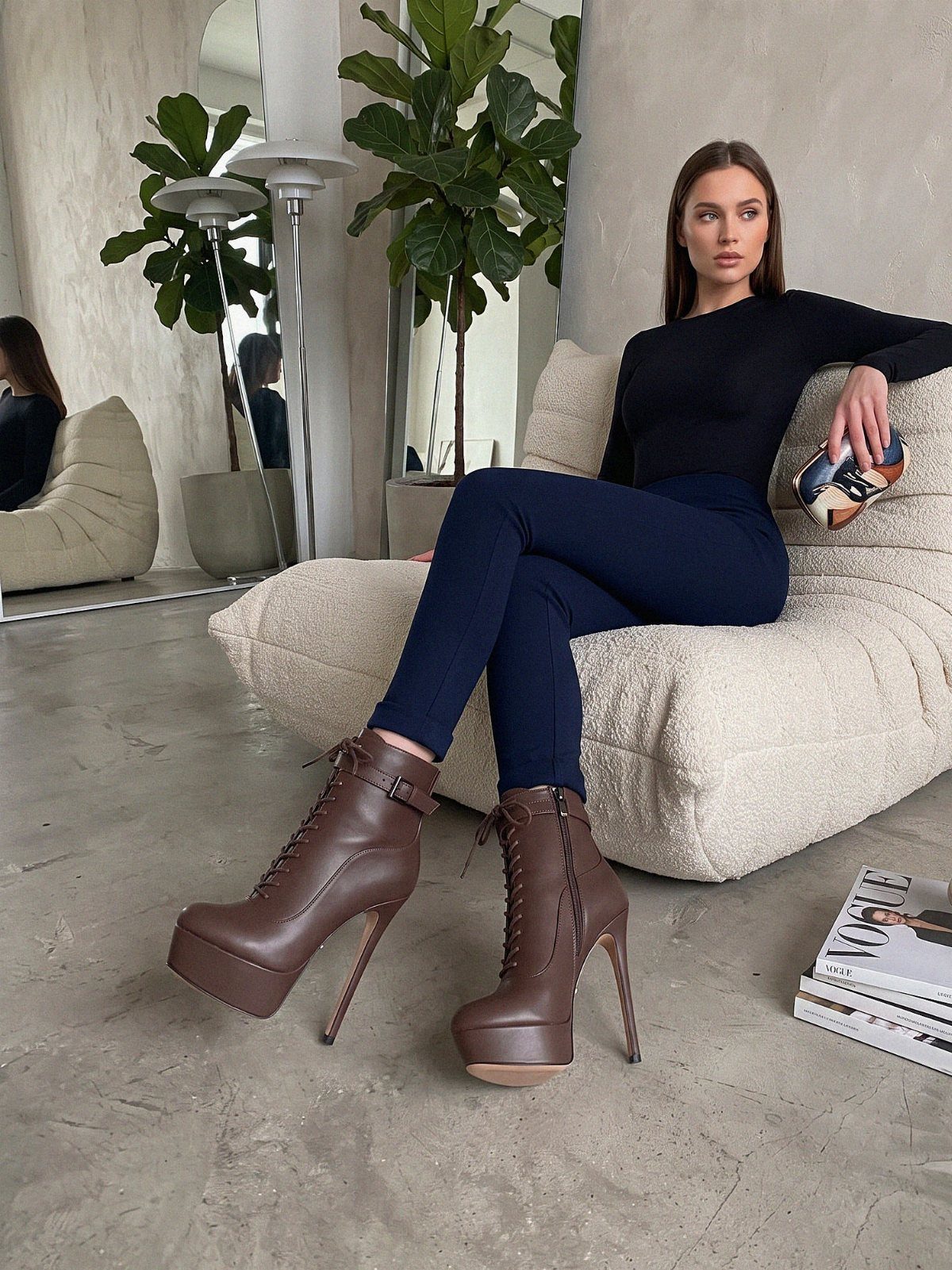
The platform sole in a boot needs something equally clean on the leg or the whole figure tips forward visually.
Leggings do this job because they hold close to the calf and ankle, letting the boot read as a deliberate block rather than a weight dragging the outfit down.
A dark legging against brown leather keeps the color story simple; the boot’s lacing becomes the detail that matters.
The heel here is tall, so I would check that the platform itself is substantial enough to offset it before walking any real distance in these.
8. Layered Dress and Platform Boots
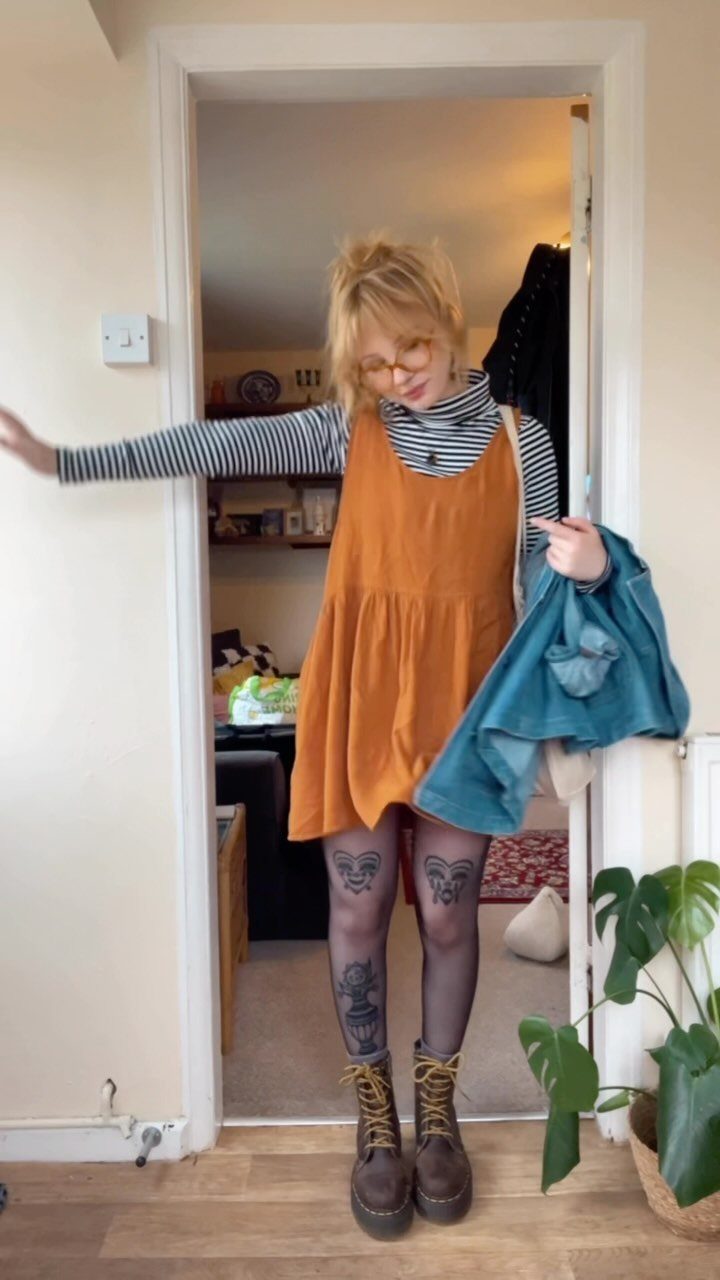
Layers this busy need one quiet piece to steady them, and the brown boots serve that role even though they are chunky; their solid color and matte leather pull the eye down and stop the pattern mixing from floating away.
An orange pinafore over a striped turtleneck is already 2 fights to referee, so I would keep the tights in a similar scale to the stripes rather than adding a third conversation.
The boot height matters: a shaft that ends at mid-calf would cut the leg at its widest point, but these lace above the ankle and still keep the line fairly long.
9. Mini Skirt and Tailored Blazer
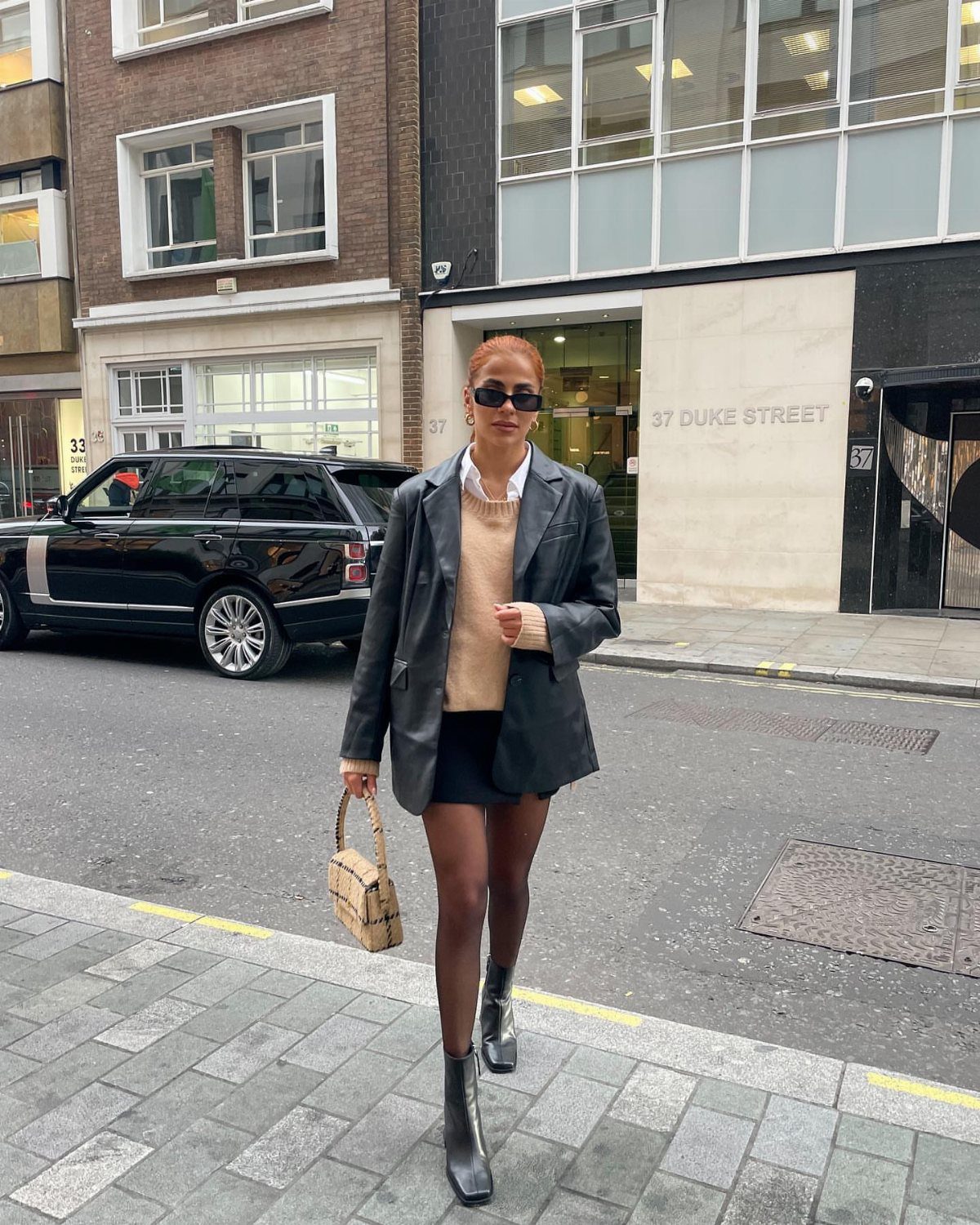
Black on black here is not boring; it lets the silhouette do the work. Tights run the season, opaque in fall, sheer or skipped in spring, but the boot stays constant.
I would keep the blazer length within a few inches of the skirt hem; a longer jacket over a mini starts to look like a wearer who got cold rather than someone who planned an outfit.
10. Blazer and Blue Jeans
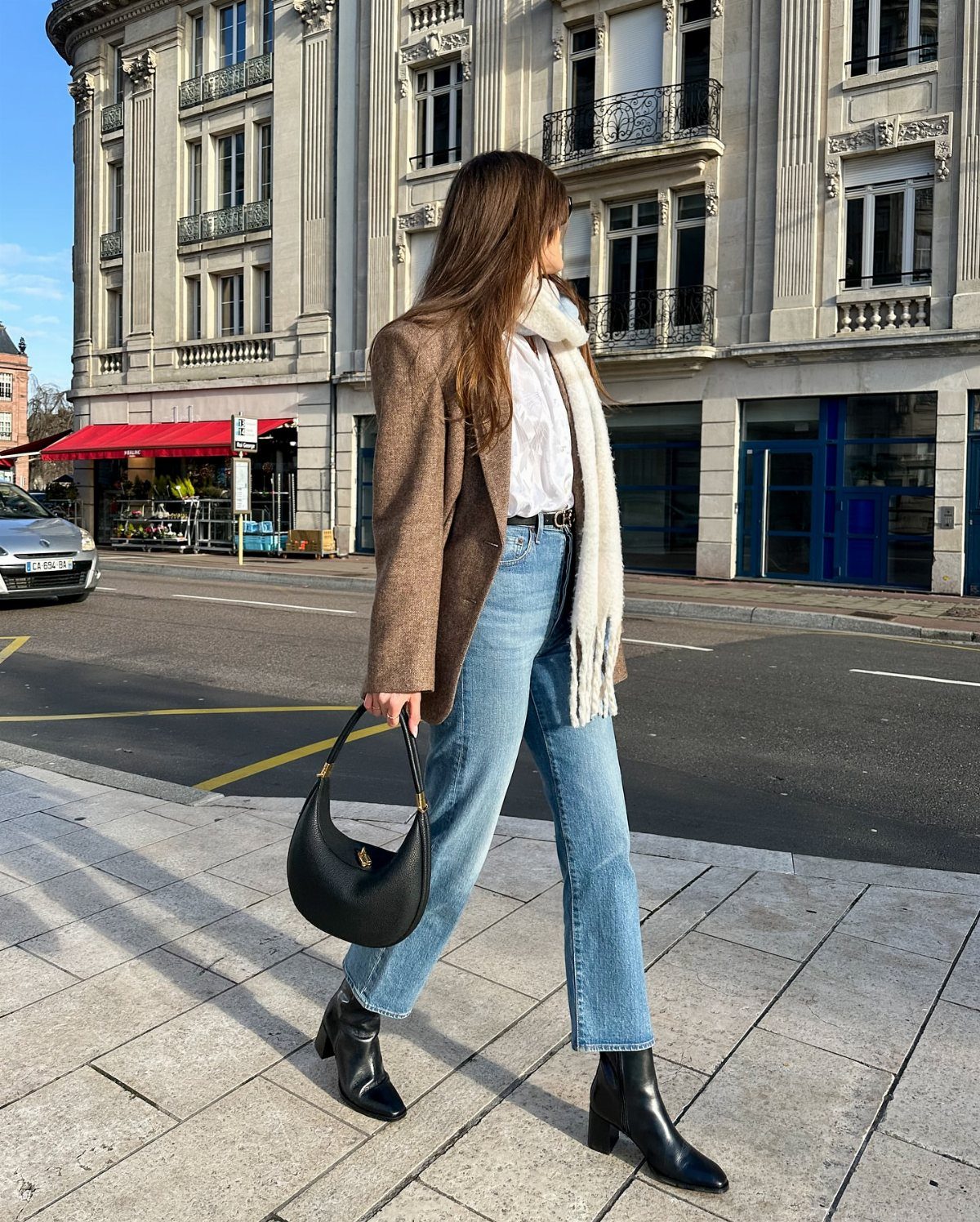
This is the uniform I reach for when I need to look like I thought about it without having thought much: light wash denim, a white shirt, a colored blazer, and black boots that do not compete.
A cream scarf adds warmth in 2 senses. The boot is low-profile leather, classic enough to wear with the same jeans on Saturday and not look office-bound.
Brown blazer against blue denim is a softer contrast than black would be; it travels better between casual coffee and a meeting that matters.
11. Tiered Skirt and Metallic Boots
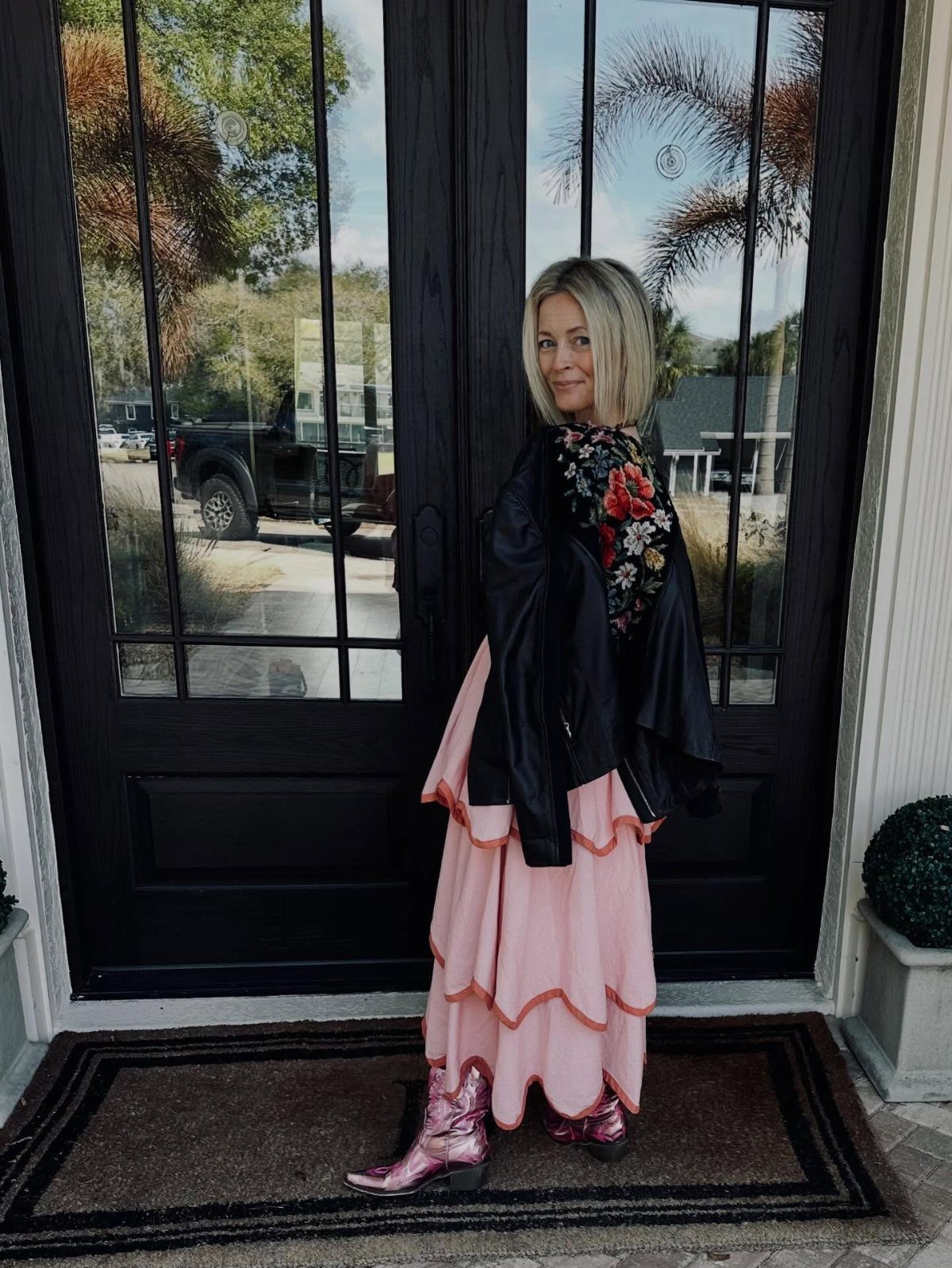
A tiered skirt moves too much to pair with a quiet shoe; the boot has to hold its own or the whole outfit drifts toward costume.
Metallic pink is a gamble that pays off here because the skirt is soft and the jacket is black leather, so the boot sits between 2 temperatures and belongs to neither.
Western stitching keeps the metallic from reading as evening; this is daytime flash. I would check that the boot shaft is slim enough to tuck under the skirt hem without leaving a bulge; the tiers have volume enough already.
Styling Proportions
The trouble with ankle boots almost always starts at that narrow band where pant hem or skirt edge meets leather. Control that point and the rest usually follows.
Bunched fabric on top of the boot chops the leg into segments.
I weigh the boot against the outfit, matching heavy to heavy instead of forcing a fight.
Color works 2 ways. Pick one approach per outfit and stay with it.
Footwear Materials
Leather carries any outfit that needs to look finished. It is the default for office or evening because it reads as intentional rather than thrown on.
Suede softens an outfit slightly. I use it when the rest of the look is sharp and needs something to relax the edge.
The pattern does the work, so I keep the rest plain when I wear it.
The material choice should match the occasion’s formality and the fabric weight of what you are wearing. Leather with silk is a standard combination for a reason; suede with heavy wool can look muddy.
Occasion-specific Styling
Casual settings let the boot carry more personality: hardware, texture, or a bolder color all work when the rest of the outfit is simple.
For the office, I keep the boot clean and low-profile. A classic leather shaft without heavy lug soles moves between meetings without drawing attention to itself.
Formal occasions call for the sleekest boot you own. Pointed toes and finer leathers read as dress shoe substitutes; anything chunky or casual undermines the outfit’s intent.
The same boot can shift between these with changes to the rest of the outfit, but only if the boot itself sits in a middle range.
A heavy combat boot never becomes formal; a sleek heeled bootie can do casual with jeans.
Layering Techniques
Textured knit with a heeled ankle boot reads as planned coziness, not accident. The boot’s structure keeps the soft layers from looking like you gave up.
The eye needs somewhere to land.
If a pair is already in your closet, this is worth a test run before you decide they are over.
Bold print booties with a matching set work when the set is monochrome and the accessories stay minimal. A structured blazer or leather jacket on top adds the extra layer without competing.
The outer layer and the boot should agree on mood: both structured, both relaxed, or one clearly leading and the other supporting. 2 competing statements and the outfit starts to fight itself.
Mix and match textures by pairing croc-embossed ankle boots with a lace-trimmed skirt and a lush, oversized knit.
— Vogue
Frequently Asked Questions
What do ankle boots look best with?
Jeans, dresses, skirts, and tailored trousers all work, but I pay attention to where the hem hits the boot shaft; that junction makes or breaks the proportion.
Wide-leg jeans need a fitted boot so fabric falls clean; skinny jeans need a roll or tuck to avoid bunching at the ankle.
Are ankle booties still in style in 2026?
Yes. Ankle boots remain one of the most versatile categories because they move between casual coffee and meetings that matter with a simple change of what you wear above them.
Can you wear ankle boots with a maxi dress?
Yes. Add a belt at the waist or the dress and boots merge into one shapeless column.
Can you wear ankle boots in summer?
Yes. Skip shearling and insulated styles until fall; the boot’s weight should match the season’s fabric weight.
Should socks show with ankle boots?
Usually not. Tights run the season with skirts: opaque in fall, sheer or skipped in spring, but the boot stays constant.