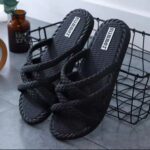
These sandals span waterproof foam to leather and cork, so the deciding factor is where you plan to wear them: poolside, office, or all day on your feet.
What separates the ones that help from the ones that hurt is whether the arch support is built into the footbed rather than added later, a point every podiatrist source I read agreed on.
1. Sandals with Contoured Footbeds
The Birkenstock Arizona EVA swaps the usual leather and cork for waterproof molded foam with the same contoured footbed.
A deep heel cup sits under the bone, and the raised toe bar gives your foot something to grip against so the arch support actually works while you walk.
The straps adjust, which matters more than it sounds if your feet swell by afternoon. Fifteen colors are stocked, from black to metallic copper, and the pair weighs next to nothing.
Rated for poolside or beach, not for trail use; the rubber sole grips wet tile but the foam compresses over rocky ground.
If you need the same footbed in leather, the classic Arizona is the alternate, though it costs more and is not waterproof.
2. Sport Sandals
Sport sandals built for plantar fasciitis carry thicker soles and firmer arch support than the ones sold for casual wear.
The OOFOS Ooahh Luxe Slide uses OOfoam that the company says absorbs 37% more impact than standard shoe foam, and the footbed is shaped to take load off the arch, knee, and ankle at once.
Machine washable, which solves the smell problem that slides usually develop by August. The Luxe runs $75 and comes in enough colors that some readers buy a second pair for indoors only.
These are recovery sandals first; the sole is thick and the look is not dressy.
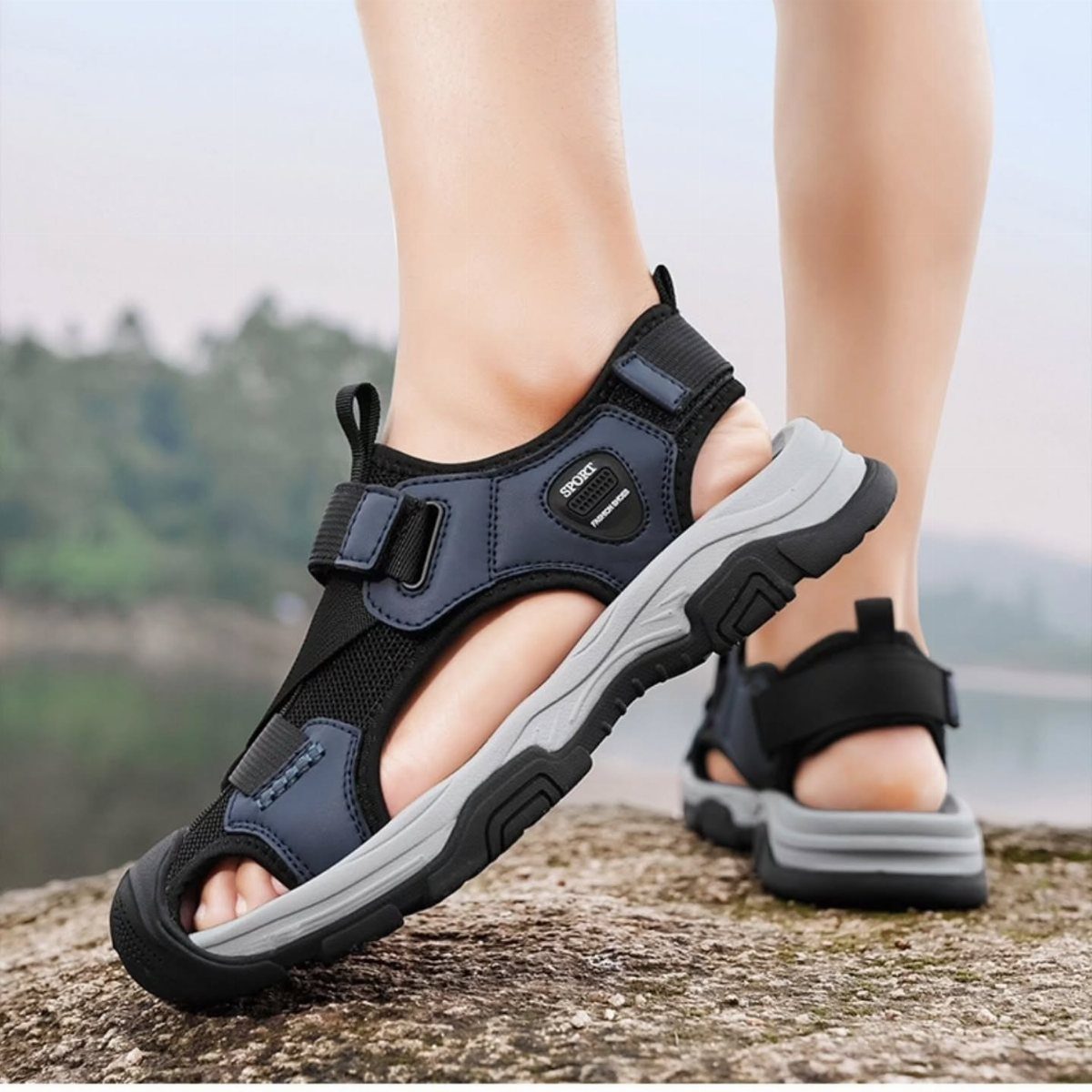
For water crossings or real hiking, Teva’s Original Universal has adjustable straps and a molded EVA midsole with heel cup, though its arch is less aggressive than the OOFOS.
The thick and cushioned footbed, called OOfoam, absorbs over 30% more impact than average footwear foam, according to the manufacturer, plus it creates a 1-inch platform and cradles arches for comfy all-day wear.
— Bustle
3. Platform Sandals with Ankle Straps
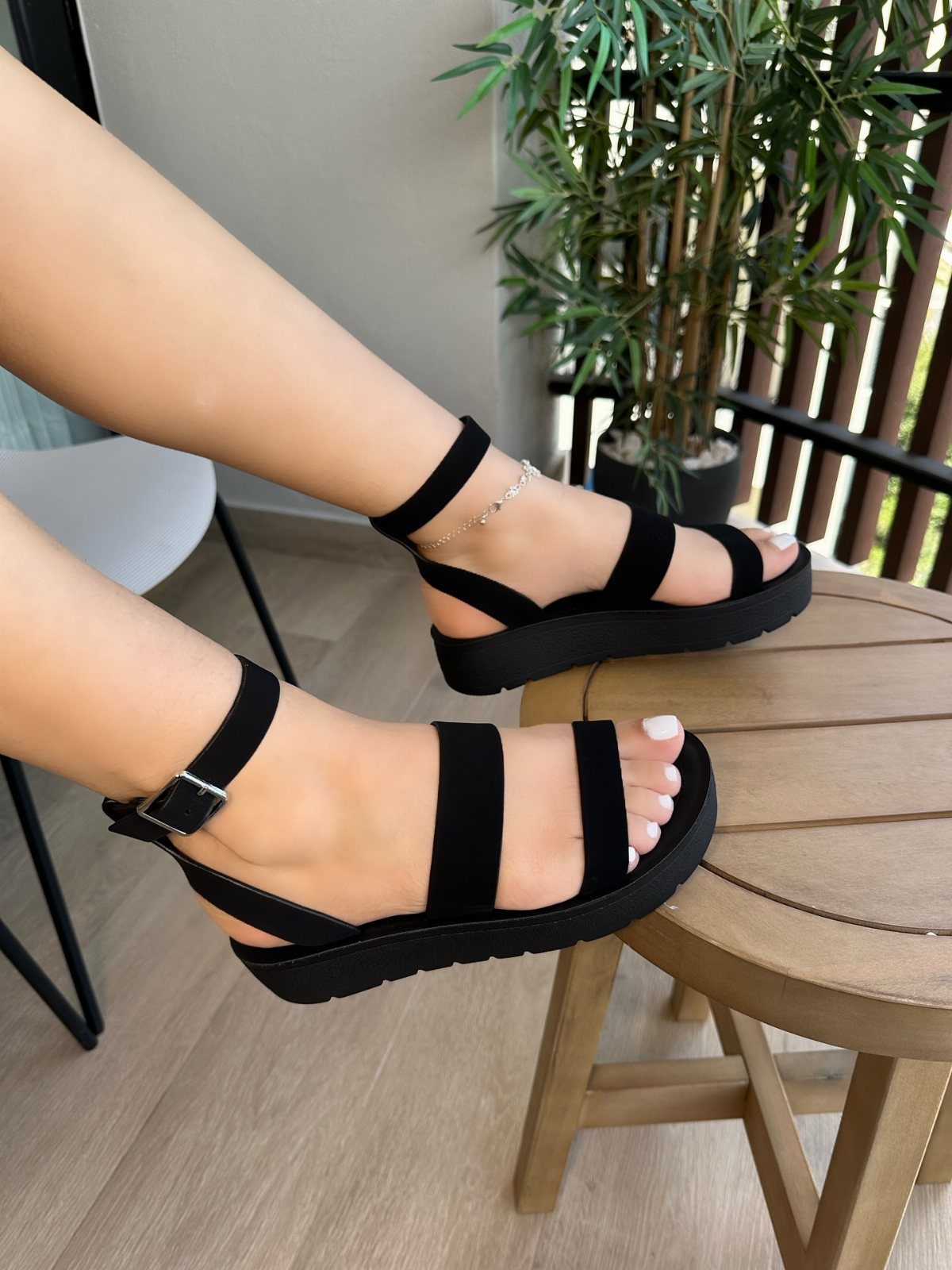
Platform sandals with ankle straps spread pressure across the foot instead of concentrating it at the toes or heel.
The ankle strap keeps the foot from sliding forward, which is where most platform sandals fail: the heel lifts, the arch support misses its mark, and by noon the plantar fascia is protesting.
Look for a platform that is stacked rather than wedge-shaped, with the same height at ball and heel so your foot stays level.
The Vionic Tide II, at $90, hides orthotic construction inside a flip-flop shape, with a woven toe post and foam-lined strap to prevent the rubbing that cheap thongs cause.
Teva’s Original Universal applies the same principle with sport straps and 15 color options. Neither is narrow; if your foot runs wide, check whether the platform itself tapers at the ball, which can pinch.
4. Cork Sole Slide Sandals
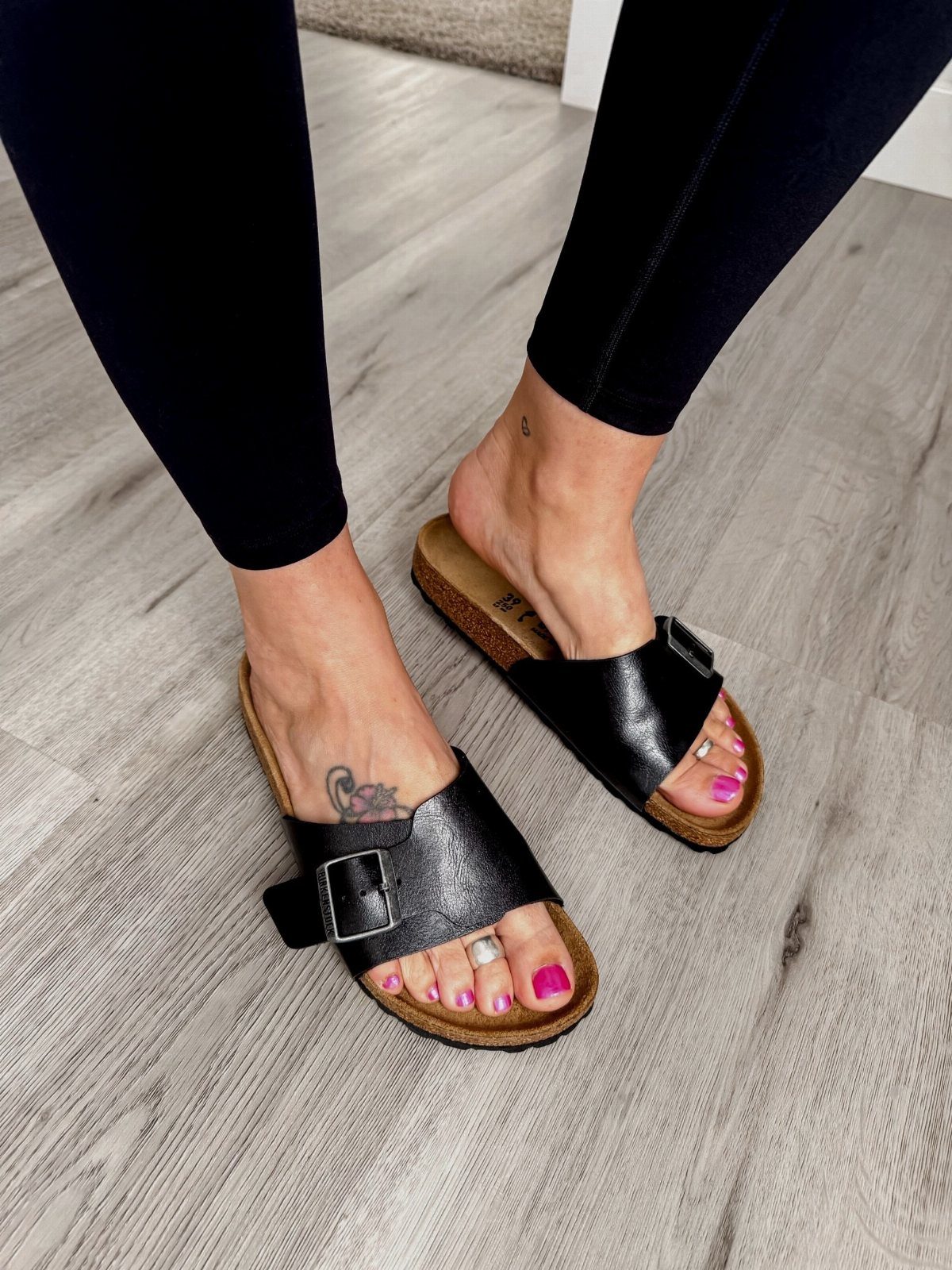
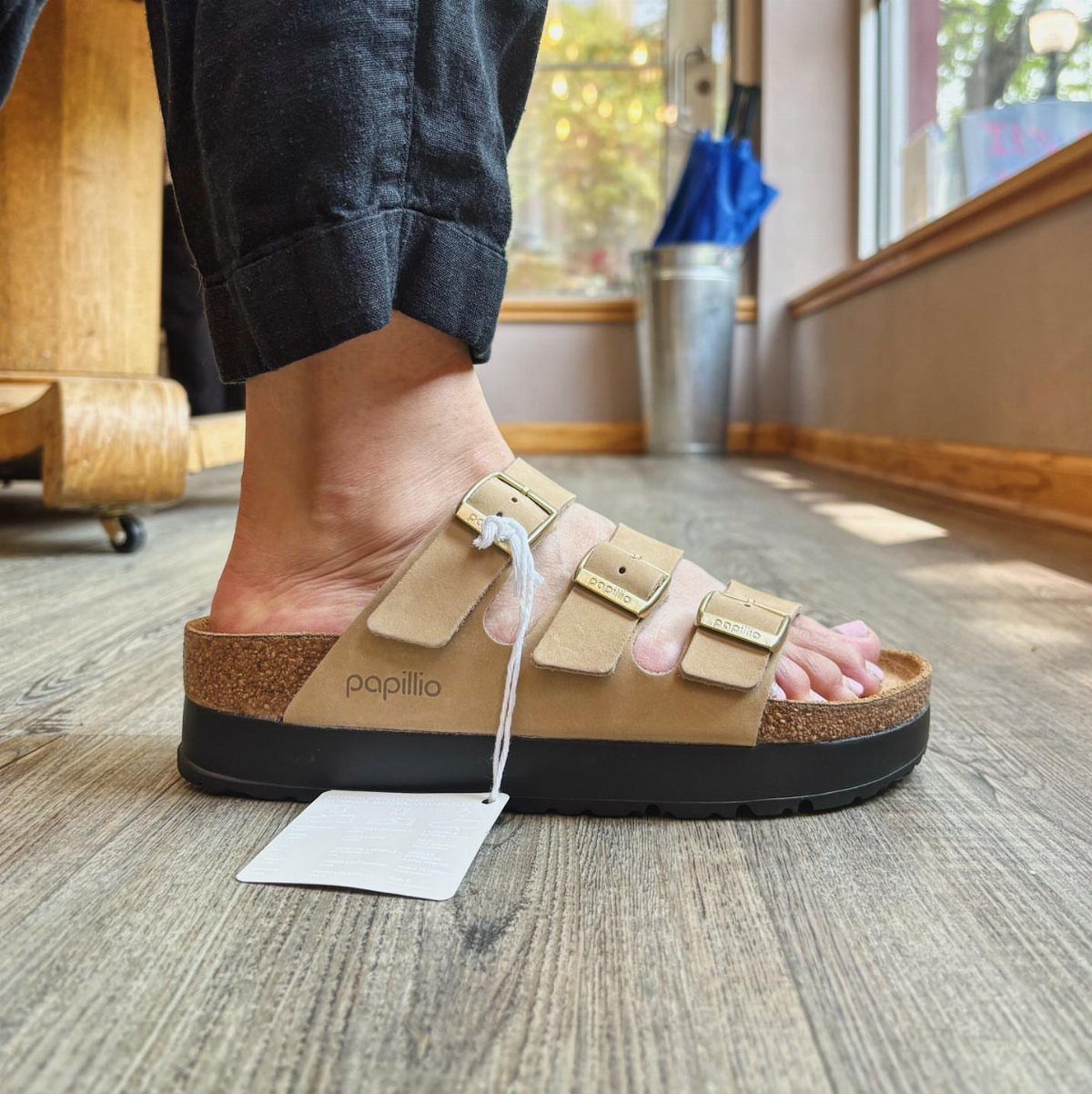
Cork sole slides start with the Birkenstock single-strap: a cork-latex footbed that molds to your arch with wear, with a suede liner that wicks sweat and a raised rim that keeps the foot centered.
The cork compresses slightly and then holds its shape for years; replace the sole when the tread wears, not when the footbed softens. For wide feet, the Arizona straps adjust, while the Madrid’s single strap does not.
Aerothotic makes a similar slide with an adjustable upper strap if your width changes during pregnancy or long days of standing. Budget half a size up from your usual if you will wear these with socks in cooler months.
5. Thick-soled Thong Sandals
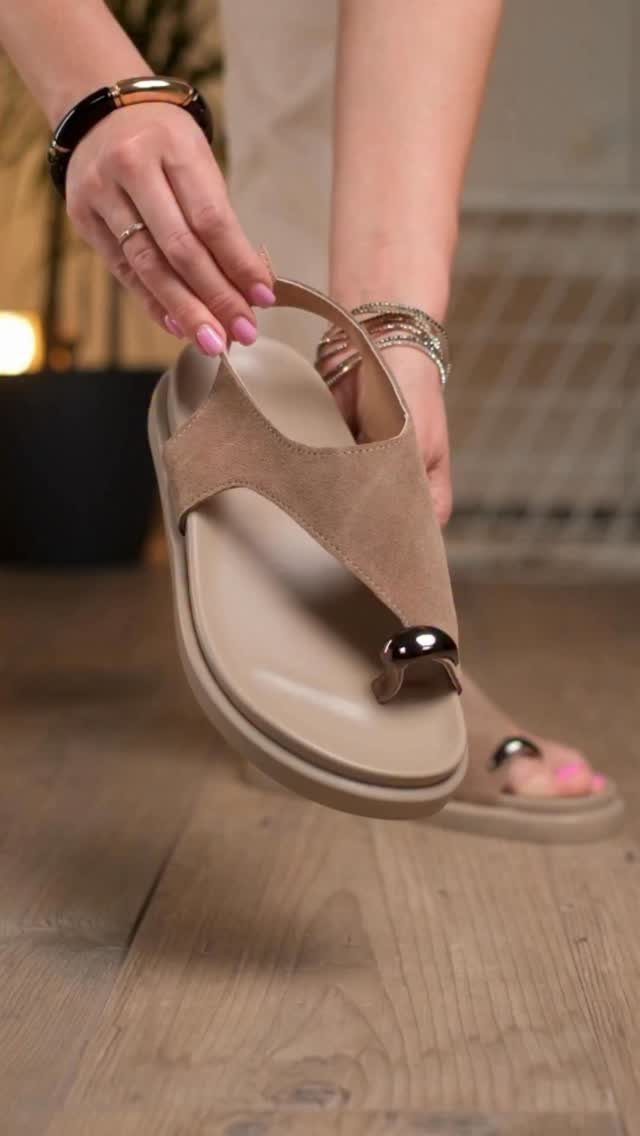
Thick-soled thong sandals have shaken off their reputation as orthopedic-only territory. Suede uppers with a platform sole pass for a normal fashion sandal until you turn it over and see the molded arch.
Sole thickness matters more than whatever covers the top of your foot. A thin leather thong will transmit every step to the heel no matter how soft the strap feels.
Look for compressed foam or EVA thick enough to cushion the ball of the foot, with the heel sitting no higher than the forefoot.
The OOFOS OOriginal, built from OOfoam that floats and survives the washing machine, is the recovery standard. For suede or leather uppers, Vionic and Aerothotic both make dressier versions, though you lose the waterproofing and the washability.
6. Supportive Wedge Sandals
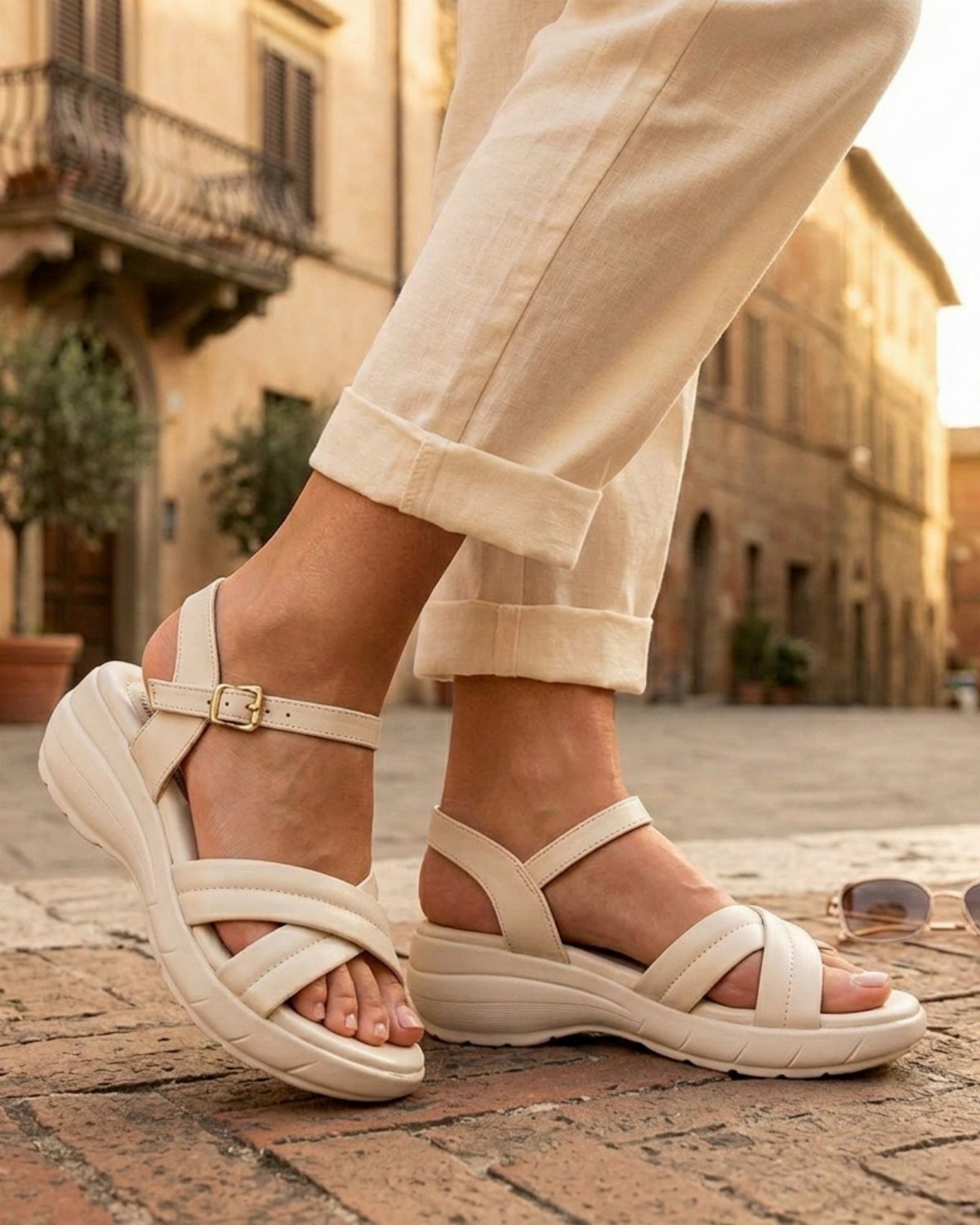
Wedge sandals distribute weight across the entire sole instead of concentrating it at a single heel point, which is why a well-built wedge can feel flatter than it looks.
Look for a wedge that is cork or molded foam, not rigid wood, so the sole compresses slightly under impact.
The straps should anchor at the ankle and across the forefoot; a single toe strap with no heel counter will not hold the foot steady on an incline.
For office or dress occasions, a moderate wedge in leather or linen reads as a heel without the pressure spike.
Test the slope: if you feel your weight pressing into the ball of the foot while standing still, the wedge is too steep for all-day wear.
Podiatrist Recommendations
Podiatrists I have read consistently point to arch support as the feature that matters most for acute plantar fasciitis.
Dr. Emily Splichal, a New York City podiatrist, puts it plainly: a sandal that takes stress off the arch or plantar fascia is what you want in a flare-up.
The brands that come up repeatedly in her writing and in other podiatric sources include Vionic, Birkenstock, Aetrex, OOFOS, Teva, and Crocs. What unites them is a medial arch built into the footbed rather than added later as an insert.
Dr. Jacqueline Sutera adds one detail I had not considered: the strappier the sandal, the better, because straps hold the foot in place so you are not gripping with your toes to keep it on.
Foot Health Importance
A totally flat sole increases stress on the plantar fascia and heel, which translates directly to sharper pain along the arch or at the heel strike.
The mistake is assuming that any open shoe is better than none in summer; the wrong sandal is worse than a sneaker.
The materials that actually cushion and absorb shock are EVA foam and cork, both of which mold to the foot and flex under pressure rather than transmitting every step upward.
Strappy sandals perform as well as sneaker-like ones for stability; the strap does the work of holding the foot in place, which lets the footbed do its job.
Avoiding Barefoot Walking
Walking barefoot is exactly what the plantar fascia does not need during a flare-up.
The sources are unanimous on this: without support, the inflamed tissue takes the full load of every step. Dr. Splichal’s recommendation is to wear an orthotic sandal whenever possible, even indoors, to keep pressure off the arch.
This is where a second pair of recovery slides makes sense; the OOFOS Luxe is priced low enough that some buyers dedicate one pair to the house.
The principle is simple: the plantar fascia heals when stress is removed, and a supportive sandal removes more stress than a hard floor. Stretching helps, but stretching alone while walking barefoot on tile or hardwood undermines the work.
Stylish Options Available
The divide between orthopedic and presentable has narrowed.
What makes these workable for daily wear is that the support is built in, not bolted on. You are not lacing an orthotic into a cute sandal; the cute sandal is the orthotic.
Waterproofing and washability tend to go with the sporty looks, while dressier leather and linen versions sacrifice both for the sake of passing at dinner.
Frequently Asked Questions
What’s the worst thing you can do for plantar fasciitis?
Walking barefoot is the worst thing you can do during a flare-up. Walking barefoot lets the already-irritated band of tissue under your foot absorb the full shock of each step, which drags out recovery.
I have read podiatrists say to keep a supportive sandal on even inside the house, since hard floors offer no give.
What shoes do podiatrists recommend for plantar fasciitis?
Podiatrists recommend shoes with built-in medial arch support rather than flat soles or after-market inserts. Molded footbeds keep their shape while you walk, which means the arch stays lifted and the plantar fascia does less work.
What finally cured my plantar fasciitis?
The sources do not describe a single cure, but the consistent recommendation is to remove stress from the plantar fascia so it can heal.
That means wearing supportive shoes with arch support whenever possible, even indoors, combined with stretching. At $75, the OOFOS Luxe is cheap enough that some people buy a second pair to leave by the back door.
Should I wear flip-flops if I have plantar fasciitis?
Only if the flip-flop has real support built in. A flimsy thong passes the impact straight through to your heel and strains the tissue along the sole.